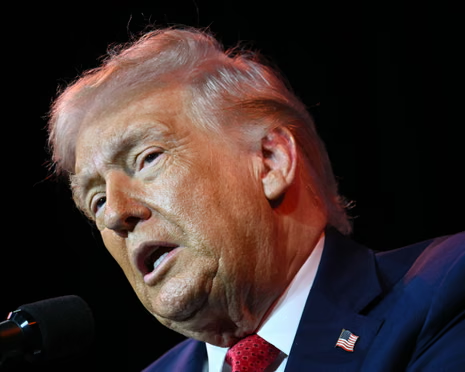
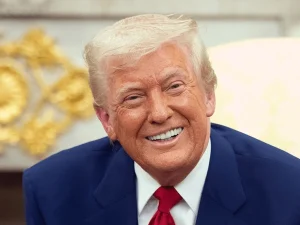
WASHINGTON—In a sharp and unexpected turn after days of incendiary rhetoric, U.S. President Donald Trump announced late Wednesday that he has invited Colombia’s leader to the White House, signaling a dramatic pivot from confrontation to diplomacy following recent threats of military action.
The development came after a direct phone call between Trump and Colombia’s president, marking their first official conversation since relations sharply deteriorated earlier this week. Trump described the exchange as constructive and respectful, striking a noticeably different tone from remarks made just days earlier that sent shockwaves through Latin America.
“It was a great honor to speak with the President of Colombia, Gustavo Petro, who called to explain the situation of drugs and other disagreements that we have had,” Trump wrote on social media. “I appreciated his call and tone, and look forward to meeting him in the near future.”
While Trump said arrangements are now underway for an in-person meeting in Washington, he did not provide a specific date, leaving questions about timing, agenda, and the political stakes surrounding the proposed visit.
From Threats to Talks in Less Than 72 Hours
The invitation comes just days after Trump suggested that U.S. military action against Colombia’s government “sounds good” to him, comments that followed a dramatic U.S. operation in neighboring Venezuela that resulted in the capture of its longtime leader and his transfer to the United States to face criminal charges.
That episode reverberated across the region and fueled fears that Colombia could be next in Washington’s expanding campaign against drug trafficking networks. Trump has repeatedly accused Colombia’s leadership of failing to stem the flow of cocaine into the United States, a charge that Bogotá strongly rejects.
At a rally in Colombia’s capital following the phone call, President Gustavo Petro confirmed the conversation and framed it as a step toward restoring dialogue.
“We have spoken by phone for the first time,” Petro told supporters gathered to celebrate Colombian sovereignty. He said he had asked for a restart of talks between the two nations after months of growing hostility.
A Relationship Marked by Deep Ideological Divides
Relations between Washington and Bogotá have been strained since Trump returned to office in January 2025. The Republican president and Colombia’s leftist leader have clashed repeatedly over drug policy, regional security, and global politics.
Trump has accused Petro’s government of enabling cocaine production and trafficking, and in October imposed sanctions against the Colombian leader. The administration also revoked Petro’s U.S. visa last fall after he participated in a pro-Palestinian demonstration in New York during the United Nations General Assembly and publicly urged U.S. soldiers to disobey Trump’s orders.
Petro, a former guerrilla who became Colombia’s first left-wing president in 2022, has been an outspoken critic of U.S. foreign policy. He has condemned American military operations in the Caribbean targeting suspected drug-running boats and accused Washington of complicity in civilian deaths abroad.
Those disputes came to a head over the weekend, when Trump described Petro as “a sick man” and accused him of profiting from cocaine trafficking—remarks Petro dismissed as unfounded and dangerous.
Drugs, Sovereignty, and the Shadow of Venezuela
The sudden thaw comes against the backdrop of the United States’ aggressive posture in the region following the capture of Venezuela’s leader. That operation demonstrated Washington’s willingness to act unilaterally, raising alarms among neighboring governments and sparking intense debate about sovereignty and international law.
Colombia, long a key U.S. ally in counter-narcotics efforts, found itself in an uneasy position. While Bogotá has cooperated closely with Washington for decades, Petro has sought to reorient Colombia’s drug strategy, emphasizing crop substitution, social programs, and negotiated solutions alongside enforcement.
Trump, by contrast, has embraced a more muscular approach. Since September, his administration has carried out more than 30 strikes against suspected drug-running vessels in Caribbean waters, operations that officials say have killed at least 110 people. Petro has denounced those actions and called for legal accountability.
A Diplomatic Reset or Tactical Pause?
The White House invitation raises questions about whether Trump is seeking a genuine reset with Colombia or merely pressing his advantage after demonstrating U.S. power in the region. For Petro, accepting the invitation could offer an opportunity to de-escalate tensions, defend his record, and protect Colombia from becoming entangled in a broader U.S. campaign.
Analysts say the meeting, if it occurs, would likely focus on drug trafficking, migration, security cooperation, and economic ties. Colombia remains one of the United States’ most important partners in South America, with deep military, trade, and intelligence links.
At the same time, the political risks are significant for both leaders. Trump faces domestic scrutiny over his increasingly assertive foreign policy, while Petro must balance engagement with Washington against nationalist sentiment at home.
Signals to the Region
Beyond Colombia, the announcement is being closely watched across Latin America. Countries wary of U.S. intervention see the invitation as a possible sign that diplomacy still has a role, even after Trump’s most aggressive statements.
Others view it as a reminder of Trump’s unpredictable style—capable of swinging rapidly from threats to handshakes. The speed of the reversal underscores how quickly regional dynamics can shift under the current administration.
For now, both sides are emphasizing dialogue. Petro told supporters that restarting talks was essential to avoid further escalation, while Trump highlighted the “tone” of the call as a positive sign.
What Comes Next
No formal agenda has been released, and it remains unclear whether the proposed White House meeting will materialize in the coming weeks or months. Still, the invitation itself marks a notable de-escalation after one of the most volatile moments in U.S.-Colombia relations in years.
Whether the meeting leads to a lasting reset—or merely a temporary pause—will depend on what happens behind closed doors. For now, the sudden shift from military threats to diplomatic outreach has reshaped the narrative, offering a moment of uncertainty in a region bracing for the next move from Washington.