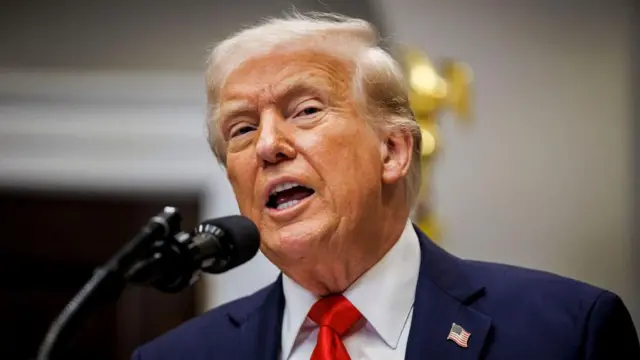
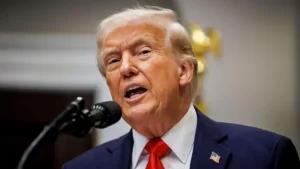

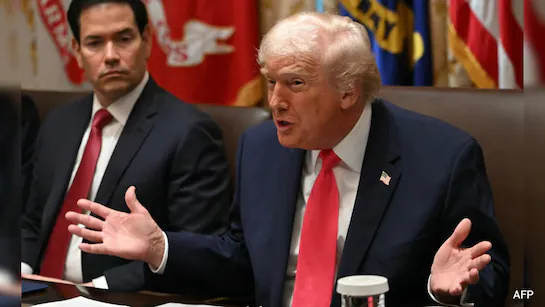
President Donald Trump convened an urgent high-level meeting with Secretary of State Marco Rubio on Monday as the death toll from Iran’s rapidly escalating unrest surpassed 500, marking one of the bloodiest episodes in the country’s modern history. The emergency talks came amid mounting international alarm, harrowing new footage emerging from Tehran, and growing pressure on Washington to determine whether the United States will intervene diplomatically, militarily, or both.
The White House confirmed that Trump and Rubio spent hours reviewing intelligence briefings and discussing a range of policy options, from renewed diplomatic engagement to potential military action. According to administration officials, the president is also scheduled to meet again in the coming days with Defense Secretary Pete Hegseth, Chairman of the Joint Chiefs of Staff Gen. Dan Caine, and other senior national security leaders.
The urgency is driven by events on the ground in Iran, where protests that began in late December have evolved into a nationwide uprising following a catastrophic economic collapse. The Iranian rial has plunged to an unprecedented low of 1.45 million per U.S. dollar, effectively wiping out personal savings and pushing inflation beyond 70 percent. Food shortages, mass unemployment, and the erosion of basic services have fueled anger across cities and rural regions alike.
What began as demonstrations over soaring prices has transformed into open defiance of the ruling regime. Protesters chant anti-government slogans, burn images of Supreme Leader Ayatollah Ali Khamenei, and wave pre-revolutionary flags symbolizing a desire for fundamental political change. Security forces have responded with overwhelming force.
Verified video footage that circulated Sunday shows rows of black body bags laid out at the Kahrizak Forensic Medical Center in Tehran. Mourners stand silently over the dead, some collapsing in grief. The images have sent shockwaves through international media and diplomatic circles.
A U.S.-based human rights organization tracking the unrest reports that at least 544 people have been killed since December 28. Of those, 496 are believed to be protesters, while 48 were members of the security forces. More than 10,000 individuals have reportedly been arrested, many in mass sweeps that human rights advocates warn could lead to torture, secret trials, and executions.
Iran’s government has not released an official death toll. Instead, state media blames what it calls “Israeli-U.S. interference” for the violence and focuses coverage on fallen security personnel. Tehran has declared three days of state mourning, framing the deaths as the result of “urban terrorist criminals,” a term widely understood to refer to protesters.
Speaking aboard Air Force One, Trump confirmed he is receiving hourly intelligence updates and said the administration is actively weighing its next move. “A meeting is being set up,” he told reporters, referring to potential diplomatic engagement with Iranian officials. He added a stark warning: “We may have to act before a meeting.”
That statement underscored a shift in tone from cautious diplomacy toward the possibility of preemptive action. The president previously warned that any harm to protesters could trigger consequences. With fatalities now in the hundreds, the administration faces pressure from lawmakers, allies, and advocacy groups to follow through.
Iran’s Foreign Ministry acknowledged that communication channels remain open. Spokesperson Esmaeil Baghaei said messages are being exchanged between Foreign Minister Abbas Araqchi and U.S. special envoy Steve Witkoff “whenever necessary.” The regime has reportedly expressed interest in resuming nuclear negotiations, presenting diplomacy as a way out of isolation.
Yet the White House remains skeptical. Officials privately describe Tehran’s outreach as an attempt to buy time while crushing dissent at home. Trump, according to aides, is wary of allowing talks to become a shield behind which security forces continue lethal crackdowns.
The unrest arrives just six months after U.S. and Israeli forces struck Iran’s nuclear facilities during Operation “Midnight Hammer,” targeting sites at Fordow and Natanz. The administration claimed those strikes severely degraded Tehran’s nuclear capabilities. Iranian leaders, however, vowed retaliation and warned that future U.S. action would be met with force.
That warning was reiterated over the weekend by Mohammad Ghalibaf, speaker of Iran’s parliament. “If the United States takes military action, both the occupied territories and U.S. military and shipping lanes will be our legitimate targets,” he said, adding that American and Israeli bases could be struck.
Inside Iran, the human toll continues to rise. During brief internet windows achieved through satellite connections and other workarounds, protesters have shared messages with journalists abroad. One young man described security forces firing live ammunition into crowds. “My friend was shot in the stomach,” he wrote. “They are using real guns and bullets. We are hoping for U.S. and Israeli intervention. Without them we cannot succeed.”
Another message read, “They shut the internet down so the world can’t see their brutality. We are being murdered by our own government.”
Such appeals place Washington in a precarious position. Intervention could embolden protesters and potentially hasten regime change. It could also ignite a regional conflict involving proxies across the Middle East, threaten global energy markets, and draw U.S. forces into a prolonged confrontation.
European allies have urged restraint while calling on Tehran to halt the violence. Privately, diplomats fear that Iran’s collapse could produce chaos comparable to Syria’s civil war or Libya’s fragmentation, with ripple effects far beyond the region.
Within the administration, debates are intensifying. Some officials argue that decisive action now could prevent mass atrocities and reshape the Middle East. Others caution that military intervention may unify hardliners within Iran and turn public anger outward toward the United States.
Trump’s political instincts have long favored dramatic gestures and clear lines. He has repeatedly framed global conflicts in moral terms, casting the United States as a guarantor of order against regimes he views as illegitimate. The images from Tehran have reportedly had a personal impact on him, according to aides, reinforcing his belief that the Iranian leadership has forfeited its right to govern.
At the same time, Trump is acutely aware of the domestic implications. The American public remains wary of new overseas wars. Members of Congress across party lines have demanded briefings and clarity on the administration’s intentions. Some Republicans support a hardline stance, while others urge caution, recalling the long costs of Middle Eastern interventions.
Markets are also watching closely. Iran sits atop some of the world’s largest oil and gas reserves. Any disruption to exports or shipping lanes in the Persian Gulf could drive energy prices sharply higher, with immediate consequences for inflation and economic stability worldwide.
For now, the White House is pursuing a dual-track approach: keeping diplomatic channels open while preparing for escalation. Military assets in the region have reportedly been placed on heightened alert. Intelligence agencies are monitoring Iranian troop movements, internal communications, and signs of fragmentation within the regime.
Whether the protests can sustain momentum remains uncertain. Iran’s security apparatus is vast, experienced, and ruthless. Previous uprisings have been crushed through mass arrests, executions, and prolonged fear campaigns. Yet the scale of the current unrest, combined with economic collapse and visible fractures among elites, has created conditions unlike those seen in decades.
As night falls over Tehran, chants echo through neighborhoods despite curfews and patrols. Each day brings new funerals, new videos, and new names added to the growing list of the dead.
In Washington, Trump faces a decision that could redefine his presidency and alter the trajectory of an entire region. Diplomacy may offer an exit ramp, but time is running out. With every body bag laid on the ground in Iran, the cost of inaction grows heavier.
The world now watches to see whether the United States will step forward as mediator, enforcer, or bystander in the face of a nation in revolt.

Emily Johnson is a critically acclaimed essayist and novelist known for her thought-provoking works centered on feminism, women’s rights, and modern relationships. Born and raised in Portland, Oregon, Emily grew up with a deep love of books, often spending her afternoons at her local library. She went on to study literature and gender studies at UCLA, where she became deeply involved in activism and began publishing essays in campus journals. Her debut essay collection, Voices Unbound, struck a chord with readers nationwide for its fearless exploration of gender dynamics, identity, and the challenges faced by women in contemporary society. Emily later transitioned into fiction, writing novels that balance compelling storytelling with social commentary. Her protagonists are often strong, multidimensional women navigating love, ambition, and the struggles of everyday life, making her a favorite among readers who crave authentic, relatable narratives. Critics praise her ability to merge personal intimacy with universal themes. Off the page, Emily is an advocate for women in publishing, leading workshops that encourage young female writers to embrace their voices. She lives in Seattle with her partner and two rescue cats, where she continues to write, teach, and inspire a new generation of storytellers.