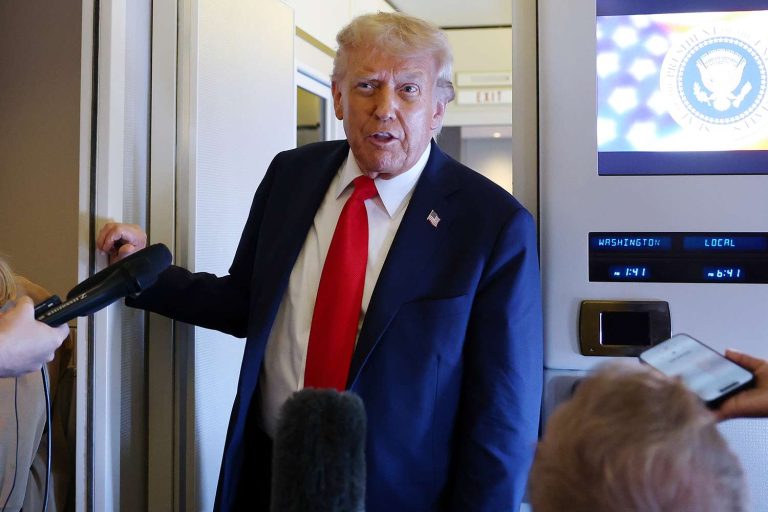

As the United States moves deeper into 2026 and the midterm elections draw closer, President Donald Trump’s standing with the American public remains a central subject of debate among political observers, voters, and analysts alike. Public opinion about a president often evolves in response to current events, policy outcomes, and the broader national mood — and recent years have been no exception.
Trump’s political career, spanning multiple terms and a uniquely controversial public profile, has rarely followed a smooth or predictable trajectory. Support for his policies and leadership has risen and fallen in response to events ranging from economic shifts to global crises and contentious domestic debates. What is clear at this stage is that Trump’s public approval continues to be a significant political factor with implications for both his own agenda and the broader electoral landscape.
Public Confidence and Leadership Perceptions
Public confidence in a president’s leadership often serves as a barometer of broader national sentiment, and in Trump’s case, indicators suggest a notable degree of skepticism among voters. A recent survey conducted by the Pew Research Center found that fewer Americans now say they support most of Trump’s policies compared with earlier in his term. The poll, conducted from January 20 through January 26, 2026, also reported that broad confidence in Trump’s handling of key leadership attributes — such as ethical conduct, respect for democratic norms, and overall capability — appears to have softened.
According to that survey, a substantial portion of U.S. adults say they are not confident in Trump’s leadership skills across several core categories. The drop in confidence encompasses areas that long served as consistent talking points for Trump’s supporters, suggesting that even among his base, enthusiasm may not be as robust as it once was.
In addition, the Pew poll indicates that a majority of Americans now believe the administration’s actions overall have been worse than they expected — a reversal from earlier moments in Trump’s presidency when optimism or at least neutrality was more prevalent.
These broader sentiments frame the current political environment and help explain why public opinion metrics are being closely watched as the nation enters an election year.
Issues Driving Public Opinion
Several policy areas appear to be influencing how Americans view the president. Economics, immigration, and national governance are among the top issues shaping voter sentiment — and they are not always trending in Trump’s favor.
On economic issues, multiple reports indicate that many Americans are feeling continued pressure from inflation, rising costs, and wage stagnation. These economic anxieties often translate into frustration with national leadership, even when broader economic indicators are mixed or improving. In some recent reporting, a plurality of voters mentioned economic concerns as their top priority when considering the president’s performance.
Immigration — once a cornerstone of Trump’s political messaging — has also become a complicated factor in public opinion. According to a separate survey by Reuters/Ipsos, approval of the president’s immigration policies has fallen to record lows, with significant numbers of respondents saying current enforcement approaches are too harsh. This is noteworthy because immigration historically energized key segments of Trump’s base; its weakened support suggests a shift in how the public perceives this issue.
Other aspects of governance that influence public sentiment include foreign policy, handling of public safety, and the administration’s crisis response. For example, recent controversy over federal law enforcement actions in Minneapolis has drawn bipartisan scrutiny and may be contributing to broader dissatisfaction among independent voters who weigh such developments heavily.
What Recent Polling Shows
After laying out the context for how Americans are thinking about Trump and his leadership, it’s worth examining where the latest data places his public approval.
Several major national polls released in early 2026 show that the president’s approval ratings are below 50 percent across multiple surveys, with disapproval generally stronger than approval.
One such national survey conducted by Fox News between January 23–26, 2026 found that about 44 percent of voters approve of Trump’s job performance, while 56 percent disapprove. This figure has remained roughly consistent in recent months and reflects broader dissatisfaction among independent voters and moderates.
Another well‑regarded monthly survey — the Harvard CAPS/Harris Poll — reported Trump’s approval at 45 percent, down modestly from earlier estimates and amid growing concern over immigration enforcement and other policy areas.
Polls tracking responses through late January and early February also suggest similar patterns. In the Economist/YouGov survey, approximately 40 percent of Americans said they approved of Trump’s job handling, with a majority expressing disapproval.
Across these and many other polling sources, the trend lines point toward a presidency that remains politically divisive — a continuation of patterns seen throughout Trump’s previous years in office but with a notable tilt toward negative overall public reception in key areas.
Breakdown by Demographics and Policy Areas
In addition to overall figures, approval ratings often reveal deeper insights when broken down by demographic group or issue area.
For example, in the Fox News poll, Trump received high approval among Republican respondents, but his approval among independent voters was significantly lower. Disapproval was particularly strong among moderates and White voters, highlighting the challenges the administration faces in broadening support beyond its core base.
On specific policy matters, separate surveys have found that approval of the president’s handling of inflation and economic issues lags behind other areas. Even within the Republican Party, while many continue to back Trump overall, a significant segment expresses concern over the economic direction of the country — a perennial issue that often influences voter behavior at the ballot box.
Immigration — long seen as a signature issue for Trump — also shows a complicated picture. In one poll, a large plurality said enforcement actions by ICE and CBP had gone too far, underscoring how immigration policy can be a double‑edged sword in shaping public opinion.
Implications for the 2026 Midterms
Approval ratings matter because they often correlate with electoral dynamics. Low or stagnant approval can energize opposition turnout and sway undecided voters, particularly in swing districts and among independent voters whose support can determine legislative majorities in Congress.
With midterm campaigns gaining momentum, Republican strategists are likely watching these public opinion trends closely. A president’s popularity — or lack thereof — can influence down‑ballot races, fundraising, and voter mobilization efforts. If key constituencies such as independents and suburban voters perceive leadership performance unfavorably, that can have ripple effects for party candidates across states.
For Democrats and their allies, current polling presents an opportunity to frame the political narrative around dissatisfaction and contrast it with alternative visions for governance and policy. Conversely, Republicans must balance energizing their base while seeking to broaden appeal among less enthusiastic voters.
What Pollsters Say About the Future
Poll experts typically caution against reading too much into any single survey. Polls have margins of error and reflect specific moments in time — and public sentiment can shift rapidly in response to events, economic data, or political developments.
Still, aggregated polling — which combines results from multiple surveys to find common patterns — provides a more stable picture of public sentiment. In the case of Trump’s current approval ratings, the aggregation suggests that a net negative approval gap persists, with disapproval outweighing approval across a range of reputable sources.
Analysts also note that approval ratings often shift as elections draw nearer, meaning that Trump and his allies may focus on messaging and policy areas that could boost public perception in the months ahead. However, with the current political landscape marked by strong reactions to immigration, economic concerns, and leadership confidence, changes in public opinion are far from guaranteed.
Conclusion
As 2026 progresses and the midterm elections loom, President Donald Trump’s approval ratings continue to attract attention from political analysts and the public alike. While the broader trend indicates a challenging environment with below‑majority approval in several national polls, the nuances of public opinion — including demographic divides and issue‑specific perceptions — reflect a complex and divided electorate.
For voters, observers, and political stakeholders, these numbers and their implications will play a central role in shaping the conversation about leadership, accountability, and the direction of national policy in the months ahead.

Emily Johnson is a critically acclaimed essayist and novelist known for her thought-provoking works centered on feminism, women’s rights, and modern relationships. Born and raised in Portland, Oregon, Emily grew up with a deep love of books, often spending her afternoons at her local library. She went on to study literature and gender studies at UCLA, where she became deeply involved in activism and began publishing essays in campus journals. Her debut essay collection, Voices Unbound, struck a chord with readers nationwide for its fearless exploration of gender dynamics, identity, and the challenges faced by women in contemporary society. Emily later transitioned into fiction, writing novels that balance compelling storytelling with social commentary. Her protagonists are often strong, multidimensional women navigating love, ambition, and the struggles of everyday life, making her a favorite among readers who crave authentic, relatable narratives. Critics praise her ability to merge personal intimacy with universal themes. Off the page, Emily is an advocate for women in publishing, leading workshops that encourage young female writers to embrace their voices. She lives in Seattle with her partner and two rescue cats, where she continues to write, teach, and inspire a new generation of storytellers.