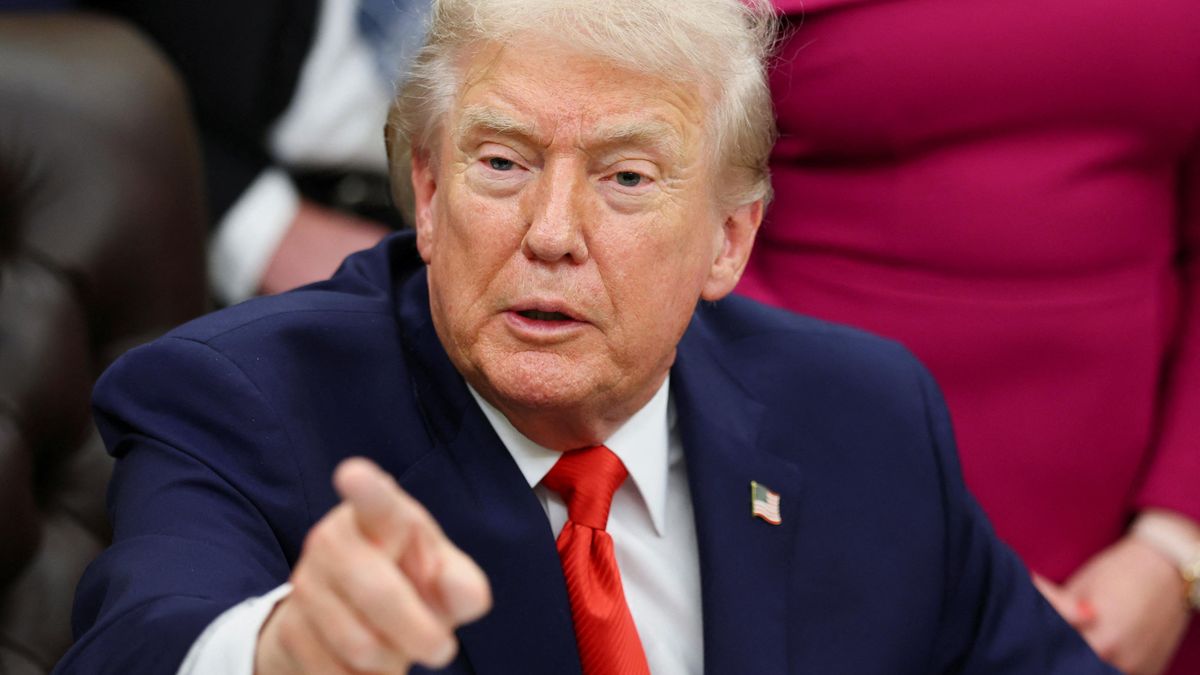
In a rare prime-time address from the White House, President Donald Trump spoke directly to Americans about the state of the nation, emphasizing economic recovery, cost-of-living pressures, and what he described as a broader effort to restore stability after years of disruption. Delivered from Washington on December 17, the speech was framed as both a progress report and a forward-looking outline of priorities for the coming year.
The president’s remarks came at a moment when economic anxiety remains widespread. Although inflation has slowed from its recent highs, many households continue to feel strained by elevated prices for food, housing, and other essentials. Against this backdrop, the address sought to reassure voters that the administration has a clear strategy and measurable results.
Rather than focusing narrowly on a single policy area, the speech ranged across domestic economics, immigration enforcement, trade, military compensation, and America’s global standing. Throughout, the president returned repeatedly to a central theme: that the country had been pushed to the brink and was now being pulled back.
Setting the Tone: A Nation at a Crossroads
From the outset, the president framed the past several years as a period of disorder and decline. He argued that when his administration took office, it faced economic instability, weakened borders, and eroded confidence in institutions. This framing set the tone for the rest of the address, positioning current policies as corrective measures rather than new experiments.
The language was familiar but deliberate. The president spoke of restoring balance, rewarding work, and prioritizing citizens who “make the nation run.” He described the address not as a victory lap, but as an update on an ongoing effort—one that, in his words, was still in its early stages.
Throughout the speech, visual aids were used to underscore his claims, including charts comparing economic indicators across administrations. These visuals were meant to reinforce the idea that recent trends represent a clear break from the immediate past.
Inflation, Prices, and Household Pressure
A significant portion of the address focused on the cost of living, an issue that has dominated kitchen-table conversations across the country. The president pointed to inflation during the pandemic years as a defining challenge for American families, citing sharp increases in grocery prices and household staples.
Food costs, in particular, were highlighted as emblematic of broader economic stress. Items such as eggs, coffee, sugar, beef, and butter experienced steep price hikes over several years, squeezing household budgets even as wages struggled to keep pace.
While acknowledging that prices remain high, the president emphasized that inflation has slowed considerably in recent months. He attributed this shift to a combination of market forces and policy decisions aimed at stabilizing supply chains and reducing regulatory burdens.
Only midway through the address did the president make his central claim explicit: that prices are now moving downward rather than upward, and that the trend reflects deliberate action by his administration rather than coincidence.
Wages, Employment, and the Private Sector
Building on the discussion of prices, the president turned to wages and employment. He argued that paychecks are now growing faster than inflation, a point intended to reassure workers who may not yet feel tangible relief at the grocery store or gas pump.
A notable emphasis was placed on job creation within the private sector. The president asserted that all new jobs created during his term have come from private enterprise, framing this as evidence of sustainable economic growth rather than government-driven expansion.
In this telling, a strong private sector was not merely an economic goal but a national security imperative. The president linked economic independence, industrial capacity, and global influence, suggesting that prosperity at home strengthens America’s position abroad.
A Surprise Announcement for the Military
Midway through the address, the president shifted focus to the armed forces, unveiling an unexpected announcement. Nearly 1.5 million active-duty service members, he said, would receive a one-time “warrior dividend” payment of $1,776—a symbolic figure tied to the nation’s founding year.
The payment, scheduled to arrive before Christmas, was framed as both recognition and gratitude. The president praised the military as unmatched in strength and capability, emphasizing that service members deserved tangible acknowledgment for their role in safeguarding the nation.
The announcement drew attention not only for its size but for its symbolism, reinforcing themes of patriotism and continuity between America’s past and present.
Housing, Immigration, and Market Pressure
The address then turned to housing affordability, another area where many Americans feel acute strain. While specific policy details were reserved for the coming year, the president signaled that reforms were underway to increase housing supply and ease rent pressures.
Immigration policy was presented as closely linked to housing costs. The president argued that stricter enforcement has reduced competition for housing, easing demand in certain markets. He characterized illegal immigration as a contributing factor to rising rents and strained public resources over the previous four years.
This section of the speech returned to the administration’s early actions on border enforcement. The president described the southern border as having been in crisis and claimed that decisive measures taken at the start of his term reversed that trajectory quickly.
Border Security and Public Safety
Immigration enforcement was framed not only as an economic issue but as a matter of public safety. The president argued that lax policies had allowed millions to enter the country unlawfully, placing additional burdens on taxpayers and communities.
He cited crime, social services, and local infrastructure as areas affected by what he described as an uncontrolled influx. By contrast, current policies were portrayed as restoring order and reinforcing the rule of law.
The message was consistent with the administration’s broader narrative: that strong borders are foundational to economic stability, public safety, and national sovereignty.
Trade, Tariffs, and Domestic Investment
The latter portion of the address focused on trade policy and manufacturing. The president defended tariffs as a necessary tool to rebalance trade relationships and incentivize domestic production.
He argued that previous trade agreements disadvantaged American workers and allowed foreign competitors to undercut domestic industries. By contrast, current policies were credited with driving investment back into the United States.
According to the president, more than $18 trillion in domestic investment commitments have been secured since January. He attributed this to a simple principle: companies that build in America avoid tariffs and gain access to a stable economic environment.
Tax Policy and Economic Vision
Tax cuts were presented as another cornerstone of the administration’s economic strategy. The president highlighted what he described as the largest tax reductions in American history, packaged into a sweeping legislative effort that combined multiple bills into a single act.
The stated goal, he said, was to leave more money in the hands of workers and businesses, fueling growth and innovation. Looking ahead, the administration plans to double down on domestic energy production and manufacturing, reinforcing what the president called an “America-first” economic model.
Looking Ahead to a Symbolic Year
The address concluded with a forward-looking note. In 2026, the United States will host the World Cup while also marking its 250th anniversary—a convergence the president described as deeply symbolic.
He framed the coming year as an opportunity to showcase a renewed nation: confident, prosperous, and respected on the world stage. The president urged Americans to see the current moment not as an endpoint, but as the beginning of a broader comeback.
When the world looks at the United States, he said, it should see a country loyal to its citizens, faithful to its workers, and certain of its future.
Whether one agrees with the assessment or not, the address made one thing clear: the administration intends to define the national conversation around economic recovery, sovereignty, and long-term direction as the country moves forward.

Emily Johnson is a critically acclaimed essayist and novelist known for her thought-provoking works centered on feminism, women’s rights, and modern relationships. Born and raised in Portland, Oregon, Emily grew up with a deep love of books, often spending her afternoons at her local library. She went on to study literature and gender studies at UCLA, where she became deeply involved in activism and began publishing essays in campus journals. Her debut essay collection, Voices Unbound, struck a chord with readers nationwide for its fearless exploration of gender dynamics, identity, and the challenges faced by women in contemporary society. Emily later transitioned into fiction, writing novels that balance compelling storytelling with social commentary. Her protagonists are often strong, multidimensional women navigating love, ambition, and the struggles of everyday life, making her a favorite among readers who crave authentic, relatable narratives. Critics praise her ability to merge personal intimacy with universal themes. Off the page, Emily is an advocate for women in publishing, leading workshops that encourage young female writers to embrace their voices. She lives in Seattle with her partner and two rescue cats, where she continues to write, teach, and inspire a new generation of storytellers.