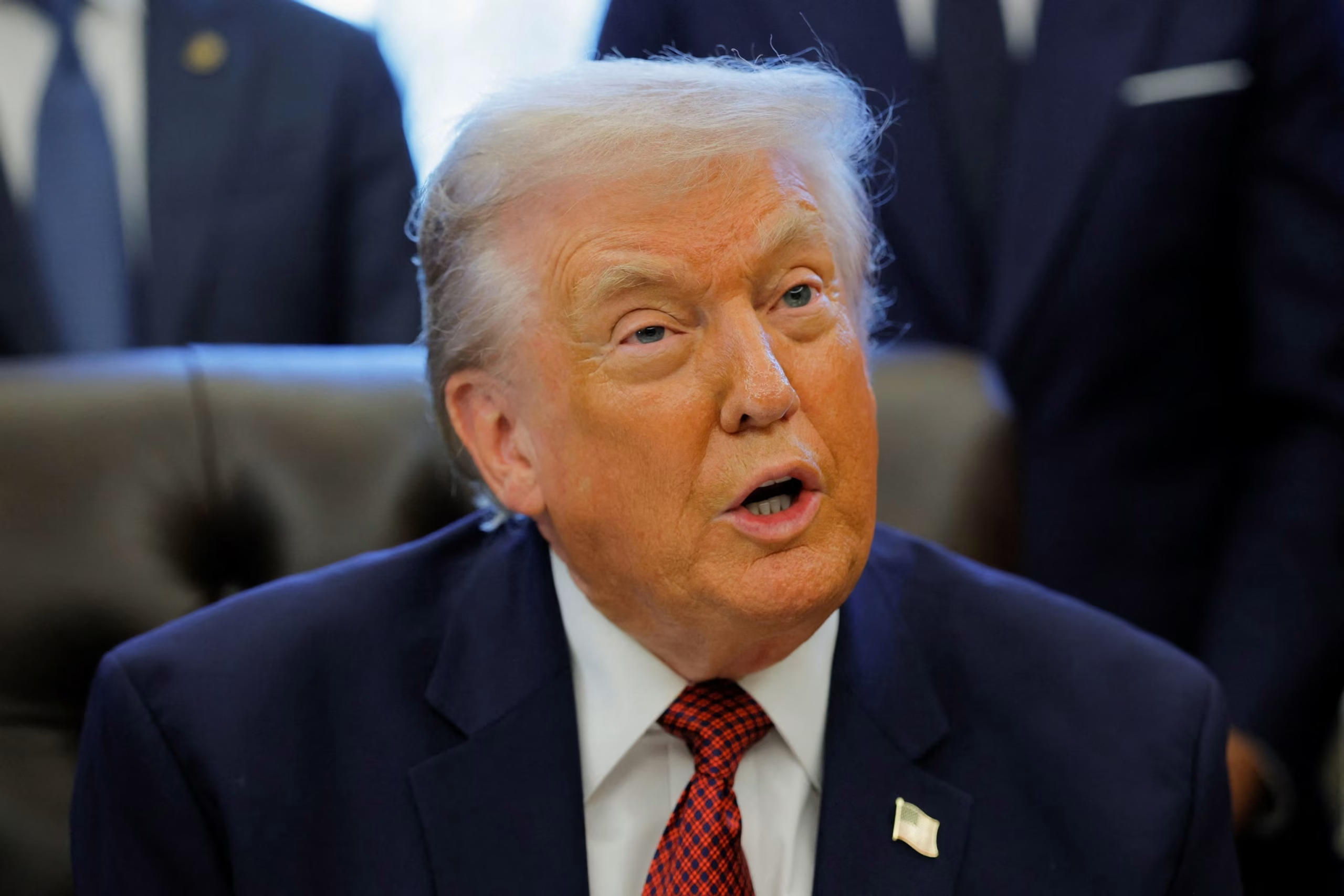
President Donald Trump on Monday signed an executive order formally designating fentanyl and its precursor chemicals as weapons of mass destruction, dramatically escalating the federal government’s response to the ongoing opioid crisis that has devastated communities across the United States.
The announcement was made during an event at the White House marking the presentation of the Mexican Border Defense Medal, where Trump described fentanyl as a threat unlike any conventional weapon.
“No bomb does what this is doing,” Trump said from the Oval Office. “This poison is killing our people in numbers we have never seen before.”
The president claimed that fentanyl is responsible for between 200,000 and 300,000 deaths annually, framing the drug epidemic as a national security emergency rather than solely a public health issue.
Expanded Powers to Target Cartels and Foreign Networks
By classifying fentanyl as a weapon of mass destruction, the executive order grants the administration expanded authority and additional resources to target foreign governments, drug cartels, and transnational criminal organizations involved in the drug’s production and distribution.
A White House statement said the move allows federal agencies to “unleash every available tool” against networks responsible for flooding the United States with the synthetic opioid.
“President Trump is taking decisive action against the cartels and foreign networks that have turned fentanyl into the leading cause of death for Americans ages 18 to 45,” the statement said.
The administration also asserted that drug cartels and foreign terrorist organizations use profits from fentanyl trafficking to fund assassinations, terrorist activities, and armed conflicts over smuggling routes.
Fentanyl’s Deadly Path to the United States
According to the Centers for Disease Control and Prevention, fentanyl is a powerful synthetic opioid that has legitimate medical uses, including for surgical anesthesia and the treatment of severe pain. However, the overwhelming majority of fentanyl-related overdoses in the U.S. are linked to illegally manufactured versions of the drug.
Illicit fentanyl is most commonly sold as a powder or pressed into counterfeit pills that closely resemble legitimate prescription medications, often without the user’s knowledge.
Federal officials say many of the chemical ingredients used to manufacture fentanyl are produced by companies in China. These precursor chemicals are then purchased—legally or illegally—by Mexican drug cartels, including the Sinaloa and Jalisco New Generation cartels. The cartels synthesize fentanyl in clandestine laboratories and smuggle it into the United States, primarily through border crossings in California and Arizona.
Smaller quantities of fentanyl are also produced in Canada and trafficked south into the U.S., though officials say this represents a far smaller share of the overall supply.
Part of a Broader Anti-Drug Strategy
Monday’s executive order is the latest in a series of aggressive actions taken by Trump since returning to office to combat drug trafficking and organized crime.
On his first day in office, the president designated several major drug cartels as foreign terrorist organizations and specially designated global terrorists, a move that significantly expanded the federal government’s ability to impose sanctions and pursue criminal networks operating beyond U.S. borders.
Trump has also imposed tariffs on China, Mexico, and Canada, citing their alleged failure to do enough to stem the flow of fentanyl and its precursor chemicals into the United States.
“President Trump will not rest until the cartels are dismantled, illicit fentanyl is eradicated from America’s streets, and every family is safe from this chemical weapon,” the White House said.
Military and Maritime Crackdown Raises Questions
In addition to economic and diplomatic measures, the Trump administration has launched an intensified campaign against suspected drug smuggling operations in the Caribbean. According to administration officials, U.S. forces have struck 23 vessels believed to be involved in narcotics trafficking since September.
The strikes represent a significant expansion of U.S. enforcement efforts beyond traditional law enforcement operations, reflecting the administration’s framing of fentanyl trafficking as a national security threat.
However, some lawmakers in Congress have raised concerns about the legality and oversight of the operations. Critics have questioned the transparency surrounding the strikes and whether the president has the authority to order lethal action against suspected smugglers without explicit congressional approval.
Administration officials have defended the operations as necessary and lawful, arguing that the scale of the fentanyl crisis requires extraordinary measures.
A New Phase in the Drug War
By labeling fentanyl a weapon of mass destruction, Trump has placed the drug crisis squarely within the realm of national defense and counterterrorism policy, signaling that his administration intends to pursue a far more confrontational approach than previous efforts.
Supporters argue the move reflects the staggering human toll of fentanyl and the need to treat trafficking networks as hostile actors. Critics warn that the designation could blur the line between law enforcement and military action, potentially raising constitutional and diplomatic concerns.
As overdose deaths continue to devastate communities nationwide, the executive order marks a pivotal shift in how the federal government defines—and confronts—the fentanyl epidemic.

Emily Johnson is a critically acclaimed essayist and novelist known for her thought-provoking works centered on feminism, women’s rights, and modern relationships. Born and raised in Portland, Oregon, Emily grew up with a deep love of books, often spending her afternoons at her local library. She went on to study literature and gender studies at UCLA, where she became deeply involved in activism and began publishing essays in campus journals. Her debut essay collection, Voices Unbound, struck a chord with readers nationwide for its fearless exploration of gender dynamics, identity, and the challenges faced by women in contemporary society. Emily later transitioned into fiction, writing novels that balance compelling storytelling with social commentary. Her protagonists are often strong, multidimensional women navigating love, ambition, and the struggles of everyday life, making her a favorite among readers who crave authentic, relatable narratives. Critics praise her ability to merge personal intimacy with universal themes. Off the page, Emily is an advocate for women in publishing, leading workshops that encourage young female writers to embrace their voices. She lives in Seattle with her partner and two rescue cats, where she continues to write, teach, and inspire a new generation of storytellers.