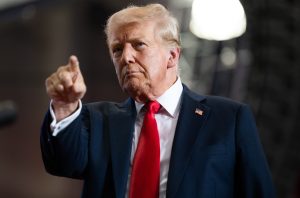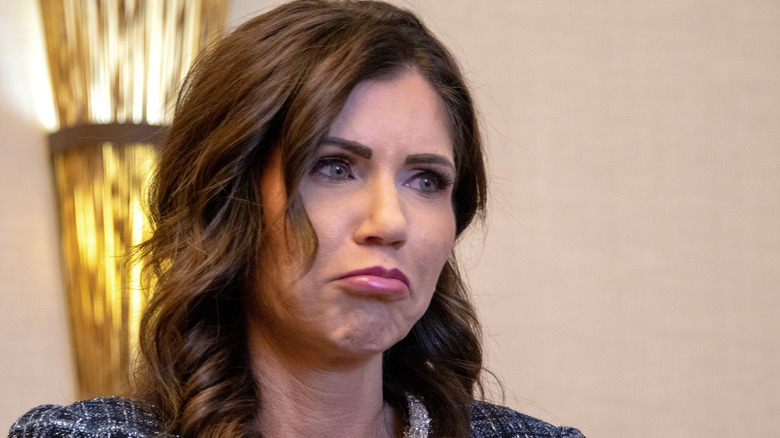
Donald Trump has reassigned Homeland Security Secretary Kristi Noem to a more limited role in the aftermath of the deadly Minneapolis shooting involving federal immigration agents, signaling a significant shift in her responsibilities within the administration. The move followed a tense White House meeting overseen by Chief of Staff Susie Wiles, during which Trump reportedly expressed dissatisfaction with Noem’s handling of the crisis.
The scrutiny of Noem intensified after 37-year-old ICU nurse Alex Pretti was shot and killed by a Border Patrol officer in Minneapolis on Saturday. Noem had initially described the incident as an act of “domestic terror,” a characterization that reportedly put her at odds with President Trump.
According to sources familiar with the discussions, Trump confronted Noem during a late-night Oval Office meeting about both her response to the shooting and her broader management of internal immigration enforcement operations. Noem’s adviser and rumored partner, Corey Lewandowski, was reportedly present during the summit. By the end of the evening, Trump had directed Noem to step back from overseeing interior enforcement operations and instead concentrate her efforts on border security along the southern U.S. frontier.
Shift in Command
Trump ordered White House Border Czar Tom Homan to take over operational control of federal enforcement activities in Minnesota. Homan, a longtime ICE veteran, is tasked with coordinating federal and state law enforcement efforts to manage the protests and ongoing unrest in the Twin Cities.
Noem, while retaining her position as DHS secretary, is expected to focus primarily on border security initiatives rather than domestic operations. The reassignment reflects both Trump’s dissatisfaction with her Minneapolis response and a broader effort to consolidate federal authority under Homan in the region.
As part of the personnel reshuffle, Border Patrol commander Gregory Bovino, who had been elevated by Noem and Lewandowski to oversee high-profile urban raids in Los Angeles, Chicago, and Minneapolis, was removed from the Minneapolis operation. Scores of agents under Bovino’s command were also reassigned. According to reports, Border Patrol Commissioner Rodney Scott revoked Bovino’s access to government-issued social media accounts as part of the transition.
The reassignment has reportedly caused internal friction within ICE and Border Patrol ranks. Many federal agents view urban enforcement operations as part of ICE’s jurisdiction, and Bovino’s removal stirred anger among officers who had previously participated in these operations.
Fallout from Pretti Shooting
The Minneapolis shooting has been a flashpoint for national debate over federal law enforcement tactics. Alex Pretti, 37, was shot dead after reportedly struggling with Border Patrol agents during an attempt to intervene in the arrest of a criminal migrant. Videos from the scene show Pretti holding an object as he struggled with officers, though his family contends he was unarmed, holding only a phone with his empty hand raised.
Noem’s initial description of Pretti as a “domestic terrorist” drew criticism from several quarters, including members of the Trump administration. During a press briefing on Monday, White House Press Secretary Karoline Leavitt emphasized that she had “not heard the president characterize” Pretti in that manner. Trump himself told the Wall Street Journal, “I don’t like any shooting. I don’t like it,” signaling a more measured stance than Noem’s initial comments.
The handling of the incident has complicated legislative discussions over DHS funding and contributed to tensions between federal and state authorities. Minnesota Governor Tim Walz, a Democrat, has expressed concerns about federal operations in the state, raising the possibility of political pushback that could influence budgetary negotiations in Washington.
White House Reaction and Strategy
During the late-night Oval Office meeting, Trump reportedly reviewed cable news coverage of the Minneapolis operation, expressing concern about public perception and the administration’s portrayal in the media. Officials note that the president was particularly focused on how the administration’s response was framed nationally, emphasizing the importance of controlling the narrative in high-profile law enforcement incidents.
Noem’s communications team, including Press Secretary Karoline Leavitt and Communications Director Steven Cheung, were present at the summit to provide briefings and counsel on messaging. Despite the reassignment, Noem is expected to maintain her role within the cabinet, though her direct oversight of internal immigration enforcement operations has been curtailed.
By contrast, Homan is now the primary official responsible for coordinating federal enforcement in Minneapolis, working alongside state and local authorities. The administration hopes that Homan’s experience and relationships with ICE personnel will help de-escalate tensions and implement a more coordinated approach to urban operations.
Internal Dynamics and Rivalries
The personnel changes highlight longstanding rivalries within DHS and between federal law enforcement officials. Noem and Lewandowski had previously elevated Bovino to oversee significant urban enforcement operations, granting him responsibility for high-profile raids in multiple U.S. cities. Bovino’s removal marks a clear shift in authority, reinforcing Homan’s control over critical operations in Minneapolis and signaling the administration’s lack of confidence in Noem’s crisis management.
Sources suggest that some federal agents aligned with ICE were frustrated by Noem’s initial directives, which they viewed as an encroachment on the agency’s traditional responsibilities. Bovino’s reassignment to California, coupled with Homan’s deployment to Minneapolis, represents an effort to restore operational control to experienced ICE personnel and address internal morale concerns.
Broader Implications
The reassignment also reflects a broader challenge for the Trump administration in balancing enforcement priorities with public scrutiny. The Minneapolis incidents have drawn national attention, with advocacy groups, former elected officials, and local leaders weighing in on both the shootings and the federal response. The administration’s recalibration signals a recognition of the political sensitivity of such operations and the need for careful management of both personnel and messaging.
Experts note that the move could influence future DHS operations across the country, particularly in urban areas where enforcement activities are likely to attract public scrutiny. By placing Homan in direct operational control, the administration appears to be prioritizing experience, coordination with local authorities, and media management in response to high-profile incidents.
Outlook for Noem
While Noem retains her cabinet position, her diminished role in domestic enforcement marks a significant setback in her political and administrative influence. Analysts suggest that the reassignment may limit her ability to shape policy on interior immigration operations, potentially impacting her long-term ambitions within the administration.
Despite the controversy, Noem is expected to continue overseeing southern border initiatives, a key area of focus for the Trump administration. Her work in this arena will be closely monitored, both for operational outcomes and for the broader political implications of her leadership within DHS.
In the short term, the Trump administration is betting that Homan’s presence in Minneapolis will help stabilize the situation, foster cooperation with local authorities, and mitigate further escalation. At the same time, Noem’s reassignment serves as a cautionary example of the political and operational risks associated with high-profile law enforcement incidents.
The situation in Minneapolis, combined with ongoing debates over DHS funding and federal oversight, underscores the complex dynamics of managing enforcement operations in politically charged environments. The administration’s approach to these challenges will likely shape both public perception and the internal dynamics of DHS in the months ahead.

Emily Johnson is a critically acclaimed essayist and novelist known for her thought-provoking works centered on feminism, women’s rights, and modern relationships. Born and raised in Portland, Oregon, Emily grew up with a deep love of books, often spending her afternoons at her local library. She went on to study literature and gender studies at UCLA, where she became deeply involved in activism and began publishing essays in campus journals. Her debut essay collection, Voices Unbound, struck a chord with readers nationwide for its fearless exploration of gender dynamics, identity, and the challenges faced by women in contemporary society. Emily later transitioned into fiction, writing novels that balance compelling storytelling with social commentary. Her protagonists are often strong, multidimensional women navigating love, ambition, and the struggles of everyday life, making her a favorite among readers who crave authentic, relatable narratives. Critics praise her ability to merge personal intimacy with universal themes. Off the page, Emily is an advocate for women in publishing, leading workshops that encourage young female writers to embrace their voices. She lives in Seattle with her partner and two rescue cats, where she continues to write, teach, and inspire a new generation of storytellers.