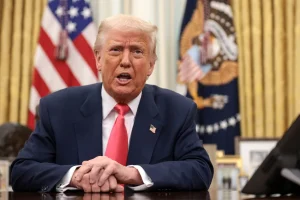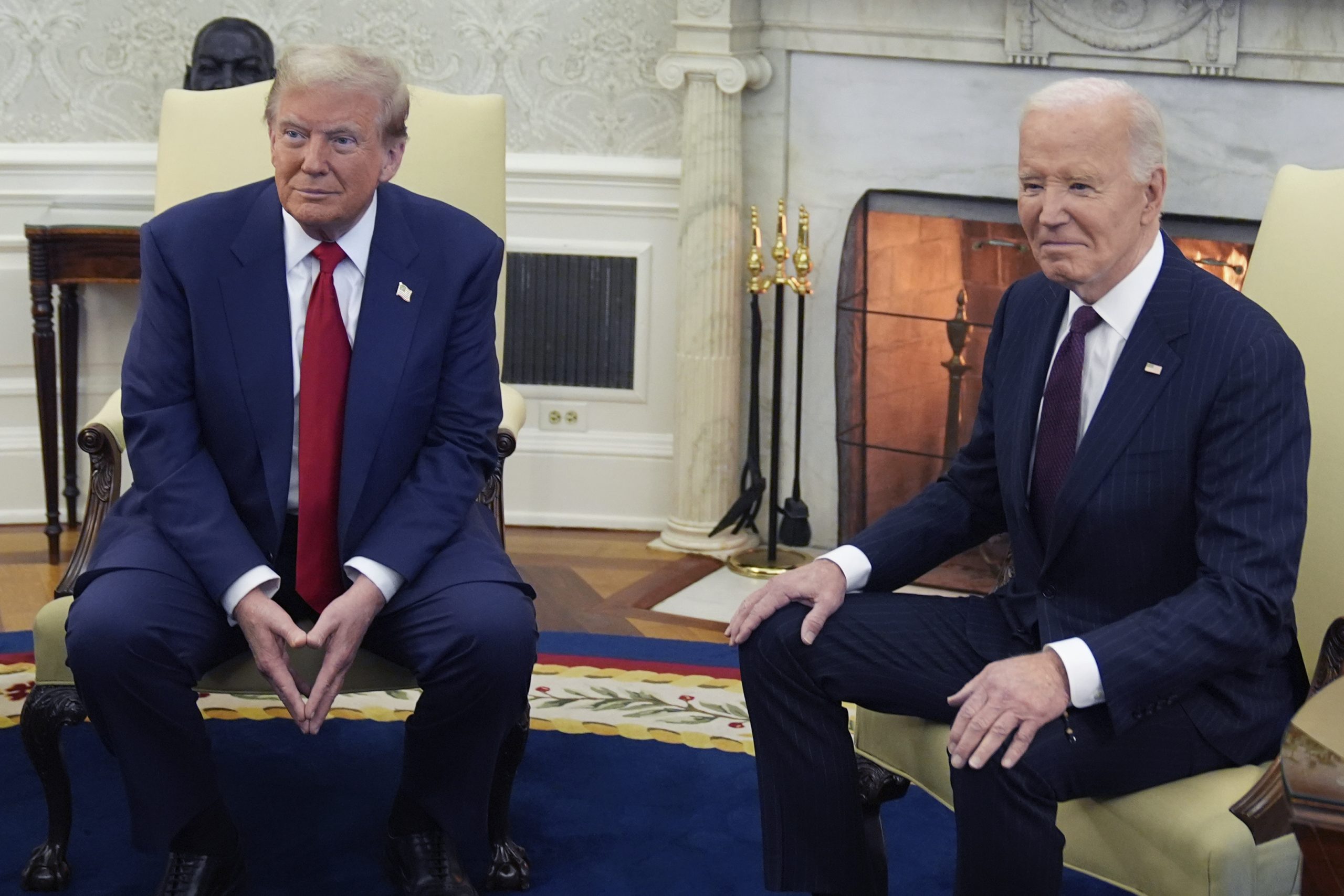
Washington was thrown into turmoil on Thursday after President Donald Trump made a sweeping declaration challenging the legitimacy of actions taken during Joe Biden’s presidency. The statement, delivered through Trump’s official channels, immediately captured the attention of lawmakers, legal experts, and political observers who say the move could trigger intense scrutiny over how presidential directives were carried out during Biden’s time in office.
The announcement touched a nerve in a city already rattled by recent national security events, drawing renewed focus to questions that have long surrounded Biden’s administrative processes. For years, critics argued that the former president’s reliance on surrogates and staff blurred traditional lines of presidential authority. Now, Trump’s challenge appears poised to turn those lingering doubts into a national debate.
Concerns about Biden’s physical stamina and cognitive clarity were common during his years in the White House, often driven by visible stumbles and moments where he appeared detached or confused. Supporters dismissed those criticisms as partisan noise, but opponents insisted the telltale signs pointed to a presidency increasingly managed by aides rather than the man elected to lead it. Thursday’s announcement thrust those concerns back into the spotlight.
A Sudden Shift With Major Implications
The heart of the controversy revolves around the autopen, a mechanical device capable of reproducing a person’s signature. While the autopen has existed in various forms for more than two centuries, it became a central tool of the Biden administration. According to long-standing legal opinions, presidents may authorize the device for routine correspondence or ceremonial communications.
But critics warned that Biden’s heavy reliance on the autopen—especially for critical executive actions—blurred the meaning of presidential approval. The Trump administration says the issue is not the device itself, but what it symbolizes: a presidency conducted from a distance.
While previous presidents used the autopen sparingly, Biden’s use became a political flashpoint. Some claim that staffers applied his signature to directives without meaningful oversight or involvement. Biden denied this outright, insisting in a July interview with The New York Times: “I made every decision.”
But Trump’s announcement directly challenges that assertion, raising the stakes dramatically.
In his Thursday posts, Trump alleged that the vast majority of Biden’s formal actions were executed through the autopen rather than his hand. He claimed that this amounted to a breakdown of lawful presidential procedure, and that many of those actions were therefore invalid.
While Trump’s statement did not immediately specify which orders or documents he considers compromised, his words were clear enough to ignite widespread concern among former Biden officials.
A Long History of a Little-Known Presidential Tool
The autopen has an obscure history but a surprisingly long one. The earliest known precursor dates back to 1803 when Thomas Jefferson purchased a writing device designed to replicate signatures. Over the centuries, the technology evolved, eventually becoming a standard tool for correspondence.
Recent presidents used it sparingly:
-
Gerald Ford employed it for routine mail
-
Lyndon Johnson used it for high-volume responses
-
George W. Bush reportedly relied on it for ceremonial letters
-
Barack Obama became the first to sign a bill using it in 2011
In 2005, the Justice Department affirmed the autopen’s legality in a memo stating that “a person may sign a document by directing that his signature be affixed to it by another.”
Legal scholars have repeatedly noted that the Constitution does not require a president to physically sign pardons, commutations, or executive orders, so long as he authorizes the action.
Trump’s challenge, however, centers on the premise that Biden did not personally authorize many of the documents bearing his signature—a far more explosive allegation.
Why This Moment Matters
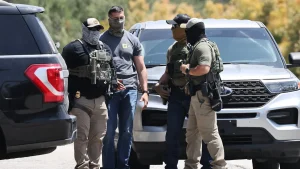
The timing of Trump’s announcement is no accident. It follows a deadly attack in Washington, D.C., where two National Guard troops were ambushed near the White House. One Guardsman, 20-year-old Spc. Sarah Beckstrom, later died of her wounds. The shooter, an Afghan national brought to the U.S. during Biden’s Operation Allies Welcome, reignited debate about immigration vetting.
In the hours after the shooting, Trump unveiled a series of aggressive immigration reforms—among them, a temporary halt on all migration from “Third World Countries” and a review of green cards issued to individuals from 19 designated nations.
Several of those Biden-era immigration decisions, Trump noted, were made on documents he claims were signed through the autopen rather than by Biden himself.
The implication is unmistakable: if those decisions were not personally signed, they may be subject to reversal.
Mounting Questions for the Biden Team
Former Biden administration officials are already preparing for a wave of questions. Some defended their processes, arguing that every document signed—with pen or autopen—was approved by the former president.
Others, speaking privately, acknowledged that Biden’s schedule and pace required heavy delegation. One former official said staffers were routinely authorized to “manage signature logistics” during high-volume periods.
For the Trump administration, that admission is exactly the point.
If Biden was disengaged—even at a procedural level—Trump argues the American people were not truly being governed by the man they elected.
The Political Impact
For many older conservative voters, the autopen issue validates their instinct that Biden’s presidency was a façade—run by staff, managed by handlers, and propped up by an administration reluctant to show the president publicly.
Trump’s announcement taps directly into that sentiment, positioning him as the one willing to expose what he calls “the truth behind the curtain.”
Democrats, meanwhile, accuse Trump of undermining democratic norms by attempting to erase the decisions of a former president. But the White House’s refusal to answer direct questions—deflecting instead to Trump’s posts—did little to calm the waters.
A President Who Signs His Own Work
Trump has frequently contrasted himself with Biden on this issue, boasting that he uses the autopen only for “very unimportant papers.”
“To sign pardons and all of the things that he signed with an autopen is disgraceful,” Trump said earlier this year.
That distinction resonates with supporters who see Trump as an engaged, energetic executive—and view Biden as having outsourced the duties of the office.
Immigrant Policy, Biden Directives, and What Comes Next
Trump’s sweeping immigration reforms, announced shortly after the D.C. shooting, are now intertwined with his challenge to Biden’s autopen-signed actions. Trump vowed to:
-
Pause migration from Third World countries
-
Reverse what he calls “millions of Biden illegal admissions”
-
Denaturalize individuals who undermine public safety
-
Deport any foreign national deemed a public charge or security risk
In his words, some of these admissions and protections were approved “through an autopen process that Biden had no involvement in.”
If Trump follows through, countless Biden-era directives could be reexamined—setting off a legal and political battle unlike anything seen in decades.
For now, the nation waits to see how far Trump will take his challenge—and how deeply Biden’s reliance on a centuries-old device will shape the legacy of his presidency.

James Jenkins is a celebrated Pulitzer Prize-winning author whose work has reshaped the way readers think about social justice and human rights in America. Raised in Atlanta, Georgia, James grew up in a community that instilled in him both resilience and a strong sense of responsibility toward others. After studying political science and creative writing at Howard University, he worked as a journalist covering civil rights issues before dedicating himself fully to fiction. His novels are known for their sharp, empathetic portraits of marginalized communities and for weaving personal stories with broader political realities. Jenkins’s breakout novel, Shadows of Freedom, won national acclaim for its unflinching look at systemic inequality, while his more recent works explore themes of identity, resilience, and the fight for dignity in the face of oppression. Beyond his novels, James is an active public speaker, lecturing at universities and participating in nonprofit initiatives that support literacy and community empowerment. He believes that storytelling is a way to preserve history and inspire change. When not writing, James enjoys jazz music, mentoring young writers, and traveling with his family to explore cultures and stories around the world.