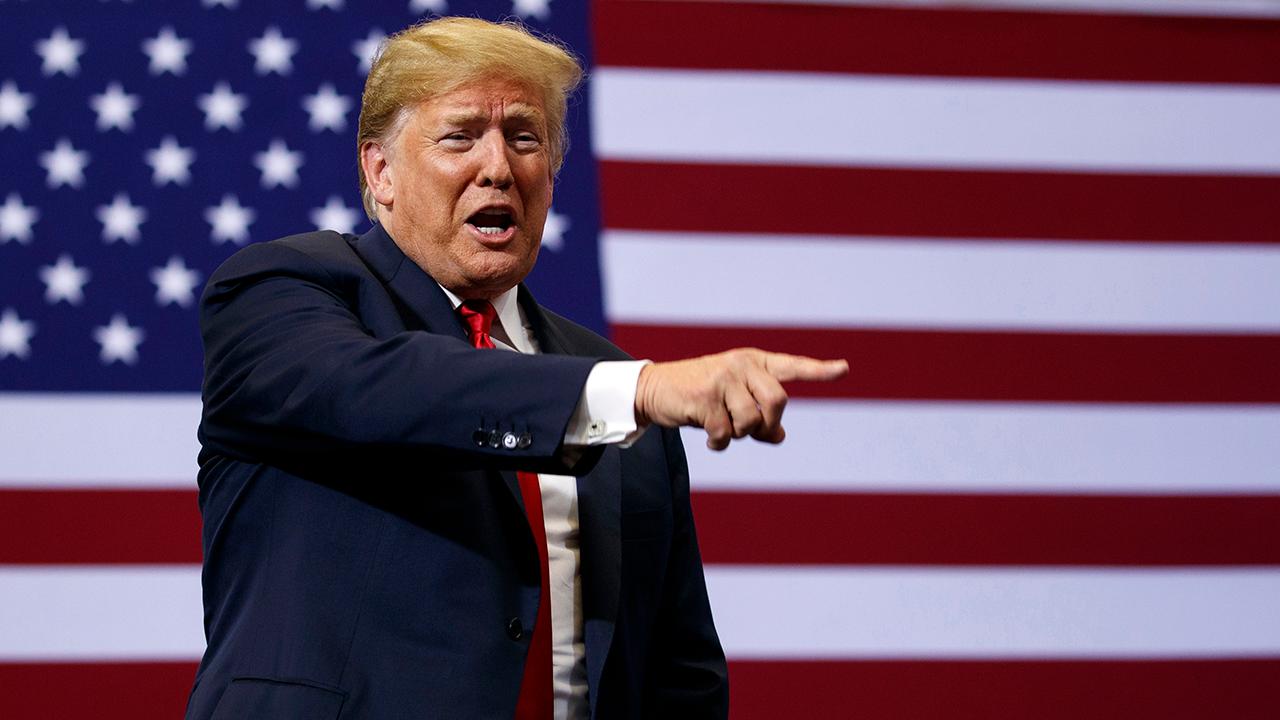
President Donald Trump has released a comprehensive national security blueprint aimed at redefining the United States’ position on the global stage. The newly unveiled document, formally titled the National Security Strategy (NSS), is the first such strategy issued since Trump returned to the White House for a second term. It outlines the administration’s approach to global threats, domestic security, and strategic priorities, emphasizing sovereignty, economic independence, and military readiness.
“This document is a roadmap to ensure that America remains the greatest and most successful nation in human history, and the home of freedom on earth,” Trump wrote in the attached letter accompanying the strategy. “In the years ahead, we will continue to develop every dimension of our national strength.” The document is 33 pages long and addresses a broad spectrum of issues, from immigration and trade to military power and alliances.
Mass Migration
One of the most striking elements of Trump’s NSS is the administration’s stance on migration. The document declares the “end of mass migration,” framing uncontrolled population flows as a national security risk. According to the strategy, border security must be the “primary element of national security.” Trump’s administration has argued that countries historically controlled immigration to safeguard stability and economic strength, and the NSS reinforces this perspective.
“We want full control over our borders, over our immigration system, and over transportation networks through which people come into our country—legally and illegally,” the document reads. “We want a world in which migration is not merely ‘orderly’ but one in which sovereign countries work together to stop rather than facilitate destabilizing population flows, and have full control over whom they do and do not admit.”
The policy reflects ongoing domestic efforts to crack down on illegal immigration. Federal authorities have reportedly carried out numerous operations to detain and deport individuals who entered the country illegally or committed crimes while residing in the U.S. Simultaneously, the administration has halted processing of asylum applications pending a review of the refugee vetting system. Trump’s approach underscores a broader vision of maintaining sovereignty and national security by controlling who enters the United States.
The strategy also emphasizes that the U.S. military may play a role in border enforcement, noting that troops have been deployed to prevent “invasion” by unauthorized migrants. This militarized approach to border security is presented as a key mechanism for protecting American citizens and ensuring the integrity of the nation’s immigration system.
China as a Strategic Challenger
The NSS explicitly names China as a primary challenger to U.S. power, influence, and economic interests. According to the document, decades of “mistaken American assumptions” have allowed Beijing to gain advantages over the United States, creating vulnerabilities in technology, trade, and strategic positioning.
“To preserve American leadership, we must address the challenges posed by China, which seeks to extend its global influence and undermine our competitive edge,” the strategy states. Trump’s plan emphasizes protecting sensitive technologies and preventing foreign investments that could compromise national security.
The blueprint also outlines the administration’s intent to “rebalance” the economic relationship with China. Trade is to be focused on fairness and reciprocity, ensuring that the United States does not suffer strategic or financial disadvantage. The document cites the nation’s $30 trillion economy in 2025 and projects that, with the right policies, U.S. GDP could grow to $40 trillion in the 2030s. This economic expansion is framed as a critical pillar for sustaining America’s status as the world’s leading power.
In addition to economic measures, the strategy emphasizes maintaining a technological and military edge. By safeguarding intellectual property, critical supply chains, and research innovations, the administration hopes to prevent China from gaining strategic advantages that could threaten U.S. national security. Trump’s NSS presents these measures as part of a holistic effort to strengthen America’s global position across multiple domains.
Critique of Europe
The strategy document also delivers a critical assessment of Europe, portraying the continent as vulnerable due to demographic trends, immigration policies, and perceived political weakness. The NSS warns that Europe faces “civilizational erasure” if current trends continue, pointing to declining birthrates, immigration policies, censorship of free speech, and suppression of political opposition as key factors.
“Should present trends continue, the continent will be unrecognizable in 20 years or less,” the document states. “As such, it is far from obvious whether certain European countries will have economies and militaries strong enough to remain reliable allies.”
While the NSS critiques Europe, it also suggests that the United States can play a role in promoting “European greatness” by encouraging policies and attitudes that strengthen resilience against internal and external pressures. The strategy calls for cultivating resistance to the continent’s perceived decline and promoting cooperation among nations that maintain shared democratic values and security interests.
The document also points to challenges faced by European allies in dealing with Russia, particularly in the context of the ongoing Russia-Ukraine conflict. The NSS asserts that Europe’s response has been inconsistent, and domestic economic pressures have hindered the continent’s ability to fully support American-led initiatives. This critique reinforces the Trump administration’s emphasis on ensuring that alliances are reciprocal and that the U.S. does not shoulder disproportionate burdens.
Broader Strategic Goals
Beyond migration, China, and Europe, the NSS outlines several broader objectives aimed at reinforcing U.S. leadership globally. These include:
-
Strengthening Military Readiness: Trump’s blueprint emphasizes modernization of the armed forces, development of advanced technologies, and readiness to respond to global threats across land, sea, air, and cyber domains.
-
Energy Independence: The document highlights energy security as a critical component of national strength, prioritizing domestic production and strategic reserves to reduce reliance on foreign energy sources.
-
Economic Growth: Alongside trade policies with China, the strategy calls for investment in infrastructure, technology, and workforce development to maintain long-term economic competitiveness.
-
Counterterrorism and Homeland Security: The NSS underscores the need to combat terrorism both domestically and abroad, emphasizing intelligence, law enforcement coordination, and border security measures.
-
Cybersecurity: With increasing threats from state and non-state actors, the document stresses the importance of defending critical infrastructure, sensitive government networks, and private sector systems against cyberattacks.
In summary, the blueprint presents a vision of a sovereign, economically robust, and militarily capable United States. It frames America as both a global leader and a country determined to control its borders, assert its interests against rivals, and encourage allies to meet their own security responsibilities.
Political Context and Reaction
The release of the NSS comes amid ongoing debates over Trump’s foreign policy approach and domestic priorities. Critics argue that the document’s stark critique of Europe and hardline stance on migration could strain traditional alliances and inflame tensions with global partners. Supporters, on the other hand, have praised the blueprint for prioritizing U.S. sovereignty, security, and economic strength.
The administration’s focus on China is likely to resonate with policymakers who have long expressed concern over Beijing’s influence in technology, trade, and geopolitics. By framing China as a challenger, the NSS provides a justification for ongoing measures to secure supply chains, protect sensitive industries, and maintain strategic advantage.
Domestically, the emphasis on border security and halting mass migration aligns with Trump’s longstanding political messaging and reinforces his administration’s commitment to “America First” policies. Federal enforcement operations, asylum review changes, and troop deployments along the southern border reflect the practical application of these strategic priorities.
The strategy also sends a message to both Congress and international partners that the United States intends to assert its interests vigorously, whether in trade, military, or diplomatic arenas. Analysts note that the NSS could serve as a roadmap for the next several years of U.S. policy under Trump’s second term, shaping legislative priorities, foreign aid decisions, and defense investments.
Conclusion
President Trump’s National Security Strategy sets forth an ambitious vision for America’s role in the world. By addressing mass migration, identifying China as a strategic challenger, and critiquing European allies, the blueprint underscores the administration’s focus on sovereignty, security, and economic dominance. The document reflects a comprehensive approach, integrating domestic policies with international strategy to safeguard American interests and maintain global leadership.
While the plan has drawn praise from supporters who value a strong, assertive United States, it has also sparked criticism from those concerned about strained alliances, potential diplomatic fallout, and the humanitarian implications of strict migration policies. As the administration moves forward with implementation, the NSS is likely to guide both domestic and international policy decisions, providing a clear framework for Trump’s second term priorities and shaping the trajectory of U.S. global influence.
Ultimately, the release of the NSS highlights the administration’s intent to assert control, protect national interests, and ensure that America remains a preeminent global power, while simultaneously redefining the nation’s relationships with both allies and strategic rivals. The blueprint presents a vision of an America that is secure, prosperous, and unyielding in its pursuit of national strength.

Emily Johnson is a critically acclaimed essayist and novelist known for her thought-provoking works centered on feminism, women’s rights, and modern relationships. Born and raised in Portland, Oregon, Emily grew up with a deep love of books, often spending her afternoons at her local library. She went on to study literature and gender studies at UCLA, where she became deeply involved in activism and began publishing essays in campus journals. Her debut essay collection, Voices Unbound, struck a chord with readers nationwide for its fearless exploration of gender dynamics, identity, and the challenges faced by women in contemporary society. Emily later transitioned into fiction, writing novels that balance compelling storytelling with social commentary. Her protagonists are often strong, multidimensional women navigating love, ambition, and the struggles of everyday life, making her a favorite among readers who crave authentic, relatable narratives. Critics praise her ability to merge personal intimacy with universal themes. Off the page, Emily is an advocate for women in publishing, leading workshops that encourage young female writers to embrace their voices. She lives in Seattle with her partner and two rescue cats, where she continues to write, teach, and inspire a new generation of storytellers.