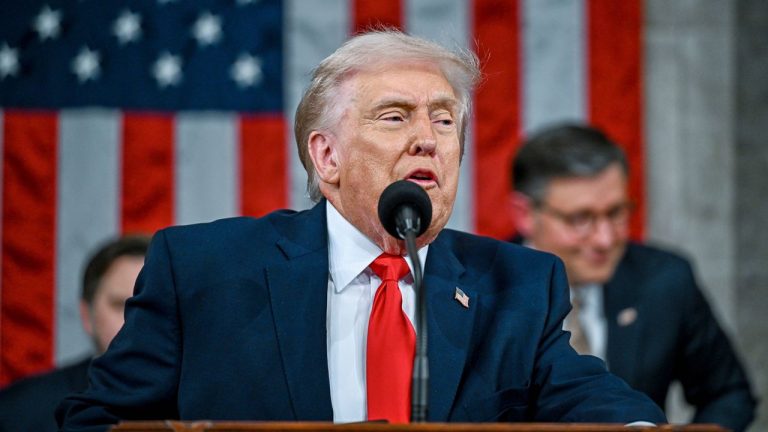
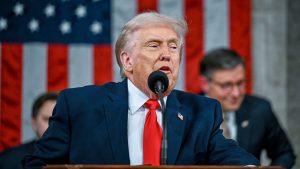
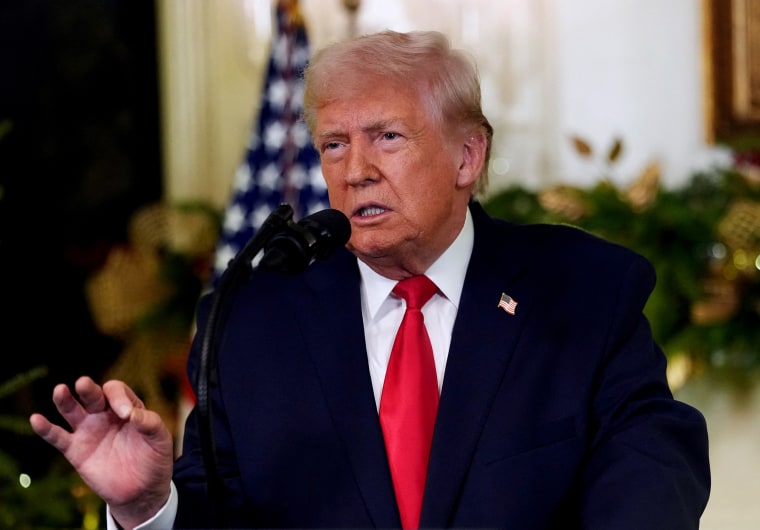
President Donald Trump announced on January 8, 2026, that the United States would begin targeting drug cartels in Mexico with land-based operations, marking a significant escalation in his administration’s anti-narcotics strategy. Speaking in a televised interview with Fox News host Sean Hannity, Trump said the U.S. had successfully eliminated nearly all drug shipments arriving by sea and was now shifting focus to land operations.
“We knocked out 97 percent of the drugs coming in by water, and we are going to start now hitting land with regard to the cartels,” Trump said. He emphasized that criminal syndicates have effectively taken control of Mexico, lamenting the impact of cartel activity on both countries. “The cartels are running Mexico. It’s very sad to watch and see what’s happened to that country. They’re killing 250,000, 300,000 in our country every single year,” he said, referencing the deadly effects of drug trafficking on American communities.
The announcement comes just days after a high-profile U.S. operation led to the capture of Venezuelan leader Nicolás Maduro, who faces criminal charges including narco-terrorism. Officials have framed these actions as part of a broader effort to dismantle regional narcotics networks and combat the trafficking of illegal substances into the United States.
Trump criticized Mexican authorities for failing to address the cartels decisively, singling out President Claudia Sheinbaum. While acknowledging that Mexico is capable of tackling the problem, he described Sheinbaum as “afraid” and maintained that cartel influence in the country limits her authority. Trump said U.S. forces have offered to assist in dismantling the cartels but suggested that unilateral action may be necessary if Mexico does not act.
The Mexican government, however, has firmly rejected any suggestion of foreign intervention. President Sheinbaum stressed that Mexico opposes unilateral military action by the United States and emphasized the importance of respecting national sovereignty. “We categorically reject intervention in the internal affairs of other countries,” she said, highlighting the historical failures of foreign interventions in Latin America to achieve lasting stability or democracy. Mexican officials reiterated that any anti-cartel strategy must involve binational cooperation and respect for Mexico’s territorial integrity.
Trump’s announcement represents a clear escalation from prior efforts, which primarily focused on maritime interdiction of drug shipments. Administration officials have stated that sea-based trafficking has been nearly halted, prompting the pivot to land operations. While details of the land-based campaign remain vague, Trump suggested that operations could involve strikes against cartel leadership or key infrastructure, though he did not specify whether U.S. troops would enter Mexican territory.
Legal experts and international observers have raised concerns over the potential ramifications of land strikes inside a sovereign nation. Under international law, military action on foreign soil without consent can be interpreted as an act of war. Moreover, the U.S. Constitution grants Congress the authority to declare war, and most military operations beyond domestic borders require legislative authorization or formal treaties. Trump has previously suggested that formal declarations of war may not be necessary for anti-drug operations, a stance that has sparked criticism from lawmakers and constitutional scholars.
Domestically, Trump framed the land-based operations as a continuation of his administration’s commitment to public safety. He linked cartel activity directly to the American drug crisis and overdose epidemic, citing high annual mortality figures. While the numbers he referenced—between 250,000 and 300,000 deaths—do not align with official statistics, they underscore the urgency Trump attributes to the campaign against organized crime networks.
The president also reiterated criticism of Mexico for declining U.S. assistance. He argued that while the Mexican government is capable of acting, the entrenched power of cartels has prevented decisive action. Trump framed the United States as taking on the responsibility to protect its citizens and reduce the inflow of drugs into the country.
Analysts note that Trump’s announcement raises significant questions regarding the operational scope of the proposed land strikes. It remains unclear whether U.S. forces would conduct precision raids against cartel leaders, broader ground operations targeting multiple cartel factions, or a combination of intelligence-driven strikes. Without explicit authorization or cooperation from Mexico, the legal and diplomatic consequences of such operations could be profound, potentially destabilizing regional security and complicating U.S.-Mexico relations.
The president’s remarks also come in the context of heightened attention to drug-related violence in both the United States and Mexico. U.S. officials have long warned of the influence of cartels on domestic drug markets and the growing sophistication of trafficking operations. Trump’s administration has employed an aggressive approach, including labeling Mexican cartels as terrorist organizations, a designation aimed at justifying escalated enforcement actions and expanding the legal tools available to U.S. authorities.
Public reaction to the announcement has been mixed. Supporters have praised Trump for taking decisive steps to combat the cartel threat, viewing land strikes as a logical extension of the successful maritime interdictions. Critics, however, have expressed concern about sovereignty, legality, and potential unintended consequences, warning that unilateral military actions in Mexico could escalate violence and provoke international backlash.
Despite these uncertainties, Trump has framed the upcoming operations as necessary to defend American citizens and maintain pressure on cartels. He did not provide a timeline for land-based strikes or elaborate on specific targets, leaving many questions about implementation, operational oversight, and coordination with Mexican authorities.
In summary, Trump’s statement marks a dramatic shift in the U.S. approach to combating drug cartels, signaling a move from primarily defensive, sea-based interdictions to potentially offensive land operations. While the president casts these measures as protective and necessary, legal, diplomatic, and strategic challenges loom large. Observers will closely monitor whether the administration can execute land strikes without igniting broader conflict or straining relations with Mexico and other regional partners.
The announcement also highlights the broader debate about U.S. responsibility for international drug enforcement and the limits of unilateral action. How these operations unfold will likely influence U.S. foreign policy in Latin America for the remainder of Trump’s second term and could redefine the U.S. approach to combating organized crime beyond its borders.

Emily Johnson is a critically acclaimed essayist and novelist known for her thought-provoking works centered on feminism, women’s rights, and modern relationships. Born and raised in Portland, Oregon, Emily grew up with a deep love of books, often spending her afternoons at her local library. She went on to study literature and gender studies at UCLA, where she became deeply involved in activism and began publishing essays in campus journals. Her debut essay collection, Voices Unbound, struck a chord with readers nationwide for its fearless exploration of gender dynamics, identity, and the challenges faced by women in contemporary society. Emily later transitioned into fiction, writing novels that balance compelling storytelling with social commentary. Her protagonists are often strong, multidimensional women navigating love, ambition, and the struggles of everyday life, making her a favorite among readers who crave authentic, relatable narratives. Critics praise her ability to merge personal intimacy with universal themes. Off the page, Emily is an advocate for women in publishing, leading workshops that encourage young female writers to embrace their voices. She lives in Seattle with her partner and two rescue cats, where she continues to write, teach, and inspire a new generation of storytellers.