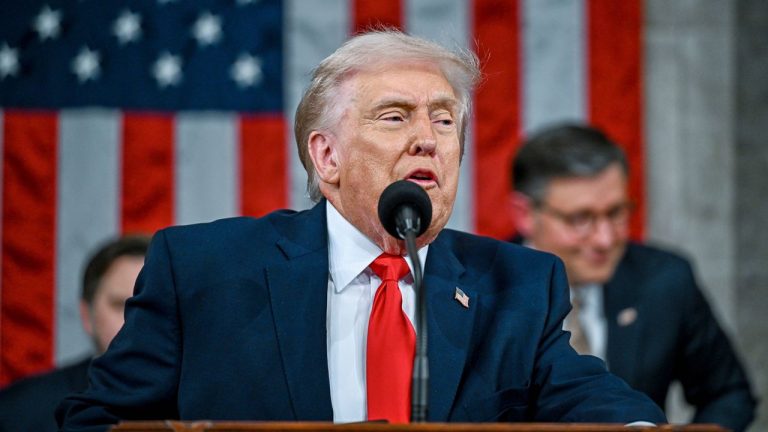
In a dramatic escalation of the United States’ longstanding battle against international drug trafficking, President Donald Trump announced Thursday that the U.S. military will begin launching land strikes against drug cartels, shifting the focus from sea-based interdiction efforts to direct action on land. The move marks a new chapter in what the administration characterizes as its campaign to stop narcotics from reaching American communities — a campaign that has already included extensive maritime operations and controversial foreign interventions.
Trump made the remarks during an interview with Fox News host Sean Hannity, where he emphasized the perceived severity of cartel operations and suggested the situation in Mexico — where the cartels operate with deep roots and influence — had reached a breaking point. According to Trump, 97 percent of drugs entering the U.S. by water have been stopped, prompting a strategic pivot to land-based efforts. But it is his vow to “start now hitting land with regard to the cartels” that has captured media and international attention.
“This fight isn’t just about stopping drugs at the ports or in the sea,” Trump said. “Now we’re going to take it to where it’s being run on the land.” He framed his comments around his belief that cartels are running Mexico and indirectly contributing to hundreds of thousands of American deaths every year.
A New Phase of the Drug War?
If carried out, the shift from maritime interdiction to land strikes would represent one of the most significant U.S. military policy changes in the Western Hemisphere in recent memory. Until now, Trump’s anti-drug campaign had focused largely on cutting off trafficking routes through naval forces in the Pacific and Caribbean and designating major cartels as terrorist organizations. The president has repeatedly called cartel violence a threat to national security and public safety, arguing that organized crime’s influence extends beyond Mexico’s borders into American homes.
In his comments, Trump also claimed that the Mexican government has been unwilling or unable to effectively address cartel power, suggesting that Mexico’s leaders must “get their act together.” He said the U.S. had offered to send troops to assist Mexico but described the Mexican leadership as reluctant, even “afraid,” to take that step. Critics immediately seized on the language as overly confrontational and diplomatically insensitive.
Mexico’s Response
Mexican President Claudia Sheinbaum quickly and firmly rejected the notion of U.S. military involvement on Mexican soil. She reiterated her government’s commitment to sovereignty and non-intervention, telling reporters that any foreign military action would be unacceptable and would violate Mexico’s constitutional principles. She emphasized that Mexico wants cooperation on drug enforcement and security, but not foreign boots on its territory.
“We categorically reject intervention in the internal affairs of other countries,” Sheinbaum said earlier this week, stressing that partnership and dialogue, not military intrusion, are the right path forward. She cited Latin America’s historical struggles with foreign intervention as a cautionary tale against repeating past mistakes.
The Push for Land Strikes
Trump’s announcement reflects frustration within parts of the U.S. government that traditional tactics have not dismantled the cartels’ operational power. While narco-trafficking continues to be a complex transnational problem involving drug production, distribution networks, money laundering, and corruption, Trump has argued that a more direct, forceful strategy is necessary to blunt cartel influence and reduce the flow of narcotics into the United States.
The idea of land strikes has raised numerous questions, both practical and legal. Under U.S. law, military action in a foreign country typically demands either the consent of that country’s government or explicit authorization from Congress. Trump has previously stated that he believes formal war declarations are unnecessary and that certain missions fall within the president’s constitutional authority as commander-in-chief — a stance that has drawn intense debate among legal scholars and lawmakers.
Domestic Political Reaction
Domestically, the announcement has drawn mixed reactions. Supporters within Trump’s base argue that bold action against cartels is long overdue and could be pivotal in halting the flow of dangerous drugs like fentanyl into the U.S. market. According to the Centers for Disease Control and Prevention, tens of thousands of Americans die annually from synthetic opioid overdoses, although estimates vary widely depending on data sources and classification.
However, opposition voices — including some lawmakers from both parties — worry that launching land strikes in another sovereign nation without clear Congressional authorization could be unconstitutional and perilously escalate tensions with a key neighboring country. Some critics also argue that such a military focus could distract from long-term strategies like border security, law enforcement cooperation, economic development, and addiction treatment programs.
Regional and International Implications
Internationally, Trump’s remarks have set off discussions across Latin America and among U.S. allies about the potential for foreign military engagement in domestic cartel affairs. While Mexico has vocally opposed U.S. intervention, other regional governments are watching closely, as the cartels’ reach extends across borders and often intersects with migration, corruption, and security issues that affect multiple nations.
The broader context of Trump’s foreign policy — including his recent military action in Venezuela that resulted in the capture of President Nicolás Maduro — has heightened concerns among some foreign leaders about U.S. intentions in the region. Leaders in Colombia, Cuba, and other countries have also been mentioned by Trump in statements about cartel action, further fueling anxiety about potential escalation beyond Mexico.
What Comes Next
At this stage, the strategy that Trump described — land strikes against cartels — remains a policy direction rather than an executed plan. Trump did not provide specific operational details, timelines, or legal frameworks for how such strikes would be carried out.
The question of whether U.S. forces would operate unilaterally on foreign soil, with or without the consent of that nation’s government, remains unanswered. Military experts and diplomats alike have suggested that such an approach would require careful coordination, clear objectives, and legal grounding to avoid unintended consequences.
As Mexico continues to reject foreign military involvement, the path forward appears complex. Any escalation risks straining bilateral relations and could have implications for trade, migration policy, and regional cooperation on security issues.
A Broader Debate on Drug Policy and National Security
Trump’s announcement underscores the broader national debate over how best to confront the drug crisis and organized crime — whether through military force, law enforcement cooperation, economic aid, or domestic strategies addressing addiction and demand.
For now, the president’s remarks signal an intention to pursue a more aggressive approach against cartels, even as questions remain over feasibility, legality, and diplomatic consequences.
What is clear is that this announcement — bold, controversial, and historically significant — marks a defining moment in U.S. policy toward drug cartels and military engagement abroad. Analysts and policymakers will watch closely to see whether rhetoric evolves into action — and, if so, how it shapes the future of U.S.–Mexico relations and the ongoing war against drugs.