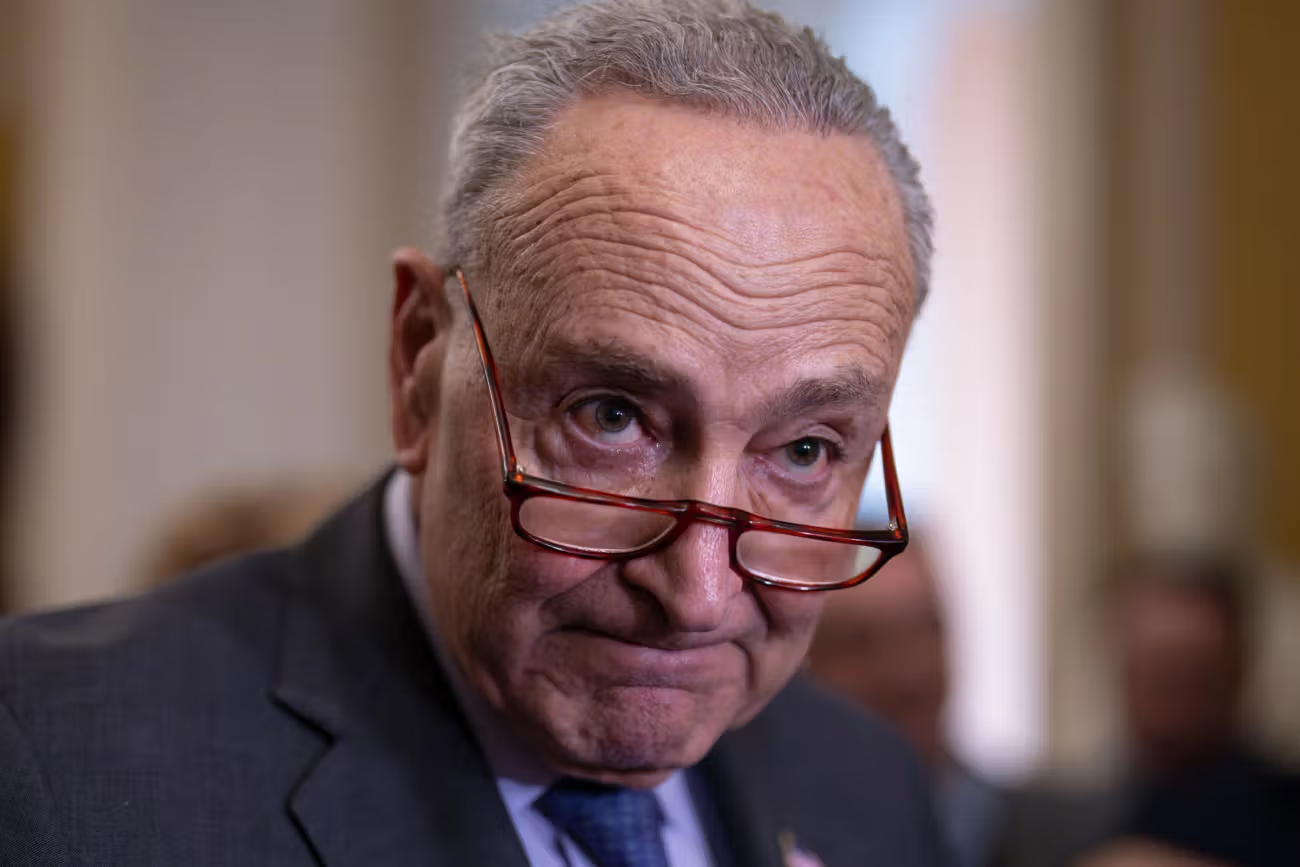
In recent weeks, tensions between President Donald J. Trump and Senate Minority Leader Charles E. Schumer have captured national attention. At the center of the public dispute are sharply contrasting perspectives on leadership priorities, policy execution, and national strategy. What began as a disagreement over specific policy outcomes and administrative decisions quickly escalated into a high-profile political confrontation, with both leaders employing strong rhetoric to advance their positions. This article examines the verified facts surrounding the confrontation, explores the underlying policy and strategic considerations, and analyzes the broader implications for governance and public perception in the United States.
Divergent Perspectives on Policy and Leadership
President Trump recently highlighted a series of actions and negotiations that he described as major accomplishments for the United States. In public statements, he emphasized economic gains, strategic agreements, and policy developments, portraying himself as a proactive leader advancing American interests both domestically and abroad. Trump’s messaging framed these efforts as evidence of effective leadership and a commitment to delivering results even under complex circumstances.
Conversely, Senate Minority Leader Schumer publicly criticized these actions, emphasizing concerns over timing, oversight, and potential risks to national security. Schumer’s statements questioned whether critical safeguards were being maintained and whether leadership decisions adequately considered long-term implications. He urged caution, emphasizing the importance of transparency, institutional review, and legislative oversight in ensuring that policy actions align with the broader interests of the nation.
This contrast reflects a recurring tension in American governance: the balance between executive initiative and legislative oversight. Trump’s approach stresses decisive, high-profile action intended to demonstrate leadership and generate tangible outcomes. Schumer’s approach prioritizes deliberation, oversight, and institutional accountability to protect long-term national interests. Both perspectives have merit, yet their juxtaposition often produces intense political friction.
Verified Facts Underpinning the Confrontation
Several key points are supported by verified reporting and public statements from both leaders:
-
Public Statements and Criticism: Both Trump and Schumer made public statements criticizing each other’s approach. Trump defended his actions as effective and beneficial, while Schumer emphasized oversight and caution, arguing that certain policy decisions posed potential risks.
-
Policy Priorities: Trump cited a series of initiatives, agreements, and negotiations as evidence of progress, highlighting economic, strategic, and policy-related gains. These statements align with publicly reported accounts of administrative actions and international discussions.
-
Concerns Over Oversight: Schumer underscored the importance of legislative review, particularly when policy decisions may have long-term implications for national security or economic stability. He stressed that oversight is critical to ensuring that leadership actions do not compromise essential safeguards.
-
Use of Strong Rhetoric: Both leaders employed emphatic language to convey the significance of their positions. Trump described criticism of his actions as “almost treasonous,” framing opposition in moral as well as political terms. Schumer, in turn, emphasized the potential consequences of unchecked executive action, portraying his critique as a defense of institutional integrity.
While these points are factually supported, certain claims remain disputed or subject to interpretation. For instance, Trump’s assertion of extraordinary economic gains is largely rhetorical, and the precise outcomes of specific initiatives or agreements may not yet be finalized or independently verified. Nevertheless, the overall contours of the confrontation are well documented.
Political and Strategic Implications
The dispute between Trump and Schumer highlights the complex interplay of political strategy, policy execution, and institutional oversight in the United States. On one level, it represents a clash of governance philosophies: Trump prioritizes rapid action and public demonstration of results, while Schumer emphasizes accountability, caution, and institutional review.
This confrontation also underscores the broader role of political messaging. Trump seeks to shape public perception by framing his actions as effective and productive, portraying criticism as both unfair and potentially disloyal. Schumer, conversely, seeks to position himself as a guardian of prudent governance, emphasizing that policy actions must be scrutinized to protect national interests and prevent avoidable risks.
Rhetoric plays a critical role in shaping the debate. By describing criticism as “almost treasonous,” Trump elevates the stakes of dissent, framing opposition not merely as disagreement but as a moral challenge. Schumer’s framing emphasizes prudence and responsibility, appealing to both lawmakers and the public concerned with oversight, transparency, and the safeguarding of critical national interests.
Timing, Optics, and Public Perception
Timing has been a central element of Schumer’s critique. He argued that certain leadership actions were ill-timed, particularly in relation to ongoing domestic issues that demand attention and resolution. According to Schumer, prioritizing specific initiatives without addressing pressing domestic concerns risks undermining public confidence in governance.
Trump, in contrast, framed his actions as essential to achieving concrete policy outcomes. He argued that progress and measurable results should be emphasized over optics, positioning himself as a leader willing to act decisively in the national interest. This tension between perception and substance highlights the challenges leaders face in balancing practical outcomes with public and political expectations.
Public perception remains a powerful force in shaping political discourse. Even actions that produce tangible gains can be overshadowed if they are perceived as neglecting domestic responsibilities or ignoring institutional processes. Political critique, especially when amplified by media coverage, can influence public interpretation of leadership effectiveness and policy success.
The Role of Oversight and Institutional Checks
One of the central themes of the confrontation is the importance of legislative oversight in ensuring responsible governance. Schumer’s criticism underscores the constitutional balance between executive action and congressional review. Oversight mechanisms exist to ensure that policy decisions do not inadvertently compromise national security, economic stability, or institutional integrity.
Unchecked executive action, even when well-intentioned, carries the risk of unintended consequences. By emphasizing oversight, Schumer advocates for careful review of initiatives that may have long-term strategic implications. Trump’s approach, while emphasizing efficiency and results, demonstrates the challenges of acting decisively in an environment where multiple stakeholders hold authority and influence.
This tension is not unique to the current political moment; it reflects an enduring feature of American governance. Balancing the need for agile executive decision-making with the protections afforded by legislative oversight remains a central challenge for leaders navigating complex domestic and international issues.
Broader Lessons and Takeaways
Several lessons emerge from the confrontation between Trump and Schumer:
-
Balancing Executive Initiative and Oversight: The dispute illustrates the ongoing challenge of aligning executive action with legislative review and accountability. Decisions with strategic, economic, or security implications require careful coordination and oversight to ensure long-term stability.
-
Rhetoric Shapes Political Debate: The language employed by both leaders demonstrates how rhetoric influences public perception and frames political contests. Strongly worded statements can elevate the perceived stakes, transform policy disagreements into moral debates, and heighten polarization.
-
Public Perception Matters: Leaders must consider not only the substance of their actions but also how they are perceived. Timing, communication, and optics can significantly affect public confidence and the reception of policy initiatives.
-
Partisan Dynamics Influence Policy Interpretation: Political affiliation and strategic positioning can shape how initiatives are interpreted and debated. The confrontation between Trump and Schumer highlights how partisan dynamics can amplify disagreements, even over verifiable accomplishments.
-
Checks and Balances Remain Vital: The confrontation reaffirms the importance of institutional checks in maintaining accountability. Oversight mechanisms are designed to ensure that actions align with national priorities and protect against unintended consequences, emphasizing the ongoing relevance of constitutional safeguards.
Implications for Governance and Leadership
The clash between Trump and Schumer provides insight into the broader dynamics of leadership, governance, and political strategy. Leaders must navigate the dual pressures of delivering results and maintaining public and institutional confidence. Decisions with far-reaching implications require careful calibration of both substance and perception.
In highly polarized political environments, disagreements over timing, priorities, and rhetoric can overshadow policy outcomes. Even well-intentioned initiatives may be criticized if perceived as misaligned with broader governance responsibilities. As demonstrated in this case, public statements, media coverage, and political framing all play significant roles in shaping how leadership decisions are evaluated.
The confrontation also emphasizes the interdependence of executive action and legislative oversight. Sustainable policy outcomes depend on collaboration, review, and adherence to institutional checks. Failure to engage with these processes can undermine credibility, reduce public trust, and complicate the implementation of initiatives.
Conclusion
The public dispute between President Donald Trump and Senate Minority Leader Charles Schumer exemplifies the intersection of policy, politics, and narrative framing in contemporary governance. Verified facts indicate that both leaders have taken positions reflecting their priorities and interpretations of leadership responsibilities. Trump emphasizes measurable accomplishments, strategic progress, and decisive action, while Schumer stresses oversight, prudence, and protection of institutional integrity.
The rhetoric, timing, and public perception surrounding their disagreement highlight the complex challenges leaders face in balancing policy execution with political realities. As both leaders continue to communicate their positions and influence public discourse, the confrontation serves as a case study in the delicate equilibrium between executive initiative, legislative oversight, and the shaping of public narrative.
Ultimately, the clash between Trump and Schumer underscores the enduring importance of checks and balances, the influence of public perception, and the critical role of rhetoric in modern political leadership. Their confrontation demonstrates that leadership is measured not only by tangible results but also by the ability to navigate political dynamics, maintain institutional credibility, and manage the narratives that shape public understanding.

Emily Johnson is a critically acclaimed essayist and novelist known for her thought-provoking works centered on feminism, women’s rights, and modern relationships. Born and raised in Portland, Oregon, Emily grew up with a deep love of books, often spending her afternoons at her local library. She went on to study literature and gender studies at UCLA, where she became deeply involved in activism and began publishing essays in campus journals. Her debut essay collection, Voices Unbound, struck a chord with readers nationwide for its fearless exploration of gender dynamics, identity, and the challenges faced by women in contemporary society. Emily later transitioned into fiction, writing novels that balance compelling storytelling with social commentary. Her protagonists are often strong, multidimensional women navigating love, ambition, and the struggles of everyday life, making her a favorite among readers who crave authentic, relatable narratives. Critics praise her ability to merge personal intimacy with universal themes. Off the page, Emily is an advocate for women in publishing, leading workshops that encourage young female writers to embrace their voices. She lives in Seattle with her partner and two rescue cats, where she continues to write, teach, and inspire a new generation of storytellers.