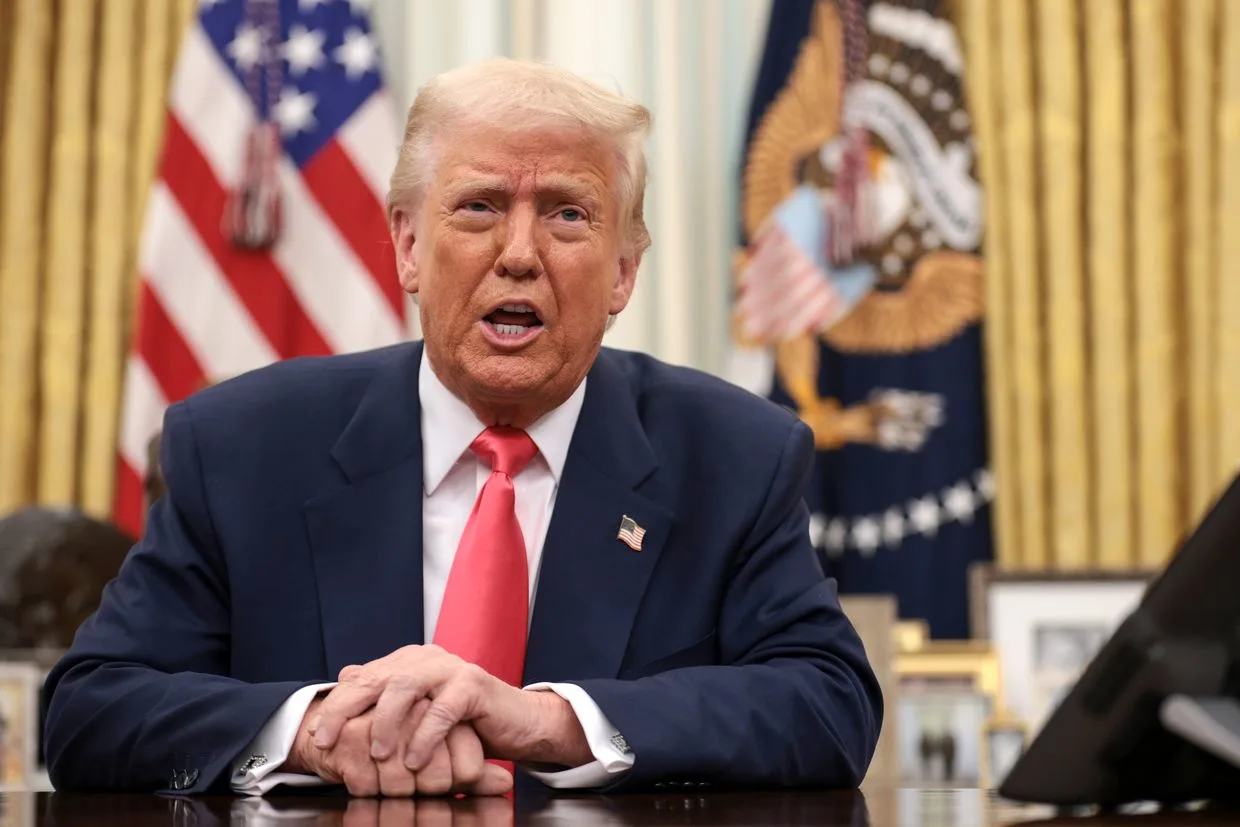
The White House has forcefully responded after Representative Debbie Wasserman Schultz, a prominent Democrat from Florida, attempted to pin responsibility for this week’s shooting of two National Guard members in Washington, DC, on President Donald Trump. Officials quickly noted that the policies allowing the suspect, Rahmanullah Lakanwal, into the United States were actually enacted under the Biden administration, not Trump.
The deadly ambush occurred Wednesday, when Lakanwal reportedly targeted West Virginia National Guard members Sarah Beckstrom and Andrew Wolfe. Beckstrom, 20, was mortally wounded, while Wolfe, 24, remains in critical condition at a DC hospital. Authorities said Lakanwal drove from his home in Bellingham, Washington, to the nation’s capital, but his motive remains unclear.
“This animal would’ve never been here if not for Joe Biden’s dangerous policies, which allowed countless unvetted criminals to invade our country and harm the American people,” White House spokeswoman Abigail Jackson told The Post. Jackson highlighted that the suspect entered the country as part of the Biden Administration’s Operation Allies Welcome, which facilitated the relocation of tens of thousands of Afghan nationals to the United States following the chaotic 2021 withdrawal from Afghanistan.
Jackson did not hold back in her criticism of Wasserman Schultz, who has a long record as a high-profile Democrat, including her previous role as chair of the Democratic National Committee during Trump’s 2016 campaign against Hillary Clinton. “The Trump administration is taking every measure possible — in the face of unrelenting Democrat opposition — to remove these dangerous individuals from the country and clean up the mess left by the Biden administration,” Jackson said. “Instead of defending terrorists, Democrats should join us in protecting the American people.”
The pushback came after Wasserman Schultz appeared on CNN Friday and suggested that Trump should reconsider deploying military forces to cities, questioning the appropriateness of assigning National Guard troops to law enforcement roles. She said, “The president looks everywhere except inward to blame his own policies. We need to make sure that we don’t have our military deployed in our cities handling law enforcement responsibilities.”
Wasserman Schultz argued that the deployment of military troops in Washington, DC, and other cities could create risks rather than mitigate them. She noted that law enforcement agencies are fully capable of managing criminal activity, implying that the presence of uniformed troops was unnecessary. “Particularly not when they haven’t coordinated closely with city leadership, and when we have law enforcement that is quite capable of handling the criminal justice issues that require police focus,” she said.
Despite these remarks, White House officials emphasized that Lakanwal’s entry into the United States predated Trump’s administration. CIA Director John Ratcliffe confirmed that the suspect had fought alongside U.S. forces in Afghanistan, adding context to his relocation to the United States under the Biden-era refugee program. More than 70,000 Afghans were brought to the U.S. under Operation Allies Welcome, many as part of efforts to resettle individuals who had assisted U.S. troops during the conflict.
While Lakanwal’s asylum was officially approved under the Trump administration in April 2025, critics pointed out that this process simply extended or finalized a status that had begun under Biden. National security officials, including Joe Kent, director of the National Counterterrorism Center at the Office of the Director of National Intelligence, echoed the White House’s position, stating that the Biden administration bore responsibility for allowing the suspect into the country in the first place.
In response to the attack, President Trump quickly ordered the deployment of an additional 500 National Guard troops to Washington, DC. This move was part of broader measures to ensure public safety in the wake of the ambush, which left the city on high alert. Already, Trump had declared a public safety emergency in August and initially deployed 800 Guard troops to bolster law enforcement efforts. With the new deployment, approximately 2,000 National Guard members are now stationed in the capital to assist local authorities in maintaining security.
The tragic events of Wednesday highlighted both the challenges and controversies surrounding the deployment of military personnel in civilian areas. While some officials argue that National Guard troops provide a necessary deterrent to crime and targeted attacks, critics like Wasserman Schultz contend that relying on the military for domestic law enforcement roles raises questions about civil liberties, chain of command, and coordination with local authorities.
White House officials, however, stressed that the safety of U.S. citizens remains the administration’s top priority. “We cannot allow bureaucratic politics or partisan finger-pointing to interfere with the protection of American lives,” Jackson said. “The safety and security of our National Guard members and the public are paramount. Our actions are focused entirely on ensuring that these threats are neutralized and prevented in the future.”
Authorities have not revealed Lakanwal’s motive, but they confirmed that the suspect had traveled across the country before targeting Beckstrom and Wolfe. Neighbors described Lakanwal as relatively quiet but noted that he had been in the U.S. since 2021 as part of the Afghan relocation program. While his prior activities included collaboration with U.S. forces in Afghanistan, questions remain about how and why he ultimately carried out the attack in the nation’s capital.
The ambush has sparked renewed scrutiny of immigration and resettlement policies, particularly those implemented during the Biden administration’s Operation Allies Welcome. Many Republican lawmakers have argued that the resettlement programs failed to adequately vet entrants, leaving the U.S. vulnerable to security risks. White House officials cited these lapses as part of their defense against what they see as politically motivated criticisms from Democrats like Wasserman Schultz.
In addition to deploying National Guard troops, President Trump has ordered an immediate review of asylum applications and the status of migrants from countries deemed “high-risk” for security concerns. The administration’s goal, according to a White House spokesperson, is to ensure that all entrants undergo thorough vetting and that any potential threats are addressed proactively.
The shooting has also prompted discussions about broader public safety measures in urban areas, particularly those with large federal presences. By stationing thousands of National Guard members in Washington, DC, officials aim to deter future attacks and reassure the public that the city’s critical infrastructure and personnel are protected.
While Trump’s actions have drawn support from some quarters, the debate remains highly partisan. Democrats continue to challenge the president’s approach, arguing that militarization of civilian spaces may be an overreach and that long-term solutions require a stronger focus on intelligence, law enforcement coordination, and community-based safety initiatives.
Meanwhile, the families of the victims have called for accountability and reassurances that such attacks will not happen again. Beckstrom’s tragic death has drawn widespread attention, and Wolfe remains hospitalized in critical condition. Public outcry has highlighted both the human toll of the attack and the political fallout, with lawmakers and officials weighing the implications of policy decisions made across multiple administrations.
The White House has used the controversy to reinforce its narrative that ensuring public safety requires decisive action. Officials point to the rapid deployment of troops, the ongoing investigation, and measures to tighten vetting procedures as evidence of the administration’s commitment to protecting citizens from threats both foreign and domestic.
As the investigation continues, both political leaders and national security experts are calling for careful consideration of how immigration policies intersect with public safety. While the Trump administration emphasizes swift enforcement and preventive measures, Democrats like Wasserman Schultz focus on the need for coordination with local law enforcement and the importance of civil liberties in deploying military personnel domestically.
The debate is likely to intensify as more details about Lakanwal’s background, motives, and connections emerge. Intelligence officials, federal investigators, and policy analysts are all scrutinizing the chain of events that allowed the suspect to enter the country and plan an attack, while political leaders continue to use the incident to advance their policy positions.
For now, President Trump has maintained that public safety will take precedence over partisan disputes. The deployment of 2,000 National Guard troops in Washington, DC, combined with expedited reviews of asylum applications and border security measures, represents the administration’s attempt to address immediate threats while signaling a broader commitment to national security.
White House officials have emphasized that attributing blame for the attack requires an accurate understanding of the policies in place when the suspect arrived in the country. Jackson said, “Political finger-pointing is no substitute for accountability. The American people deserve clear-eyed facts, swift action, and a government focused on protecting them — not partisan blame games.”
In the coming days, investigators are expected to provide updates on Lakanwal’s charges, including the possibility of upgrading them to first-degree murder depending on the ongoing condition of Andrew Wolfe. The tragic event continues to dominate news coverage, highlighting the intersection of public safety, immigration policy, and political accountability.
While debates rage on Capitol Hill, the families of the victims and the broader public await answers. The DC shooting underscores the complex challenges facing policymakers, law enforcement, and national security officials as they balance humanitarian obligations, immigration oversight, and the imperative to protect American citizens from harm.

Emily Johnson is a critically acclaimed essayist and novelist known for her thought-provoking works centered on feminism, women’s rights, and modern relationships. Born and raised in Portland, Oregon, Emily grew up with a deep love of books, often spending her afternoons at her local library. She went on to study literature and gender studies at UCLA, where she became deeply involved in activism and began publishing essays in campus journals. Her debut essay collection, Voices Unbound, struck a chord with readers nationwide for its fearless exploration of gender dynamics, identity, and the challenges faced by women in contemporary society. Emily later transitioned into fiction, writing novels that balance compelling storytelling with social commentary. Her protagonists are often strong, multidimensional women navigating love, ambition, and the struggles of everyday life, making her a favorite among readers who crave authentic, relatable narratives. Critics praise her ability to merge personal intimacy with universal themes. Off the page, Emily is an advocate for women in publishing, leading workshops that encourage young female writers to embrace their voices. She lives in Seattle with her partner and two rescue cats, where she continues to write, teach, and inspire a new generation of storytellers.