Federal action taken this week has quietly reshaped the future of a fast-growing segment of the U.S. energy sector, setting off debate across Washington, state governments, and coastal communities. While the announcement was brief and technical on the surface, officials say the decision was driven by concerns far more serious than economics or environmental policy.
At first, the move appeared procedural: a pause, not a cancellation; a review, not a reversal. But as details have emerged, it has become clear that the implications stretch well beyond energy markets—and into the realm of national defense.
A Sudden Pause Raises Questions
The decision affects several large-scale projects already under construction, developments that have been years in the making and supported by billions of dollars in investment. Workers, contractors, and state officials were informed that activity would be suspended while federal agencies reassess potential risks.
Initially, federal officials offered limited explanation, saying only that multiple departments were coordinating on a broader review. That vagueness prompted speculation: Was this about costs? Environmental concerns? Regulatory compliance?
The answer, officials now say, lies elsewhere.
Defense Officials Step In
As the pause took effect, it became apparent that the concerns originated not with energy regulators, but with the U.S. military.
Defense analysts had raised alarms about how certain large-scale infrastructure installations could affect radar systems used to protect the country—particularly along the East Coast, where population density and military assets are concentrated.
According to federal officials familiar with the review, the size, height, and movement of the structures under construction posed a risk of interfering with radar detection, potentially obscuring real targets or creating false signals.
In defense terms, that is not a minor issue.
Why Radar Matters
Military radar systems are designed to track aircraft, ships, and other objects critical to national security. Interference—known as “radar clutter”—can degrade these systems, making it harder to distinguish legitimate threats from background noise.
Experts have long acknowledged that tall, rotating structures can reflect electromagnetic signals in unpredictable ways. In civilian contexts, this may affect weather forecasting or air traffic control. In military contexts, the stakes are far higher.
Defense officials reportedly concluded that the interference risks associated with these projects were not hypothetical, but credible enough to warrant immediate action.
The Projects in Question
Only further into the review did it become clear just how sweeping the pause would be.
All five major offshore energy projects currently under construction were affected. These include developments led by both U.S. and foreign energy companies, some of which had already begun installing massive structures offshore.
The projects are located primarily along the Atlantic coast, in proximity to key shipping lanes, military installations, and densely populated regions.
Federal agencies emphasized that the pause applies across the board, not selectively, underscoring the seriousness of the underlying concerns.
The Administration’s Broader Strategy
This week’s action did not emerge in isolation. It builds on a series of steps taken earlier this year to reevaluate federal energy policy, particularly as it relates to large-scale projects subsidized or incentivized under previous administrations.
Officials within the Department of the Interior have repeatedly expressed skepticism about the long-term reliability, cost, and security implications of certain energy sources—especially those involving foreign-controlled companies or complex offshore infrastructure.
In August, the department launched a comprehensive review of offshore energy regulations, citing national security, environmental impact, and economic fairness as core concerns.
This week’s pause represents the most concrete outcome of that review so far.
Leadership Responds Publicly
Interior Secretary Doug Burgum addressed the issue directly, framing the move as a matter of common sense and national priorities.
In public comments, he described the paused projects as expensive, unreliable, and heavily subsidized, arguing that they deliver far less energy than advertised when compared to traditional sources.
He also highlighted a stark comparison: a single natural gas pipeline, he said, can supply as much energy as all five paused projects combined.
More importantly, Burgum stressed that security—not ideology—was driving the decision.
The President’s Role
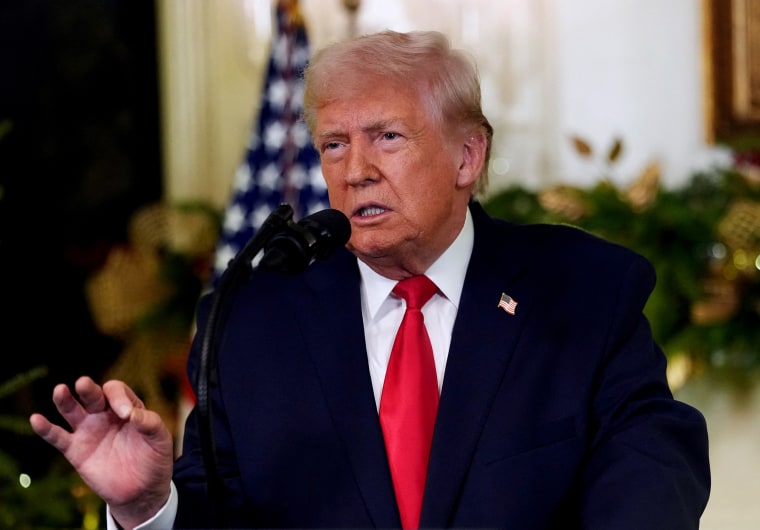
The pause aligns closely with President Donald Trump’s longstanding position on energy and national defense.
Earlier this year, Trump issued a memorandum temporarily withdrawing large portions of the U.S. Outer Continental Shelf from offshore energy leasing while directing a top-to-bottom review of existing permits.
That memo cited potential harm to navigational safety, transportation infrastructure, marine life, commercial activity, and—critically—national security.
While existing leases were initially preserved, the president made clear that no project would move forward if it posed a risk to the country’s safety.
This week’s action reflects that policy in practice.
What Experts Have Said for Years
The concerns raised by the military are not new. Federal agencies, including the Department of Energy, have long documented how large turbines and similar structures can interfere with radar operations.
Rotating blades can appear as moving objects, masking aircraft or vessels and complicating tracking systems. Reflective towers can distort signals, reducing detection sensitivity.
A federal working group has spent years studying mitigation strategies, but officials now say those solutions may not be sufficient in all locations—particularly near critical defense zones.
Economic and Political Fallout
The pause has already sparked backlash from state leaders and industry groups, who warn of job losses, sunk costs, and disrupted supply chains.
Supporters of the projects argue that mitigation measures can address radar concerns and accuse the administration of using security as a pretext for rolling back energy initiatives.
The administration rejects that claim, noting that the decision was triggered by findings from defense officials, not political appointees.
Behind closed doors, some lawmakers have acknowledged that the radar issue is difficult to dismiss.
What Happens Next
Federal agencies will now work with leaseholders, state governments, and defense experts to determine whether the identified risks can be mitigated—or whether some projects will need to be altered, relocated, or abandoned entirely.
No timeline has been set for when construction might resume.
Officials stress that the pause is precautionary, but they have also made clear that national security will outweigh economic or political considerations.
A Larger Signal
Only near the end of the process does the broader meaning become clear.
This is not just about energy projects. It is about how infrastructure decisions intersect with military readiness, technological vulnerability, and sovereignty.
By stepping in when defense officials raised alarms, the Trump administration has signaled that security concerns will take precedence—even when billions of dollars and powerful interests are involved.
For supporters, it is a return to a defense-first mindset. For critics, it is a disruptive shift in energy policy.
For now, one thing is certain: the pause has forced a national conversation that goes far beyond wind, turbines, or power grids—and into how the country balances innovation with security in an increasingly complex world.