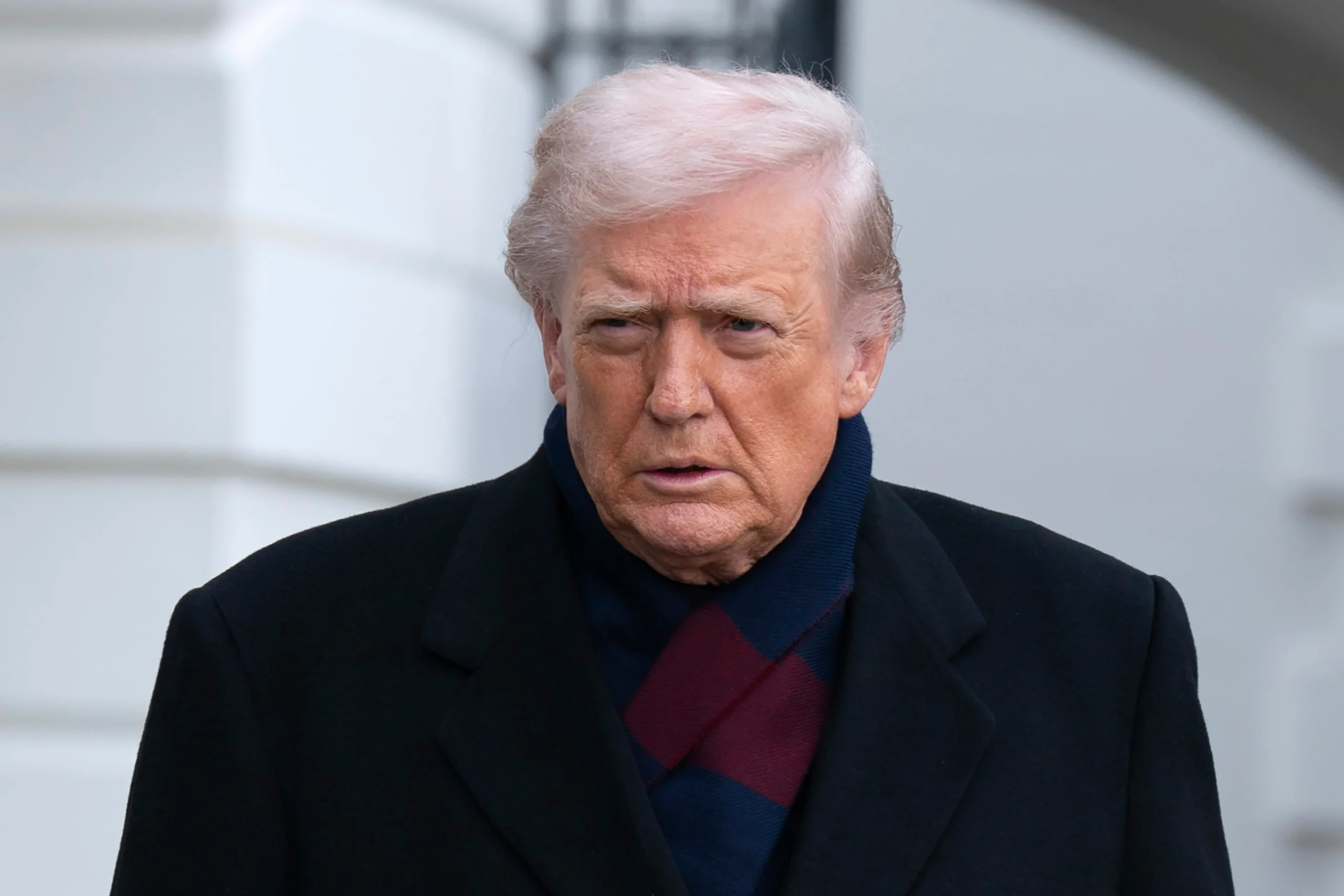
The Oval Office occupant used a rare prime-time address Wednesday night to draw a line under the first year of his return to power, offering supporters a familiar mix of confrontation, self-congratulation, and grievance while leaving critics largely unmoved. The speech, delivered from the Diplomatic Reception Room of the White House, was brief by modern standards but dense with claims, accusations, and political signaling aimed squarely at a polarized electorate.
The address came at a challenging moment. Public approval ratings have softened, particularly on affordability and cost-of-living concerns, which continue to weigh heavily on voters. At the same time, loyalists point to stricter border enforcement and an aggressive posture in the culture wars as evidence that the administration is delivering on its core promises.
Against that backdrop, the speech produced a handful of clear takeaways—some expected, one mildly surprising, and several revealing about the political strategy heading into the year ahead.
1. A rally-style performance, not a reset
From its opening moments, the address made clear it was not designed to reset the political narrative or reach undecided voters. Instead, it closely resembled the cadence and content of a campaign rally speech, transplanted into the formal setting of the White House.
The president opened by asserting that he had “inherited a mess,” a line that has become a staple of his public rhetoric. While this framing continues to resonate with his base, there is growing evidence that it is losing potency among swing voters who are more focused on present-day economic pressures than on assigning blame for past administrations.
The bulk of the roughly 17-minute speech consisted of familiar themes: denunciations of political opponents, sweeping claims about policy successes, and sharply worded cultural critiques. Immigration, crime, and education featured prominently, with the president portraying himself as a defender of national strength and traditional values.
The delivery style reinforced that message—but not necessarily its effectiveness. The speech was delivered at a rapid pace, frequently at near-shouting volume, and often jumped abruptly from one topic to another. While this high-energy approach is effective in rally settings, it undercut coherence in a nationally televised address intended to project authority and reassurance.
Journalists present in the room later noted that the speech appeared carefully timed to meet broadcast network requirements, a fact underscored by a brief exchange afterward in which the chief of staff reportedly praised the president for keeping it short.
2. A surprise announcement aimed at the military
The most concrete piece of news in the address concerned the armed forces.
The president announced that more than 1.4 million active-duty service members would receive a one-time payment of $1,776, which he described as a “warrior dividend.” He added that the checks were “already on the way” and framed the move as a gesture of gratitude to those serving the country.
For military families, the payment will likely be welcome, particularly in communities where service members are concentrated and cost pressures have intensified. Politically, the announcement reinforces the administration’s effort to portray itself as firmly aligned with the military, a constituency that has long been central to its electoral coalition.
That said, the broader political impact is likely to be limited. While the bonus may generate goodwill among recipients, it is unlikely to dramatically alter national polling trends, particularly given persistent voter concerns about inflation, housing costs, and health care expenses.
Recent polling underscores that challenge. A survey released earlier this week by The Economist/YouGov found job approval underwater, with a majority of respondents expressing disapproval of the president’s performance.
3. Silence on Venezuela despite rising speculation
In the days leading up to the address, speculation swirled that a major foreign policy announcement—particularly regarding Venezuela—might be imminent.
The administration has recently escalated its rhetoric toward Caracas, including social media posts calling for a “total and complete blockade” of oil shipments linked to the Venezuelan government. That language fueled concerns among some supporters, especially those wary of foreign entanglements, that a more aggressive course could be announced.
Prominent conservative commentators added to the speculation, suggesting the address might include a declaration of military action or a dramatic shift in policy toward President Nicolás Maduro’s regime.
In the end, none of that materialized. Venezuela went unmentioned in any substantive way, and no new foreign policy initiatives were announced.
The omission may have been deliberate. While hawkish rhetoric plays well with certain segments of the base, the prospect of military involvement abroad remains deeply unpopular with others, including parts of the MAGA coalition that prioritize domestic issues and oppose foreign wars.
4. A familiar pattern of disputed and misleading claims
As has become routine, the address included a series of claims that immediately drew scrutiny from fact-checkers.
Among them was the repeated assertion that drug prices had fallen by as much as 600 percent—an arithmetical impossibility, as a price reduction cannot exceed 100 percent. The president has made similar claims in the past, and they have consistently been debunked.
He also reiterated a claim that $18 trillion in new investment had been attracted to the United States. Independent analyses have previously noted that this figure significantly overstates confirmed investment, often counting announced or speculative commitments as completed projects.
Inflation featured prominently as well. In the opening moments of the speech, the president said he had inherited inflation that “some would say” was the worst in U.S. history. Available data does not support that characterization. Inflation stood at 3.0 percent when he took office and remains at roughly the same level today—far below historical peaks.
Such exaggerations are a defining feature of his rhetorical style and remain effective with supporters who view them as symbolic rather than literal. However, they also reinforce skepticism among voters already inclined to doubt his credibility.
It was later in the address that President Donald Trump directly leaned into these claims as part of a broader narrative portraying his administration as uniquely capable of restoring economic stability.
5. Democrats cast as villains on affordability and health care
Perhaps the most politically telling aspect of the speech was the sustained effort to assign blame for affordability and health care costs to Democrats.
The president has shown visible frustration in recent weeks over polling that shows weak approval on cost-of-living issues. In the address, he sought to redirect that frustration outward, repeatedly referring to “the Democrat inflation disaster” and accusing the opposition party of robbing Americans of homeownership and the “American dream.”
Health care was treated similarly. He derisively labeled the Affordable Care Act the “Unaffordable Care Act” and blamed Democrats for rising insurance premiums. He also accused them of being “controlled” by health insurance companies, despite recent legislative fights centered on extending subsidies for people purchasing coverage through ACA exchanges.
This line of attack reflects a strategic calculation: rather than acknowledge voter dissatisfaction with prices, the administration is doubling down on partisan blame, betting that polarization will outweigh economic anxiety.
Whether that approach succeeds remains uncertain. While it energizes core supporters, it risks alienating voters who are less interested in partisan fault-finding than in tangible relief from rising costs.
Bottom line
The address offered little in the way of policy breakthroughs or tonal shifts. Instead, it reinforced a governing style that closely mirrors campaign mode: confrontational, fast-paced, and designed to excite supporters rather than persuade skeptics.
For allies, it was a reminder of why they back the president. For critics, it confirmed their doubts. And for undecided voters struggling with everyday expenses, it may have raised as many questions as it answered.
As the second year of this term unfolds, the challenge remains the same: whether a politics built on loyalty, grievance, and rhetorical force can overcome stubborn economic concerns that continue to dominate the public mood.

Emily Johnson is a critically acclaimed essayist and novelist known for her thought-provoking works centered on feminism, women’s rights, and modern relationships. Born and raised in Portland, Oregon, Emily grew up with a deep love of books, often spending her afternoons at her local library. She went on to study literature and gender studies at UCLA, where she became deeply involved in activism and began publishing essays in campus journals. Her debut essay collection, Voices Unbound, struck a chord with readers nationwide for its fearless exploration of gender dynamics, identity, and the challenges faced by women in contemporary society. Emily later transitioned into fiction, writing novels that balance compelling storytelling with social commentary. Her protagonists are often strong, multidimensional women navigating love, ambition, and the struggles of everyday life, making her a favorite among readers who crave authentic, relatable narratives. Critics praise her ability to merge personal intimacy with universal themes. Off the page, Emily is an advocate for women in publishing, leading workshops that encourage young female writers to embrace their voices. She lives in Seattle with her partner and two rescue cats, where she continues to write, teach, and inspire a new generation of storytellers.