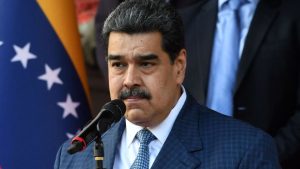
Several prominent Republican lawmakers and leaders are tempering their public support for President Donald Trump’s controversial statement that the United States would “run” Venezuela following the reported capture of Venezuelan President Nicolás Maduro, deepening a debate within the GOP about foreign policy, presidential authority, and strategic priorities.
The comments come amid intense scrutiny after Trump announced a bold military operation in Venezuela that he said resulted in Maduro and his wife being taken into U.S. custody. While many Republicans rallied around the president’s decisive actions, some top figures have taken a more cautious tone — particularly concerning Trump’s claim that the U.S. should assume governing authority in Venezuela until a transition of power is arranged.
GOP Leaders Clarify Their Positions
In the days following the president’s remarks, several Republican officeholders and party leaders publicly clarified that while they support holding Maduro accountable, they do not endorse or expect the United States to govern a foreign nation indefinitely.
One senior Republican senator said that while Trump’s efforts to confront alleged tyranny and narco-criminality are worthy of attention, statements suggesting the U.S. will “run” Venezuela raise complex legal and diplomatic questions.
Other GOP lawmakers highlighted the importance of distinguishing between taking strong action against a foreign dictator and assuming the long-term responsibilities of governance in another country — something they argue could drag the United States into prolonged conflict and strategic overreach.
Historical Reluctance to Nation-Building
Some Republicans referenced past experiences in Iraq and Afghanistan to explain their unease with Trump’s phrasing, noting that direct involvement in governing foreign nations has been costly, difficult, and politically divisive. These lawmakers emphasize that U.S. forces can help enable transitions, support democratic institutions, and apply pressure on authoritarian regimes — but direct governance is not a policy they see as sustainable or constitutionally supported.
One representative noted that Republicans have traditionally supported stability and sovereignty, warning that extended occupation or administration of another country’s government could undermine America’s global standing and fuel criticism from allies and adversaries alike.
Support for Trump’s Broader Objectives
Despite their reservations about the idea of the United States running Venezuela, many Republican leaders stopped short of opposing Trump’s broader objectives. Across the party, there remains strong backing for holding Maduro accountable for alleged crimes, protecting American national security interests, and countering transnational drug trafficking.
Some have applauded Trump’s emphasis on confronting corruption and narcotics distribution networks tied to Maduro’s government, framing those priorities as consistent with longstanding Republican calls for law and order.
Republican leaders have also signaled support for the president’s emphasis on protecting U.S. strategic interests, even as they voice caution about rhetoric that could be interpreted as nation-building.
Governors and Legislators Call for Strategic Clarity
Several Republican governors and state legislators have urged the federal government to provide more clarity on the post-capture strategy for Venezuela. They argue that Americans deserve a clear plan outlining how the United States will proceed in the region, what legal authorities justify its actions, and how it will protect American troops and interests while avoiding indefinite entanglement.
Some state leaders said they are confident the administration can address these questions, while others expressed concern about domestic priorities — urging a focus on border security and economic stability at home before expanding commitments abroad.
Views from Republican Foreign Policy Experts
Conservative foreign policy experts have also weighed in on the debate, supporting strong measures against authoritarian leaders but warning against messaging that suggests U.S. governance of another nation.
One analyst noted that Trump’s candid language may have been intended to reassure allies and demonstrate resolve, but it inadvertently stirred constitutional concerns and raised expectations the administration may not be prepared to fulfill.
A Balancing Act for the GOP
The internal conversation within the Republican Party reflects a broader balancing act: showing unified strength against foreign malfeasance while maintaining traditional conservative skepticism about prolonged overseas commitments.
Some commentators believe the president’s initial comments were meant to underscore a commitment to a secure transition in Venezuela, rather than a literal declaration of U.S. administration of that country. Still, nuance has been lost in public debate, creating an opening for dissenting voices within the party.
How This Reflects Republican Priorities
For Republican voters, particularly those focused on national security, border control, and strict enforcement of international law, the debate over America’s role in Venezuela encapsulates deeper questions about the party’s foreign policy identity.
Older and more conservative members of the electorate — including military veterans and law enforcement supporters — often champion strong action against criminal regimes. At the same time, they tend to be wary of open-ended military involvement overseas, preferring clear, achievable goals with well-defined end states.
What Comes Next
As discussions continue, Republican leaders are expected to refine their messaging on Venezuela, emphasizing tough action against Maduro’s alleged misconduct while clarifying limits on America’s role in rebuilding or governing foreign nations.
The administration may issue further guidance outlining its strategy, legal rationales, and expected timeline for international cooperation and transition in Venezuela. Whether that happens soon, or becomes a subject of prolonged policy debate within the GOP, remains to be seen.
In the meantime, the party — and its supporters — are navigating how to balance enthusiasm for decisive leadership with caution about America’s global commitments.

Emily Johnson is a critically acclaimed essayist and novelist known for her thought-provoking works centered on feminism, women’s rights, and modern relationships. Born and raised in Portland, Oregon, Emily grew up with a deep love of books, often spending her afternoons at her local library. She went on to study literature and gender studies at UCLA, where she became deeply involved in activism and began publishing essays in campus journals. Her debut essay collection, Voices Unbound, struck a chord with readers nationwide for its fearless exploration of gender dynamics, identity, and the challenges faced by women in contemporary society. Emily later transitioned into fiction, writing novels that balance compelling storytelling with social commentary. Her protagonists are often strong, multidimensional women navigating love, ambition, and the struggles of everyday life, making her a favorite among readers who crave authentic, relatable narratives. Critics praise her ability to merge personal intimacy with universal themes. Off the page, Emily is an advocate for women in publishing, leading workshops that encourage young female writers to embrace their voices. She lives in Seattle with her partner and two rescue cats, where she continues to write, teach, and inspire a new generation of storytellers.