White House Scales Back Minnesota Immigration Surge After Weeks of Unrest and Controversy
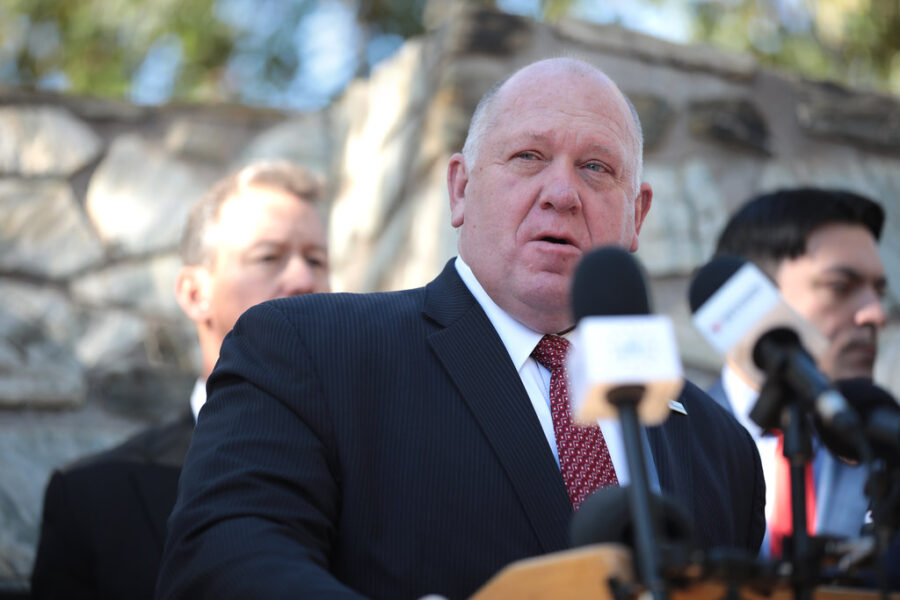
White House border czar Tom Homan announced Thursday that the surge of federal immigration agents in Minnesota is winding down after multiple weeks marked by unrest, protests, and heightened controversy over the Trump administration’s aggressive immigration enforcement agenda. The announcement comes after one of the most visible and contentious federal operations in the state in recent memory, leaving officials, residents, and advocacy groups grappling with the operation’s impact on local communities and public safety.
The deployment brought a significant presence of Immigration and Customs Enforcement (ICE) and Border Patrol agents into Minnesota, part of President Donald J. Trump’s broader agenda to crack down on illegal immigration and escalate deportations of individuals who entered the United States unlawfully. Homan, who serves as the administration’s point person on border and immigration enforcement, said that the scaled-back presence reflects a transition from active operations to oversight and local coordination, rather than an end to federal enforcement in the state.
The operation, officially named Operation Metro Surge, was initially described by federal officials as a targeted effort beginning December 1, 2025, aimed at investigating alleged fraud within parts of Minnesota’s Somali community. However, the narrative quickly expanded as federal activities spread across the Minneapolis metropolitan area and surrounding regions, drawing public attention and political scrutiny. The operation coincided with a wave of demonstrations, civil unrest, and confrontations between local activists and federal law enforcement officers, including two separate incidents that resulted in the deaths of U.S. citizens Renee Nicole Good and Alex Pretti.
“As a result of our efforts here, Minnesota is now less of a sanctuary state for criminals,” Homan declared during a news conference in Minneapolis, emphasizing the administration’s view that the operation fulfilled its primary objectives. He credited the enforcement push with demonstrating the federal government’s commitment to removing individuals who pose public safety or national security risks, though he did not provide specific figures on arrests or deportations at the briefing.
The presence of federal agents sparked immediate and sustained protest activity in Minneapolis and nearby areas. Immigrant advocacy groups and local leaders expressed alarm at what they described as an overly aggressive enforcement approach, arguing that it created fear and uncertainty in immigrant communities. Demonstrators rallied outside federal facilities and local government buildings, demanding transparency, accountability, and assurances that sensitive locations—such as hospitals, schools, and houses of worship—would not be targeted for enforcement actions.
Homan sought to address some of these concerns, assuring the public that ICE officers did not carry out arrests at hospitals, elementary schools, or churches during the recent enforcement wave. Yet he also stressed that these locations are not automatically off-limits in the context of federal enforcement operations. “Those locations are not off the table,” he said. “I said on day one, there’s no sanctuary for a significant public safety threat or national security threat.”
The administration’s position reflects a significant policy shift that began in 2025 when federal restrictions on immigration enforcement at so-called sensitive locations were lifted. Previously, ICE guidelines had limited enforcement activity in areas such as schools, hospitals, and places of worship to avoid creating barriers for immigrants seeking essential services. The lifting of these restrictions sparked widespread concern among advocacy groups and some Democratic officials, who warned that the change could discourage immigrants from seeking medical care, attending school, or engaging in civic life due to fear of deportation.
Despite these concerns, supporters of the surge argue that the operation reinforced law enforcement authority and sent a message that Minnesota would no longer function as a safe haven for individuals living in the country illegally while committing criminal offenses. Some local law enforcement officials expressed cautious support, citing the need for coordinated federal and state responses to public safety threats.
The tragic shootings of Good and Pretti, however, intensified scrutiny of federal tactics and the administration’s approach to enforcement. Both deaths occurred amid clashes between federal agents and community members, amplifying public debate over the appropriate balance between immigration enforcement and civil liberties. Critics argued that the federal surge inflamed tensions in already vulnerable communities, undermined trust between immigrant residents and law enforcement, and failed to consider the broader social and economic consequences of mass enforcement activity.
In response to these incidents, President Trump dispatched Homan to Minnesota to oversee the operation directly, replacing the previous on-the-ground commander, Border Patrol Chief Greg Bovino. Homan’s role was to coordinate federal efforts, manage public communications, and ensure that operations aligned with the administration’s objectives. According to Homan, the enforcement push achieved the intended outcomes, though he did not disclose specific details on arrests, deportations, or investigations.
As the federal presence begins to scale back, Homan indicated that a small contingent of personnel would remain temporarily to ensure a smooth transition. “A small footprint of personnel will remain for a period of time to close out, and transition full command and control back to the field office, as well as to ensure agitator activity continues to decline,” he said. This phase of the operation appears designed to maintain oversight, prevent renewed unrest, and allow local agencies to resume primary responsibility for enforcement and community engagement.
Local officials, residents, and advocacy groups are now evaluating the lasting effects of Operation Metro Surge. Many immigrants report continued anxiety over federal enforcement, even as the surge officially winds down. Community leaders have called for increased dialogue, transparency, and the implementation of policies aimed at rebuilding trust between law enforcement and immigrant populations. Some argue that the federal operation highlighted the need for clear guidelines and community input in future enforcement initiatives to prevent further escalation and protect vulnerable residents.
The Minnesota surge has also drawn national attention, serving as a case study for the Trump administration’s broader approach to immigration enforcement. Observers note that the operation reflects a trend toward rapid, high-visibility federal action in areas perceived as sanctuary jurisdictions, often accompanied by heightened public messaging emphasizing law and order. Yet the combination of protests, fatalities, and political pushback underscores the challenges inherent in balancing enforcement objectives with community stability and civil rights protections.
While the immediate federal presence in Minnesota is diminishing, the political and social reverberations of Operation Metro Surge are likely to persist. Advocates have vowed to continue monitoring ICE and Border Patrol activity, calling for rigorous oversight and accountability measures. Lawmakers on both sides of the aisle have debated the operation’s merits, with Republicans generally supporting the crackdown as a necessary step toward public safety and Democrats warning that such aggressive measures risk alienating communities and undermining trust in government institutions.
Homan’s announcement marks the conclusion of the most active phase of the surge, but it also signals the administration’s continued commitment to rigorous enforcement in other parts of the country. The Trump administration has framed Minnesota’s experience as a model for similar operations in cities and states with significant immigrant populations, emphasizing the importance of federal coordination, strategic deployment of personnel, and messaging around public safety.
As Minnesota transitions back to local oversight of immigration enforcement, residents and officials alike are left to grapple with a complex legacy. For some, the operation demonstrated federal resolve and reinforced the rule of law. For others, it exposed vulnerabilities in community relations, highlighted the risks of heavy-handed enforcement, and underscored the ongoing tensions surrounding immigration policy in the United States.
In the weeks and months ahead, policymakers, community leaders, and advocacy organizations will continue assessing both the tangible outcomes—such as arrests, deportations, and crime statistics—and the less quantifiable effects on community trust, social cohesion, and public perception of federal authority. The Minnesota surge may ultimately serve as a cautionary tale about the challenges of balancing aggressive immigration enforcement with the need to preserve civil liberties, protect vulnerable populations, and maintain public confidence in law enforcement.
Operation Metro Surge, now entering its wind-down phase, stands as a defining episode in Minnesota’s recent history, illustrating both the reach of federal immigration authority and the contentious debates surrounding its exercise. As the federal footprint diminishes, the state’s residents, officials, and immigrant communities must reckon with the consequences of a high-profile operation that tested the boundaries of law, politics, and public sentiment.

Emily Johnson is a critically acclaimed essayist and novelist known for her thought-provoking works centered on feminism, women’s rights, and modern relationships. Born and raised in Portland, Oregon, Emily grew up with a deep love of books, often spending her afternoons at her local library. She went on to study literature and gender studies at UCLA, where she became deeply involved in activism and began publishing essays in campus journals. Her debut essay collection, Voices Unbound, struck a chord with readers nationwide for its fearless exploration of gender dynamics, identity, and the challenges faced by women in contemporary society. Emily later transitioned into fiction, writing novels that balance compelling storytelling with social commentary. Her protagonists are often strong, multidimensional women navigating love, ambition, and the struggles of everyday life, making her a favorite among readers who crave authentic, relatable narratives. Critics praise her ability to merge personal intimacy with universal themes. Off the page, Emily is an advocate for women in publishing, leading workshops that encourage young female writers to embrace their voices. She lives in Seattle with her partner and two rescue cats, where she continues to write, teach, and inspire a new generation of storytellers.