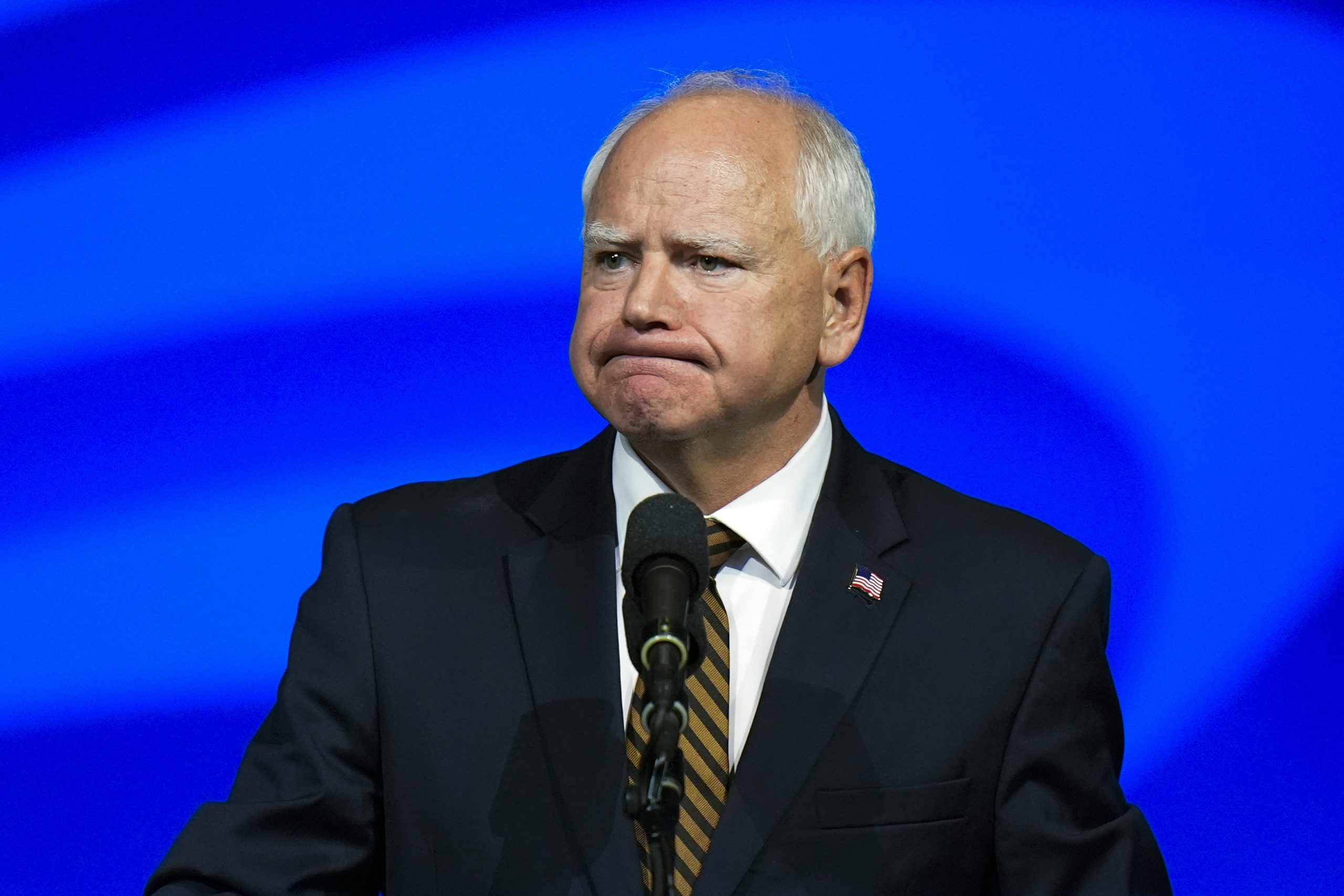
Minnesota Governor Tim Walz has sharply criticized reports suggesting that the U.S. Department of Justice has opened an investigation into him and other state officials, calling the alleged probe a political maneuver designed to silence dissent. The controversy centers on Walz’s recent public statements and actions related to federal immigration enforcement operations in Minnesota, which have sparked protests, public outcry, and escalating tensions between state leaders and the federal government.
The governor addressed the reports directly on Friday through a post on the social media platform X, where he framed the situation as an abuse of governmental power rather than a legitimate legal inquiry. Walz argued that using federal law enforcement mechanisms to scrutinize political opponents represents a dangerous step toward authoritarian governance.
According to Walz, the focus of federal scrutiny appears misplaced. In his post, he highlighted the fatal shooting of 37-year-old Renee Good during a confrontation involving a federal agent earlier this month, suggesting that accountability has not been evenly applied. Walz asserted that, despite widespread public concern about the incident, the federal officer involved has not faced investigation, while elected officials who criticize federal actions now appear to be under scrutiny.
The governor’s comments followed a news report claiming that the Department of Justice had initiated an inquiry into whether Walz and Minneapolis Mayor Jacob Frey obstructed federal law enforcement operations. The reported investigation allegedly stems from statements made by both officials encouraging residents to document and monitor the actions of Immigration and Customs Enforcement (ICE) agents operating in the state.
Mayor Frey responded publicly to the report, echoing Walz’s concerns and describing the alleged federal investigation as an attempt to intimidate local leaders who oppose the administration’s approach to immigration enforcement. In his own post on X, Frey said he would not allow federal pressure to deter him from advocating for the safety of Minneapolis residents and the integrity of local law enforcement.
Frey emphasized that his administration’s priority remains public safety, arguing that the current federal immigration operations have introduced instability and fear into the city. He accused the administration of creating conditions that place residents and officers at risk, while attempting to shift blame onto local officials who speak out against those conditions.
Shortly after Walz and Frey made their remarks, U.S. Attorney General Pam Bondi weighed in on the controversy with a brief public statement. Writing on X, Bondi reminded Minnesota officials that federal law applies uniformly and that no individual or officeholder is exempt from legal accountability. Her comment did not confirm or deny the existence of an investigation but added fuel to an already heated political dispute.
The backdrop to this conflict is a large-scale federal immigration enforcement effort currently underway in Minnesota. According to federal authorities, the operation began earlier this month after investigators uncovered alleged fraud within social services programs. Officials have stated that the suspected fraud is concentrated primarily within parts of the Somali immigrant community, though details about the scope and nature of the investigation remain limited.
The presence of Department of Homeland Security agents and ICE officers across the state has been highly visible, particularly in Minneapolis and surrounding areas. Federal officials say the operation is lawful and targeted, but critics argue that it has created widespread fear, disrupted daily life, and disproportionately affected communities of color.
Tensions escalated significantly following the death of Renee Good on January 7. According to the Department of Homeland Security, Good was fatally shot after driving her vehicle toward a federal officer during an encounter in Minneapolis. DHS stated that the officer was struck by the vehicle and suffered internal injuries, including internal bleeding. The incident prompted immediate protests, with demonstrators questioning the use of lethal force and demanding greater transparency.
Since then, protests against ICE operations have grown more intense, occasionally leading to clashes between demonstrators and law enforcement. Community leaders and civil rights advocates have accused federal agents of employing aggressive tactics that exceed their authority and undermine public trust.
In a video message posted online on Thursday, Walz delivered some of his strongest criticisms to date. Speaking directly to Minnesotans, he alleged that ICE agents were conducting aggressive and discriminatory enforcement actions throughout the state. According to Walz, agents were going door-to-door and pressuring residents to identify neighbors based on race or ethnicity.
The governor further claimed that individuals were being stopped without cause in public places such as grocery stores, bus stops, and even near schools. He alleged that U.S. citizens were among those questioned and that agents were demanding documentation without justification. Walz characterized these actions as indiscriminate and harmful, particularly to immigrant families and communities of color.
In addition to these claims, Walz accused federal officers of using excessive force during arrests. He alleged that agents were breaking into homes, forcibly detaining pregnant women, and transporting individuals in unmarked vehicles without explanation. The governor described these actions as kidnappings and said they violated basic standards of due process and human rights.
Walz framed the federal presence in Minnesota as an occupation rather than a lawful enforcement effort. He urged residents to remain vigilant and to document interactions with ICE agents using their phones. According to Walz, collecting video evidence could help establish a public record of what he described as abuses committed against Minnesotans.
He encouraged people to carry their phones at all times and to film encounters when safe to do so, arguing that documentation is essential for accountability. Walz said such efforts could contribute to what he called a “database of atrocities,” intended to expose patterns of misconduct.
Federal officials strongly rejected these characterizations. White House spokeswoman Abigail Jackson responded to Walz’s video in comments to Fox News, accusing the governor and other state leaders of escalating tensions and inciting hostility toward federal agents. Jackson said the rhetoric coming from Minnesota leadership had contributed to an environment that endangered officers carrying out their duties.
The White House has maintained that ICE operations in Minnesota are lawful and necessary to enforce federal immigration laws and protect public resources. Officials argue that misinformation and inflammatory language from state leaders have fueled unrest and made an already challenging situation more volatile.
President Donald Trump addressed the situation on Friday, stating that he did not currently believe it was necessary to invoke the Insurrection Act in response to protests and unrest surrounding ICE operations in Minneapolis. The act would permit the deployment of military forces to restore order, a move that has historically been controversial and rarely used.
However, Trump noted that he had considered invoking the act earlier in the week, signaling that the federal government is closely monitoring developments in Minnesota. His comments suggested that while military intervention is not imminent, it remains an option should conditions worsen.
Meanwhile, questions surrounding the reported federal investigation remain unanswered. The FBI’s national press office declined to comment on whether an inquiry is underway, directing all questions to the Department of Justice. The DOJ has not publicly confirmed or denied the existence of an investigation involving Walz or Frey.
As tensions continue, Minnesota finds itself at the center of a broader national debate over immigration enforcement, states’ rights, and the limits of federal authority. For Walz and other state leaders, the dispute represents a test of their ability to challenge federal policy without facing legal consequences. For the federal government, it underscores the difficulty of enforcing immigration law amid growing public resistance and political polarization.
With protests ongoing and political rhetoric intensifying, the situation in Minnesota remains fluid. Whether the reported federal investigation materializes or fades, the clash between state and federal leaders is likely to have lasting implications for immigration policy, civil liberties, and the balance of power between governments.

Emily Johnson is a critically acclaimed essayist and novelist known for her thought-provoking works centered on feminism, women’s rights, and modern relationships. Born and raised in Portland, Oregon, Emily grew up with a deep love of books, often spending her afternoons at her local library. She went on to study literature and gender studies at UCLA, where she became deeply involved in activism and began publishing essays in campus journals. Her debut essay collection, Voices Unbound, struck a chord with readers nationwide for its fearless exploration of gender dynamics, identity, and the challenges faced by women in contemporary society. Emily later transitioned into fiction, writing novels that balance compelling storytelling with social commentary. Her protagonists are often strong, multidimensional women navigating love, ambition, and the struggles of everyday life, making her a favorite among readers who crave authentic, relatable narratives. Critics praise her ability to merge personal intimacy with universal themes. Off the page, Emily is an advocate for women in publishing, leading workshops that encourage young female writers to embrace their voices. She lives in Seattle with her partner and two rescue cats, where she continues to write, teach, and inspire a new generation of storytellers.