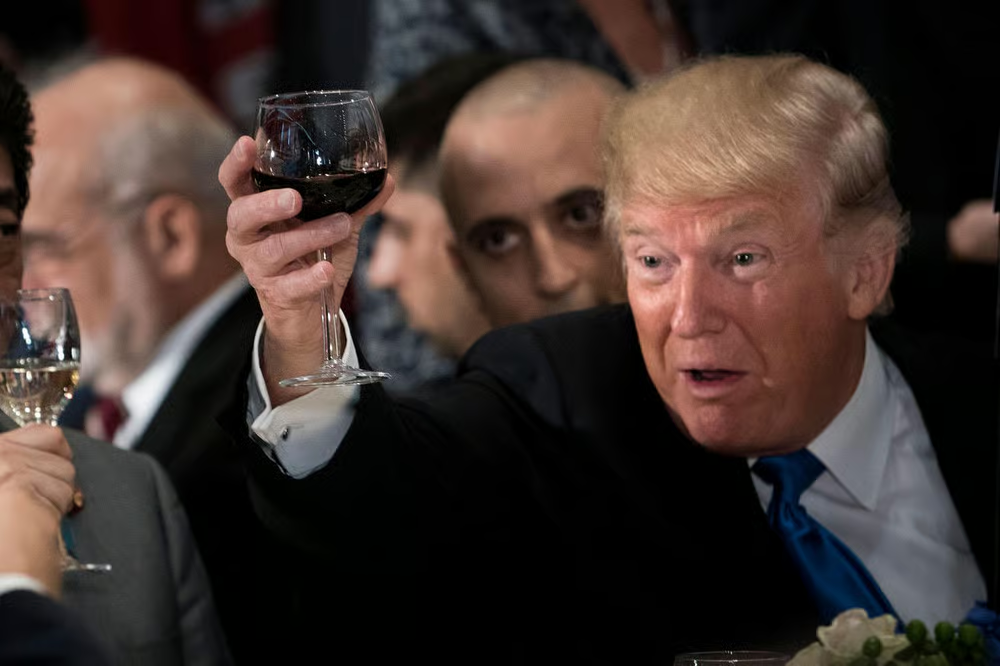
The choice to abstain from alcohol is a personal one, often shaped by family experiences, health considerations, or deeply held beliefs. For some, the decision comes after witnessing the devastating effects of addiction firsthand. For others, it may be a conscious lifestyle choice aimed at prioritizing health and mental clarity. Recently, a high-profile political figure shared candid reflections on why he has never consumed a single drop of alcohol—a revelation that has sparked discussion among fans, media, and public figures alike.
The conversation took place during a recent podcast interview with comedian and host Theo Von. The episode, posted on Von’s YouTube channel, quickly garnered widespread attention, racking up over 2.8 million views within days. The discussion ranged from personal habits to reflections on family, offering rare insight into the factors that shaped this individual’s decision to abstain from drinking.
While the individual’s fondness for Diet Coke has been well-documented—reportedly consuming several cans each day—the choice to avoid alcohol entirely had, until this interview, been less publicly explored. In the opening segment of the conversation, Von asked a simple yet direct question: why has he never drunk alcohol?
It was then that the personal story unfolded, revealing that the decision was shaped profoundly by the experiences of a family member.
A Family Lesson That Shaped a Lifetime
The figure at the center of the interview, Donald Trump, the 79-year-old President of the United States, explained that his decision to abstain from alcohol was influenced by his elder brother, Fred Trump. Fred, a man described as charismatic and handsome, struggled with alcoholism—a challenge that ultimately contributed to his premature death at the age of 42.
“I never have,” Trump said in response to Von’s question. “I had a great brother who taught me a lesson: don’t drink, and he said don’t smoke. He smoked and he drank.” The weight of this family history, he explained, left a lasting impression on his choices regarding alcohol.
Trump described Fred as “a great guy” but emphasized that his brother “had a problem with alcohol.” Reflecting on the early circumstances that may have led to Fred’s struggles, Trump suggested that the challenges began during college, when he believed his brother’s heavy drinking habits took root.
The conversation underscores how personal exposure to addiction—particularly within one’s immediate family—can strongly influence one’s approach to substances like alcohol and tobacco. It also sheds light on the impact of observing consequences firsthand, providing lessons that resonate for a lifetime.
Candid Reflections on Addiction and Recovery
Theo Von, who has shared his own journey of recovery from substance abuse, engaged in a candid discussion with the President about these choices. Von explained that while drugs were his primary struggle, alcohol posed its own set of challenges, requiring constant vigilance. “For me, drugs are the problem,” Von said, “but if I have a drink, then it’s tougher for me to prevent myself.”
This exchange offers a unique perspective on the different ways addiction can manifest and the strategies individuals use to maintain control. For some, complete abstinence is a necessary safeguard, particularly when there is a personal or familial history of substance misuse.
Experts agree that witnessing addiction firsthand—whether in family members, friends, or close associates—can have a lasting impact on one’s relationship with alcohol. It can lead to heightened awareness of potential risks and motivate individuals to take preventative measures, including total abstinence. In Trump’s case, the lesson learned from Fred’s struggles became a defining influence on his lifelong habits.
Signs Alcohol Consumption May Be Problematic
The conversation about abstinence also aligns with broader discussions about recognizing early signs of alcohol misuse. Recovering alcoholic Corey Warren recently shared insights on TikTok, emphasizing that blacking out is a critical indicator that drinking has moved beyond casual consumption.
“I used to think that blacking out was just a part of drinking, part of having fun, a part of the story I’d tell the next day,” Warren explained. “What I didn’t realize is that blacking out is not what happens when I drink too much one time. Blacking out is what happens when my tolerance is so high that I drink past my body’s limit and I don’t even realize it.”
He added, “That’s not normal, that’s not fun. That’s my brain shutting down.” Warren’s reflections illustrate that alcohol misuse often manifests subtly before it becomes life-threatening, and that certain behaviors—like repeated blackouts—signal that drinking has become dangerous rather than recreational.
For many people, observing these warning signs in others can be a powerful motivator to avoid alcohol altogether. In Trump’s case, seeing his brother’s life adversely affected by alcohol provided an unambiguous signal that abstaining entirely was the safest course.
The Role of Family Influence in Lifelong Choices
Family experiences can profoundly shape behavior, particularly when it comes to habits like drinking or smoking. Studies in behavioral science suggest that children and siblings who witness substance abuse firsthand are more likely to develop strong aversions to those substances, especially when they observe the negative consequences of addiction.
Trump’s reflections on Fred’s life illustrate this dynamic. He recounted that despite his brother’s apparent success and charm, the toll of alcoholism was undeniable. Observing a loved one struggle with addiction can crystallize awareness of risk and reinforce the importance of making deliberate choices.
It also provides insight into why abstinence can be a proactive strategy rather than a limitation. Choosing not to drink does not necessarily reflect moral superiority or judgment; rather, it is often rooted in lived experience and a desire to avoid repeating past mistakes.
Public Perception and Lifestyle Choices
Donald Trump’s avoidance of alcohol has been a topic of public interest for years, largely due to his prominent public profile. While some have speculated about the reasons for his lifestyle choices, the podcast provides clarity: his decision is rooted in deeply personal experiences and family history.
Trump’s preference for Diet Coke, often consumed in multiple cans daily, contrasts with traditional vices but also underscores his distinctive approach to personal habits. By openly discussing the influence of his brother Fred, he provides a rare glimpse into how personal history can shape public figures’ lifestyle decisions in ways that extend beyond politics or career considerations.
Public figures who abstain from alcohol often face scrutiny or speculation. Sharing the personal reasoning behind such choices can humanize them and provide relatable context for audiences. In this case, Trump’s candid conversation about family, loss, and responsibility offers a narrative that is both deeply personal and widely resonant.
Broader Lessons About Addiction and Choice
The dialogue between Trump and Theo Von highlights larger themes surrounding addiction, family influence, and personal responsibility. Addiction is not solely an individual struggle; it often affects families, communities, and social networks. Observing its effects in loved ones can instill a heightened awareness of risks and motivate preventative behavior.
For some individuals, abstinence is a lifelong commitment informed by direct experience. For others, moderation or controlled consumption may be appropriate, depending on personal and family history. The key takeaway from Trump’s interview is that abstaining from alcohol was not an arbitrary decision but a deliberate choice rooted in observation, reflection, and concern for personal well-being.
Recovery advocates also emphasize that understanding warning signs—such as repeated blackouts, increased tolerance, and impaired judgment—is critical for preventing alcohol misuse. Trump’s decision to abstain entirely aligns with this philosophy, illustrating how preventative choices can help avoid the pitfalls of addiction.
Conclusion: Personal Decisions Informed by Experience
Donald Trump’s candid discussion with Theo Von provides a rare window into the personal reasoning behind his lifelong abstinence from alcohol. By reflecting on the struggles of his elder brother Fred, he demonstrates how family experiences can shape deeply personal choices and influence lifestyle habits that endure for decades.
The conversation also highlights broader lessons about the nature of addiction, the importance of recognizing warning signs, and the value of proactive decision-making. Trump’s choice not to drink illustrates a deliberate and informed approach to personal well-being, shaped by lived experience rather than social convention or external expectation.
In an era where public figures’ personal habits are often scrutinized, Trump’s openness about his reasoning provides context that is both humanizing and instructive. It reminds audiences that personal choices, particularly around substances like alcohol, are often deeply intertwined with family history, personal experience, and the desire to live a healthy and responsible life.
As discussions about alcohol consumption, addiction, and recovery continue to evolve in the public sphere, the President’s reflections underscore the lasting impact that family lessons can have on shaping personal decisions and behaviors. His story provides both insight and perspective, highlighting the profound ways that individual choices can be informed by the experiences and struggles of those closest to us.

Emily Johnson is a critically acclaimed essayist and novelist known for her thought-provoking works centered on feminism, women’s rights, and modern relationships. Born and raised in Portland, Oregon, Emily grew up with a deep love of books, often spending her afternoons at her local library. She went on to study literature and gender studies at UCLA, where she became deeply involved in activism and began publishing essays in campus journals. Her debut essay collection, Voices Unbound, struck a chord with readers nationwide for its fearless exploration of gender dynamics, identity, and the challenges faced by women in contemporary society. Emily later transitioned into fiction, writing novels that balance compelling storytelling with social commentary. Her protagonists are often strong, multidimensional women navigating love, ambition, and the struggles of everyday life, making her a favorite among readers who crave authentic, relatable narratives. Critics praise her ability to merge personal intimacy with universal themes. Off the page, Emily is an advocate for women in publishing, leading workshops that encourage young female writers to embrace their voices. She lives in Seattle with her partner and two rescue cats, where she continues to write, teach, and inspire a new generation of storytellers.