The sandstorm outside the Forward Operating Base had been screaming for three hours, throwing fists of desert grit against reinforced walls that had withstood worse. Inside the underground command center buried beneath two stories of concrete and steel, the air was climate-controlled to exactly sixty-eight degrees, the lighting a sterile white that made everything feel simultaneously urgent and timeless. Maps glowed on multiple screens—satellite imagery of terrain I couldn’t name in countries I couldn’t acknowledge, colored overlays showing troop movements and asset positions that represented billions in resources and thousands of lives.
My name is Adrian Cross, though that’s not the name I was born with and not the name most people know me by. I’m forty-one years old. For the past sixteen years, I’ve commanded a classified joint operations unit that officially doesn’t exist—a team specializing in counterterrorism, hostage recovery, and intelligence operations in places where the United States can’t officially operate. My rank is Lieutenant Colonel, though even that’s classified under protocols that would require three levels of clearance just to confirm. The men and women under my command are the kind of soldiers whose obituaries, if they die in the field, will say they died in training accidents or car crashes, never in the deserts or mountains where they actually fell.
To my wife Amelia and my twelve-year-old daughter Lila, I’m a logistics coordinator for a private military contractor—essentially a glorified truck driver who spends months overseas managing supply chains for reconstruction projects. It’s a cover story solid enough to withstand casual scrutiny, boring enough that people don’t ask follow-up questions, and flexible enough to explain my irregular schedule and long absences. Amelia knows the truth, of course—you can’t be married for fourteen years to someone and not know when they’re lying about who they are—but she’s never asked for details I couldn’t give, and she’s raised our daughter to believe Daddy manages shipping logistics in dangerous places, which is technically true if you count ammunition and tactical equipment.
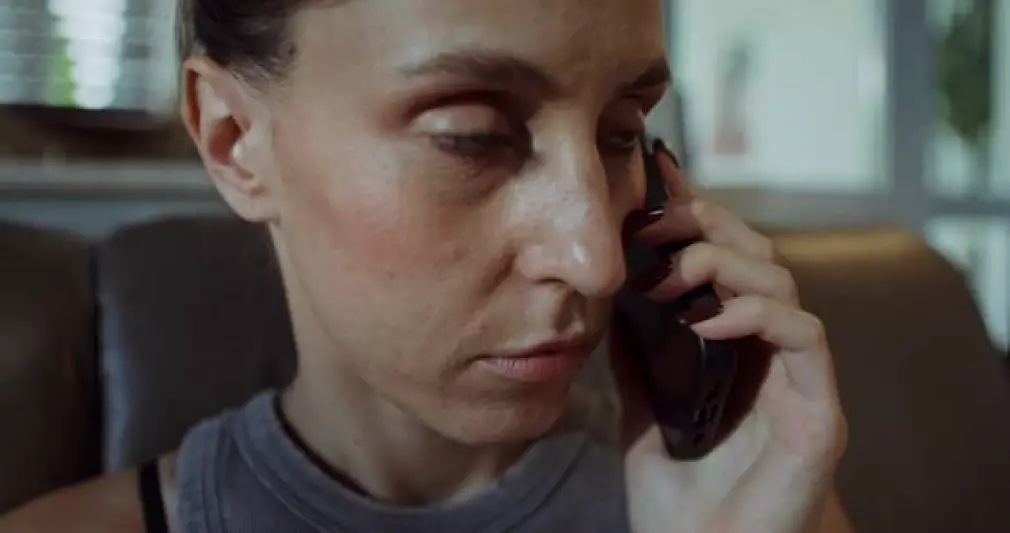
I was standing over a topographical map of a border region I won’t name, conferring with Major Richard Thompson about an extraction operation scheduled to launch in six hours, when my emergency phone vibrated against my hip. Not my regular encrypted phone that I used for daily operations, but the red phone—a satellite-enabled device with its own dedicated security protocols, a phone that only two people in the world had the number for.
My wife. And my commanding officer at JSOC.
Everything else in the room continued—analysts typing, radios crackling with chatter, the low hum of servers processing terabytes of intelligence data. But for me, the world narrowed to that vibration, to the name that appeared on the screen: Amelia.
I stepped away from the table and answered immediately.
“Adrian?” Her voice hit me before I could speak—breathless, breaking, the kind of panic that cuts through satellite interference and seven thousand miles of distance like a knife. “It’s Lila. Something happened at school. She’s—she won’t talk to me. She won’t say what happened. Adrian, she’s shaking.”
My daughter. Twelve years old. Bright, curious, stubborn like her mother, with my dark hair and her mother’s green eyes. A kid who loved astronomy and terrible puns and wanted to be a marine biologist. A kid who, last time we’d video-called three days ago, had spent twenty minutes excitedly explaining the difference between a whale shark and a basking shark.
“Slow down, Amelia. Where are you?” I kept my voice calm, controlled, the same tone I used when talking someone through a crisis situation. Around me, the operations center continued its work, but I saw Thompson glance my way, reading my body language.
“We’re at the house. I picked her up from the spring festival at school. Adrian, something happened with Preston Caldwell—the mayor’s son. I don’t know exactly what, but Lila was at the edge of the parking lot with some other kids, and when I found her, she was crying. Really crying. Not like when she scrapes her knee. She’s scared.”
Preston Caldwell. I filed the name away, already building a mental profile from what little I knew: Mayor Gregory Caldwell’s only son, probably around Lila’s age, living in Millbrook Falls, Virginia—population 8,500, a small town in the Shenandoah Valley where Amelia had grown up and where we’d bought a house six years ago specifically because it was quiet, safe, the kind of place where kids could ride bikes to school and nothing bad ever happened.
“Did she tell you what he did?” I asked.
“No. She won’t say. But Adrian, I called the school. I talked to Principal Morris, and she said she’d ‘look into it,’ but her tone—it was dismissive. Like this was just kids being kids. So I called the police. I filed a report. I wanted it documented, whatever happened.”
“That’s good. That’s the right move. Did they take it seriously?”
There was a pause, and in that pause, I heard something shift in Amelia’s breathing—from panic to something harder, angrier.
“The officer who came to take my statement was polite enough. But Adrian, while I was giving the report, Police Chief Miller showed up. He said he wanted to ‘personally ensure everything was handled appropriately’ since it involved the mayor’s son. He listened to what I said, and then he—”
Her voice broke.
“He what?” I pressed gently.
“He told me I was overreacting. He said boys will be boys, that Preston is a ‘high-spirited kid’ but not dangerous, that Lila probably just misunderstood some roughhousing. I tried to explain that she’s terrified, that something happened, and he just—”
Then I heard it. A man’s voice in the background of the call, dismissive and mocking, the kind of tone that comes from someone who’s never been challenged in his small sphere of authority.
“Stop the dramatics, Amelia. Your husband’s just a truck driver overseas. He’s not coming home to fix anything. And frankly, without evidence of actual harm, there’s nothing to investigate. Preston says they were playing a game. Your daughter says nothing happened. Case closed.”
Police Chief Miller. I’d met him exactly once, at a town barbecue three years ago—a thick-necked man in his late fifties with a handshake too firm and laugh too loud, the kind of guy who wore his badge even at social events and made sure everyone knew he’d been chief for twenty years.
The phone line rustled, and I heard Amelia’s voice, tight with barely controlled fury. “My daughter is twelve years old and won’t speak. That’s not ‘nothing happened.’”
Miller’s voice came back, patronizing and final. “Kids get upset. Doesn’t make it a police matter. Unless you have actual evidence of a crime, Mrs. Cross, we’re done here.”
Then the call cut out abruptly—not a clean disconnect, but the sudden silence of a phone being taken and ended by someone else.
The operations center around me came back into focus—analysts at their stations, the hum of equipment, Thompson watching me with the expression of someone who’d worked with me long enough to recognize when a situation had just become mission-critical.
My hands were steady. My breathing was controlled. But something inside me had shifted, had locked into place with the cold precision of a weapon being loaded.
“Sir?” Thompson said quietly. “Everything all right?”
I looked at him, then at the map in front of us showing an operation scheduled to launch in six hours—an operation involving three teams, air support, and intelligence assets that had taken weeks to position.
“Major Thompson, postpone all outgoing operations.”
The room didn’t go quiet—that would have been too dramatic, too Hollywood. But there was a pause, a fractional hesitation in the rhythm of work around us.
“Sir?” Thompson’s voice was carefully neutral. “The Pentagon already approved the extraction. The window is—”
“Postpone it,” I repeated, each word deliberate and absolute. “Contact JSOC. Tell them we have a domestic emergency requiring immediate rotation. Effective immediately.”
Thompson knew better than to argue. He also knew me well enough to understand that I wouldn’t make this call unless it was necessary. “Primary objective?”
I looked back down at my red phone, at the blank screen where my wife’s call had been terminated by a small-town police chief who thought his authority was absolute, who thought a truck driver’s wife could be dismissed, who thought there would be no consequences for protecting the mayor’s son.
“A small town in Virginia that believes I coordinate shipping logistics for a living,” I said. “And a situation that requires clarity, accountability, and federal oversight.”
I turned to face Thompson fully. “I’m going home, Major. And I won’t be dealing with this alone.”
Thompson understood immediately. He’d been with me for eight years, through three deployments and more operations than either of us could count. He knew the difference between personal business and mission-critical. This, his expression said, was both.
“How many personnel?” he asked.
“Minimum footprint. Six operators. Full investigative support package. I want communications intercept, background analysis, and legal liaison on standby. And Thompson? I want this by the book. Federal regulations, proper jurisdiction, documented evidence. Nothing that compromises operational security, but everything that makes it clear this is not a local matter anymore.”
“Understood, sir. Timeline?”
“We move in eighteen hours. I want boots on ground in Millbrook Falls by tomorrow evening.”
Thompson nodded and moved immediately to execute, speaking quietly into his headset, setting in motion a sequence of events that would pull six of the military’s most highly trained soldiers out of a combat zone and redirect them to a small Virginia town that had no idea what was coming.
I made two more calls before I left the operations center.
The first was to Colonel Patricia Hendricks at the Judge Advocate General’s Corps—the military’s legal arm. I gave her the brief version: potential assault on a minor, local law enforcement refusing to investigate due to political connections, need for federal intervention under appropriate statutes.
“Adrian, if this is what you’re describing, we can invoke federal jurisdiction under several frameworks,” Patricia said after a moment. “Denial of civil rights under color of law, potential interstate implications if there’s any indication of a pattern. But you need to be careful. Small-town politics can get ugly, and if you roll in with military resources for what looks like a personal matter—”
“This isn’t personal,” I interrupted. “This is a twelve-year-old child who’s been assaulted and a law enforcement official refusing to investigate because the perpetrator’s father is politically connected. That’s textbook civil rights violation.”
“Agreed. I’ll prep the paperwork. But Adrian? Document everything. Every conversation, every refusal to investigate, every piece of evidence. Make this airtight.”
The second call was to Amelia. She answered on the first ring.
“Adrian?”
“I’m coming home. I’ll be there tomorrow night.”
I heard her exhale, a sound somewhere between relief and disbelief. “They rotated you back?”
“I rotated myself back. Amelia, I need you to do something for me. I need you to write down everything you remember about today. Every detail. What time you picked up Lila, exactly what she said or didn’t say, who you talked to at the school, what Principal Morris said, what Chief Miller said. Everything. Timestamps if you can remember them.”
“Okay. Adrian, what are you—”
“I’m handling it. But I need documentation. Can you also take Lila to Dr. Brennan tomorrow? Not for treatment necessarily, but for a medical examination. On the record.”
Dr. Sarah Brennan was the pediatrician in the next town over, someone we’d used since Lila was born, someone whose medical notes would carry weight.
“A medical exam? Adrian, you’re scaring me.”
“I’m being thorough. If something happened to our daughter, we need documentation that can’t be dismissed or ignored. Trust me.”
“I do trust you. Adrian… Chief Miller made it sound like this would just go away. Like we don’t have any power here.”
I thought about the six operators I was bringing with me. About the federal resources I could deploy. About the fact that while Millbrook Falls thought they were dealing with a truck driver’s wife, they were actually dealing with a classified military unit commander who’d just made their town a mission objective.
“He’s wrong,” I said simply. “I’ll see you tomorrow.”
The flight home took twenty-six hours—military transport to Ramstein Air Base in Germany, then a military charter to Andrews Air Force Base outside Washington, then a rental car for the three-hour drive to Millbrook Falls. I spent most of the flight reading background reports my intelligence analysts had compiled.
Preston Caldwell, age thirteen, only child of Mayor Gregory Caldwell and his wife Diane. Three documented incidents at school in the past two years—fighting, inappropriate behavior toward female students, one formal complaint from another parent that had been “resolved internally.” The pattern was clear: a kid with no boundaries whose parents had money and influence, protected by a system that valued politics over accountability.
Mayor Gregory Caldwell, age fifty-two, third-term mayor of Millbrook Falls, owner of Caldwell Construction, the largest employer in the county. Net worth estimated at twelve million. Major donor to the county sheriff’s election campaign, the school board, and half the county commissioners. The kind of local power that, in a small town, might as well be royalty.
Police Chief Robert Miller, age fifty-nine, twenty-three years with Millbrook Falls PD, chief for the last twelve. No formal complaints in his record, but a pattern of deference to town leadership that bordered on corruption. My analysts had found three cases in the past five years where charges against connected families had been dropped or reduced without explanation.
The system wasn’t broken. It was working exactly as designed—to protect the powerful and silence everyone else.
I arrived in Millbrook Falls just after 8 p.m. on a Tuesday evening. The town looked exactly as I remembered it from brief visits home—tree-lined streets, historic downtown, American flags on every other porch, the kind of place that probably still had a Memorial Day parade and a fall harvest festival. Pretty. Peaceful. Hiding rot underneath.
My team was already in position—six operators in two vehicles, parked at a hotel fifteen miles outside town, waiting for my signal. They’d traveled separately, arriving in civilian clothes, looking like business consultants or contractors passing through. Nobody in Millbrook Falls would know they were here until I wanted them to know.
I pulled into my driveway—a modest two-story colonial on a quiet street where Lila’s bike still leaned against the garage and Amelia’s garden was blooming with early spring flowers. Normal. Suburban. Safe.
Amelia met me at the door, and for a moment, we just held each other. Fourteen years of marriage, most of it spent apart, held together by trust and satellite phones and the understanding that what I did mattered even if she couldn’t know the details.
“Where’s Lila?” I asked.
“Upstairs. She’s been in her room since yesterday. Won’t talk, barely eating. Adrian, I’ve never seen her like this.”
I found my daughter curled on her bed, hugging the stuffed whale I’d brought her from a deployment three years ago, staring at nothing. When she saw me, something broke in her expression—relief and shame and fear all mixed together.
“Hey, starfish,” I said, using the nickname I’d had for her since she was three. “Mom said you had a rough day.”
She didn’t speak, just launched herself at me, arms wrapping around my neck so tight I could barely breathe. I felt her shaking, felt tears soaking into my shoulder.
I didn’t push. I just held her, let her cry, waited.
Finally, in a voice so small I almost missed it: “He said nobody would believe me.”
My blood went cold. “Who said that?”
“Preston. He said his dad is the mayor and his friend’s dad is the police chief and nobody would believe me if I told.”
“Told what, sweetheart?”
It took her ten minutes to get it out, between sobs and long silences. Preston Caldwell and two of his friends had cornered her at the edge of the school parking lot during the spring festival. They’d pushed her against the wall, touched her in ways that made her feel sick, said things that terrified her. When she’d tried to get away, Preston had grabbed her arm hard enough to bruise and told her that if she said anything, everyone would call her a liar. That his dad would make sure her parents got in trouble. That nobody would believe a truck driver’s daughter over the mayor’s son.
By the time she finished, my hands were shaking with rage I’d learned to control in firefights and hostage situations but was struggling to contain now.
“Lila, look at me,” I said gently. “Preston was wrong. I believe you. Your mother believes you. And I promise you, everyone else is going to believe you too.”
“But Chief Miller said—”
“Chief Miller doesn’t have all the information yet. But he will.”
The next morning, I made a phone call from my driveway, standing in the spring sunshine while my daughter watched from her bedroom window.
“Thompson, we’re green. Bring the team in.”
Twenty minutes later, two black SUVs pulled up in front of my house. Six men in civilian clothes but with bearing that screamed military stepped out, followed by a woman in a suit carrying a briefcase—Captain Jennifer Walsh from JAG, the military lawyer I’d requested.
My neighbors were watching now. I saw curtains twitch, saw old Mrs. Henderson across the street standing on her porch pretending to water plants.
I walked across the street to her. “Morning, Mrs. Henderson. Beautiful day.”
“Adrian! I didn’t know you were home. Are those… friends of yours?”
“Colleagues. We’re in town on business. If anyone asks, I’d appreciate it if you could let them know I work in federal operations coordination. Not shipping logistics. That was always just a cover story for security reasons.”
Her eyes went wide. “Federal operations? You mean like—”
“I can’t discuss specifics. But yes. Thanks for understanding.”
I walked back to my house, where Thompson was briefing the team on my front lawn. Subtle. Professional. But visible enough that anyone paying attention would notice.
At 10 a.m., I walked into the Millbrook Falls Police Department—a small brick building with four police cruisers parked outside and a secretary who looked up in surprise when I entered with Thompson and Captain Walsh.
“Can I help you?” she asked uncertainly.
“We’re here to see Chief Miller. Tell him Lieutenant Colonel Adrian Cross would like to discuss the assault complaint filed by my wife two days ago.”
Her face went pale. “I’ll… I’ll get him.”
Chief Miller emerged from his office looking annoyed, but his expression changed when he saw me—not just me, but the two people flanking me, both carrying themselves with unmistakable authority.
“Mr. Cross. I didn’t realize you were back in town.”
“It’s Lieutenant Colonel Cross, actually. I apologize for the confusion. My civilian cover required a more mundane job description. This is Major Thompson and Captain Walsh from the Judge Advocate General’s Corps.”
Miller’s face went from confused to wary. “I’m not sure I understand what military personnel—”
“Are you aware that failing to investigate an assault on a minor due to political pressure constitutes a violation of federal civil rights law?” Captain Walsh asked pleasantly. “Under 18 U.S.C. Section 242, it’s a federal crime for anyone acting under color of law to willfully deprive a person of their constitutional rights. The penalty is up to ten years in federal prison.”
Miller’s face drained of color. “Now wait just a minute—”
“We have a recording of you dismissing a formal complaint,” I said. “We have medical documentation of injuries. We have witness statements. What we don’t have is any evidence that your department conducted even a basic investigation. Why is that, Chief Miller?”
“The mayor’s son said it was just kids playing—”
“The mayor’s son is the accused. Since when do police departments close investigations based solely on the word of the accused party?” Thompson asked.
Miller looked between us, clearly calculating. “Look, I don’t know what you think you’re doing, but this is a local matter. You can’t just—”
“Actually, we can,” Captain Walsh said. “And we are. As of this moment, this case is under federal review. You’ll be receiving formal notification within the hour. I suggest you preserve all records related to this incident. Any destruction of evidence will be considered obstruction.”
We left Miller standing in his office, looking like a man who’d just realized the ground had disappeared beneath his feet.
Our next stop was Mayor Caldwell’s office in the town hall. He kept us waiting twenty minutes—a power play—before agreeing to see us.
Gregory Caldwell was exactly what I expected: expensive suit, confident handshake, the smile of a man used to being the most important person in every room.
“Colonel Cross, I understand you’re upset about some incident involving your daughter, but—”
“Your son sexually assaulted my daughter,” I said flatly. “That’s not an incident. That’s a felony.”
His smile vanished. “That’s a serious accusation. Do you have proof?”
“Medical documentation. Witness statements. Physical evidence. Yes.”
“My son says they were playing a game. Kids roughhouse. Surely we can resolve this without—”
“Without what? Without holding your son accountable? Without teaching him that actions have consequences?” I leaned forward. “Mayor Caldwell, I’ve spent sixteen years working in places where people like you exist—people who think power makes them untouchable, who think they can hurt others without consequences. I’ve seen how that ends. It doesn’t end well.”
His face reddened. “Are you threatening me?”
“I’m informing you. Your son is going to be investigated. By federal authorities, not by the police chief you bought. If evidence supports charges—and I believe it will—he’ll be prosecuted. You can cooperate, or you can obstruct. Your choice. But understand that obstructing a federal investigation carries its own penalties.”
We left him sputtering threats about lawyers and political connections.
Over the next week, things moved quickly. The FBI field office in Richmond opened a formal investigation. Preston Caldwell was questioned, along with the two friends who’d been with him. Their stories contradicted each other and the evidence. Security footage from the school, which Principal Morris had claimed didn’t exist, was suddenly “found” and turned over to federal investigators.
Chief Miller was placed on administrative leave pending a review of his handling of the case. An interim chief was appointed from the county sheriff’s office.
Mayor Caldwell hired three different law firms and made calls to every politician he knew. None of it mattered. Federal jurisdiction is federal jurisdiction, and no amount of local power changes that.
Preston Caldwell was charged as a juvenile with sexual assault. His two friends were charged as accessories. The case went to juvenile court, where a judge who didn’t owe the Caldwells anything listened to the evidence and imposed serious consequences—counseling, probation, community service, and a permanent record that would follow Preston for years.
More importantly, my daughter got to see that telling the truth mattered. That being afraid didn’t mean being powerless. That sometimes, when you speak up, people listen.
Six months later, I’m back overseas, coordinating operations I can’t discuss in places I can’t name. But I video-call Lila three times a week, and she’s different now—stronger, more confident, quicker to speak up when something’s wrong.
Amelia told me that at school, when a boy in Lila’s class was bullying a smaller kid, Lila walked right up to the principal and reported it. When the principal tried to dismiss it as “boys being boys,” Lila looked her in the eye and said, “My dad says that’s not an excuse. Would you like me to have him explain it to you?”
The bullying stopped.
As for Millbrook Falls, they learned an important lesson: titles and cover stories don’t define people. The truck driver might be a colonel. The quiet neighbor might have federal resources. And small-town power is only power until it meets something bigger.
Chief Miller retired quietly and moved out of state. Mayor Caldwell lost his re-election bid. And the town got a new police chief who actually investigates crimes instead of protecting the powerful.
I still can’t tell my daughter exactly what I do. She still thinks I coordinate logistics for reconstruction projects, and that’s fine. She doesn’t need to know about classified operations or combat zones.
But she knows that when someone tries to hurt her, I will move heaven and earth to protect her. She knows that speaking up matters. And she knows that justice, real justice, doesn’t care about how much money your family has or what position your father holds.
Sometimes the most important missions aren’t the ones in combat zones. Sometimes they’re in small towns where a police chief laughs at a frightened mother and thinks there will be no consequences.
Chief Miller learned the hard way: there are always consequences.
You just have to be willing to make the call.

Emily Johnson is a critically acclaimed essayist and novelist known for her thought-provoking works centered on feminism, women’s rights, and modern relationships. Born and raised in Portland, Oregon, Emily grew up with a deep love of books, often spending her afternoons at her local library. She went on to study literature and gender studies at UCLA, where she became deeply involved in activism and began publishing essays in campus journals. Her debut essay collection, Voices Unbound, struck a chord with readers nationwide for its fearless exploration of gender dynamics, identity, and the challenges faced by women in contemporary society. Emily later transitioned into fiction, writing novels that balance compelling storytelling with social commentary. Her protagonists are often strong, multidimensional women navigating love, ambition, and the struggles of everyday life, making her a favorite among readers who crave authentic, relatable narratives. Critics praise her ability to merge personal intimacy with universal themes. Off the page, Emily is an advocate for women in publishing, leading workshops that encourage young female writers to embrace their voices. She lives in Seattle with her partner and two rescue cats, where she continues to write, teach, and inspire a new generation of storytellers.