


I didn’t believe in ghosts when I bought the house on Briarwood Lane.
By the time you reach my age, you stop believing in most things that scare younger people. Fear changes. It gets quieter. More practical. I wasn’t afraid of spirits or curses or old rumors. I was afraid of dying alone in a place filled with memories that no longer belonged to me.
My wife, Margaret, passed away the winter before. Forty-three years together, and suddenly the house we shared felt too big and too empty. Every sound reminded me she wasn’t there to hear it. Every quiet moment felt like a punishment.
So when I saw the listing for the Whitaker house, I didn’t hesitate.
It was cheap. Suspiciously cheap. End of the road, large lot, old Victorian. The real estate agent hesitated when she handed me the keys. I noticed her hands trembling.
“You know the history,” she said.
I told her history didn’t bother me.
That was my first mistake.
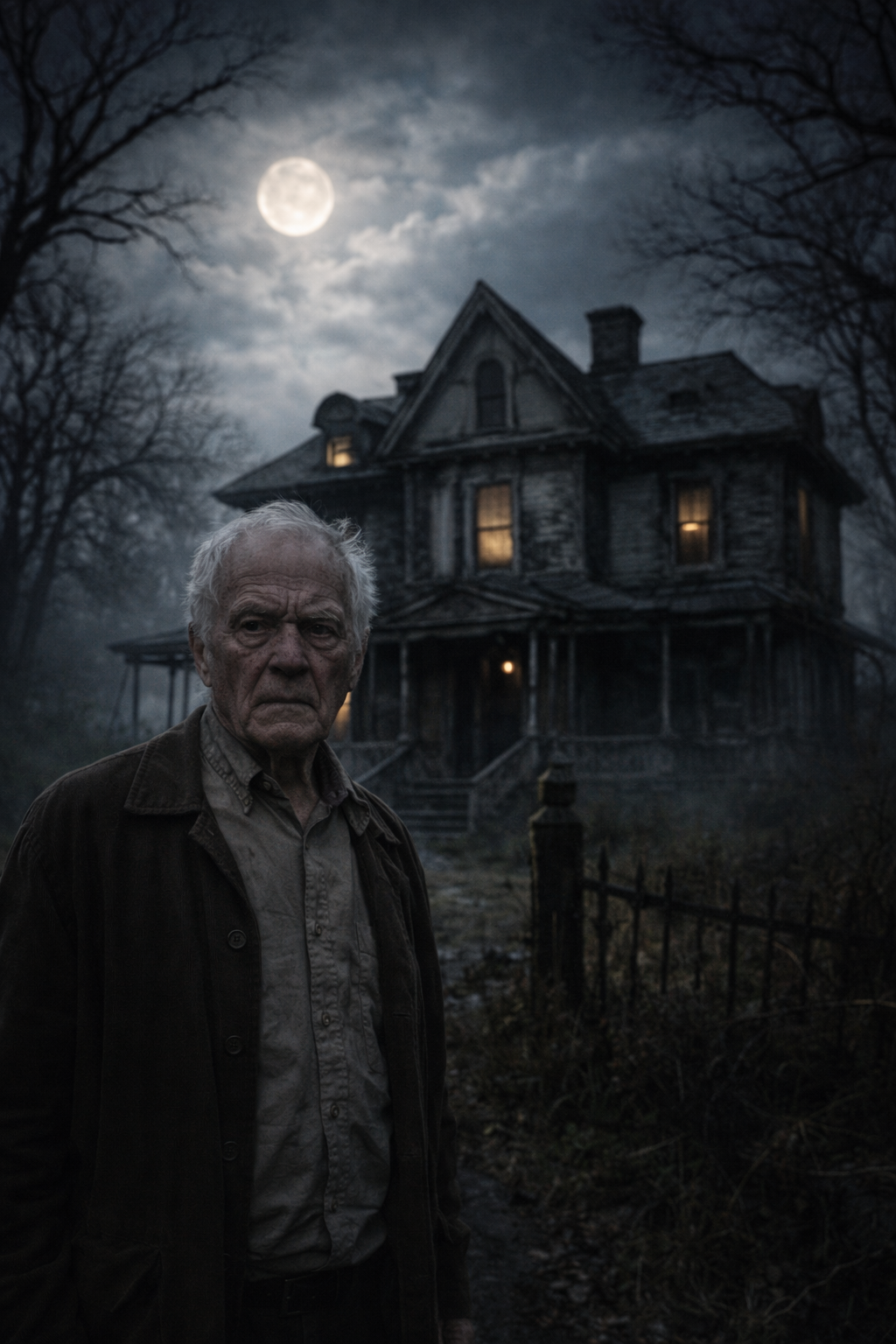
The house sat at the very end of Briarwood Lane, where the pavement cracked and weeds pushed through the asphalt. Dead oak trees surrounded the property like sentries. The iron fence leaned inward, as if trying to keep something from leaving rather than entering.
The place smelled old when I stepped inside. Dust, mildew, and something faintly metallic. The air felt heavier indoors, as if the house resisted being occupied again.
Still, I unpacked.
That first evening, I slept better than I had in months. No memories in the walls yet. No reminders of hospital rooms or empty chairs.
At 11:47 p.m., I woke up.
I know the exact time because the red digits of my alarm clock glowed in the dark. I woke suddenly, heart racing, not knowing why.
Then I heard it.
Footsteps upstairs.
Slow. Measured. Deliberate.
I lay still, listening. The sound moved across the ceiling, back and forth, like someone pacing the hallway. Each step was clear enough that I could almost picture the shoes lifting and landing.
I told myself it was the house settling.
Old houses do that.
But when the footsteps stopped directly above my bedroom, I held my breath.
They didn’t resume.
Eventually, exhaustion pulled me back under.
During the day, the house felt almost normal. Sunlight softened its edges. Dust motes floated peacefully in the air. I cleaned, repaired what I could, and tried not to think about the stories I’d heard.
People in town avoided the subject, but they all knew it. Eleanor Whitaker. Widow. Lived alone. Disappeared in 1987. No signs of a struggle. No body.
The house had never sold since.
The second night, I heard the footsteps again.
The third night, a door creaked open on its own.
By the end of the first week, I started finding things moved. A chair turned slightly. A cabinet left ajar. Once, I came downstairs to find muddy footprints leading from the back door to the staircase.
They were small. Too small to belong to any adult.
I scrubbed them away and told myself a neighborhood kid must’ve wandered in.
I locked the doors after that.
The knocking started during the second week.
Three knocks.
Pause.
Two more.
Not on doors. Not on windows.
From inside the walls.
The sound came from different places each night. Sometimes from the living room. Sometimes from the upstairs hallway. Always slow. Always deliberate.
I checked for animals. I checked pipes. I called a contractor.
He walked through the house, pale and quiet, and refused to go into the basement.
“Nothing wrong structurally,” he said. “But I wouldn’t stay here if I were you.”
That night, the knocking came louder than ever.
Sleep became difficult. When I did manage it, my dreams were crowded with whispers. Soft voices murmuring just beyond understanding. I’d wake up with the sense that someone had been standing beside my bed, watching me.
Once, I felt the mattress dip, as if someone sat down.
I didn’t open my eyes.
I didn’t want to see what might be there.
The attic finally forced the issue.
I’d avoided it as long as I could, but one afternoon I decided to face it. The stairs creaked as I climbed. The air grew colder with each step.
That’s when I noticed the door.
It was small. Hidden behind stacked boxes. Barely three feet tall.
A child’s door.
My hands shook as I opened it.
Inside was a narrow room with slanted walls. Empty except for a single wooden rocking chair, positioned squarely in the center, facing the wall.
The chair was moving.
Just slightly. A gentle back-and-forth motion.
As if someone had just stood up.
I slammed the door shut and stumbled back down the stairs.
That night, the whispers became words.
“Please,” a child’s voice said from the darkness.
I sat upright in bed, heart pounding.
“Please,” it whispered again.
I flicked on the lamp.
The room was empty.
On October 21st, I found writing scratched into the hallway wall.
Deep grooves torn through paint and plaster.
LET ME OUT
I packed my bag that afternoon.
I didn’t care about pride or money or what anyone thought. I was leaving.
When I reached the front door, the handle wouldn’t turn.
The house fell silent. Not a single creak. Not a breath of wind. The temperature dropped so fast my breath fogged the air.
From upstairs came the sound of running.
Fast, frantic footsteps pounding toward the stairs.
Then laughter.
High-pitched. Excited.
Wrong.
I ran to the basement.
The door slammed shut behind me and locked.
In the dim light, I saw the walls.
Handprints.
Hundreds of them. Small hands pressed into the concrete. Some smeared downward, as if dragged.
“That’s where she kept me,” a voice said softly behind me.
I turned.
A little girl stood at the bottom of the stairs. She wore a faded white dress. Her hair hung in tangled curls around her face. Her skin was pale, almost translucent.
Her eyes were ancient.
“She said the world was dangerous,” the girl continued. “She said I was safer here.”
My legs gave out. I sank to the floor.
“She locked the door,” the girl said. “She forgot.”
The house groaned, beams shifting as if the structure itself were breathing.
“You heard me,” the girl said. “You answered.”
The basement walls pulsed with cold.
“You can stay,” she whispered. “Or you can help me leave.”
I don’t remember making a choice.
I remember holding her hand. Cold as winter stone.
I remember the sound of a door opening somewhere deep inside the house.
They say I died peacefully in my sleep.
But sometimes, when the wind is right, people on Briarwood Lane swear they see a child standing free at the edge of the yard.
And a light burning upstairs, in a house that will never be empty again.

Emily Johnson is a critically acclaimed essayist and novelist known for her thought-provoking works centered on feminism, women’s rights, and modern relationships. Born and raised in Portland, Oregon, Emily grew up with a deep love of books, often spending her afternoons at her local library. She went on to study literature and gender studies at UCLA, where she became deeply involved in activism and began publishing essays in campus journals. Her debut essay collection, Voices Unbound, struck a chord with readers nationwide for its fearless exploration of gender dynamics, identity, and the challenges faced by women in contemporary society. Emily later transitioned into fiction, writing novels that balance compelling storytelling with social commentary. Her protagonists are often strong, multidimensional women navigating love, ambition, and the struggles of everyday life, making her a favorite among readers who crave authentic, relatable narratives. Critics praise her ability to merge personal intimacy with universal themes. Off the page, Emily is an advocate for women in publishing, leading workshops that encourage young female writers to embrace their voices. She lives in Seattle with her partner and two rescue cats, where she continues to write, teach, and inspire a new generation of storytellers.