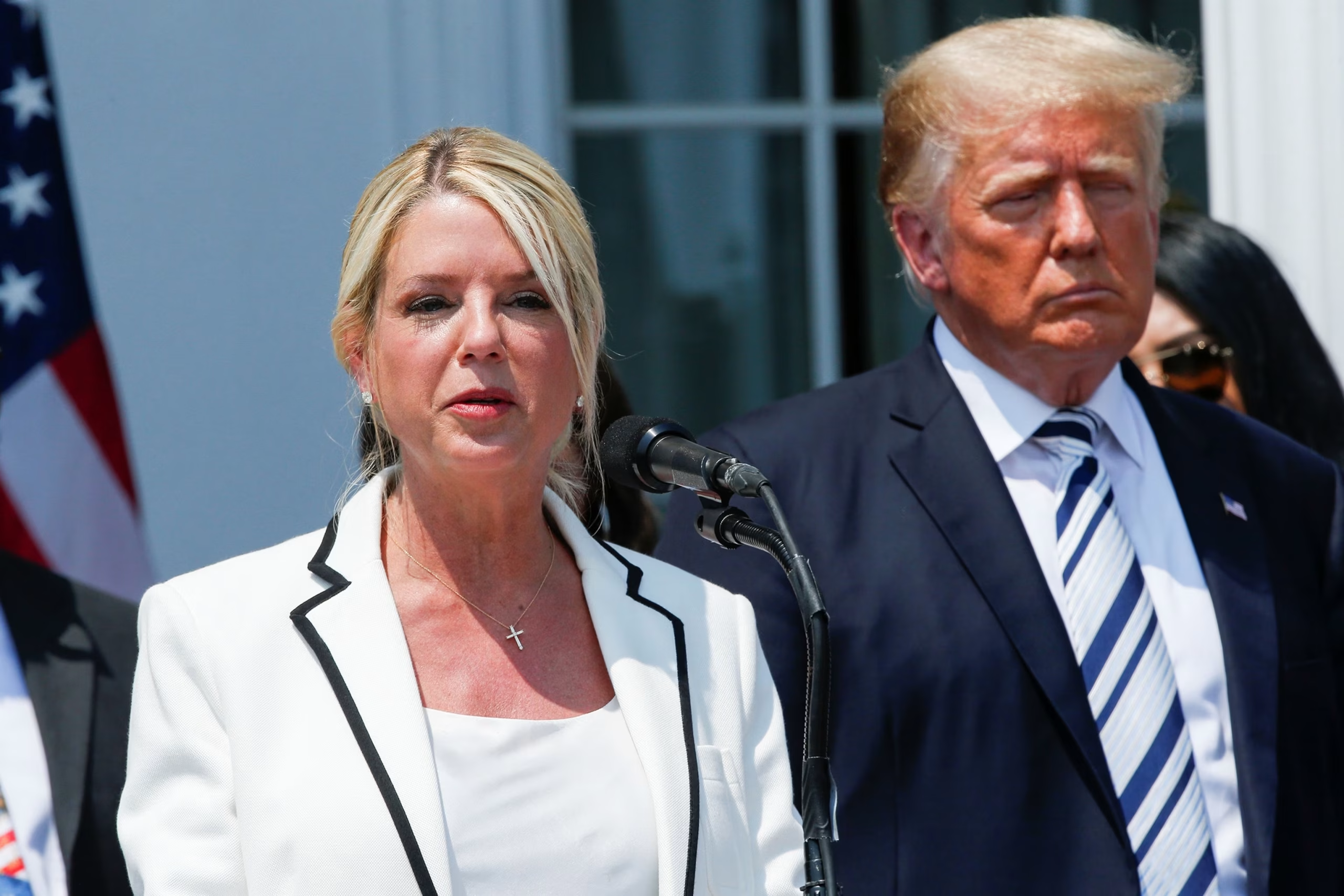
The Justice Department is facing mounting accusations from whistleblowers, victims’ advocates, and congressional Republicans that it is withholding key Epstein-related documents, even after a federal mandate required their release.
The pressure comes weeks after Congress passed the Epstein Files Transparency Act, forcing Attorney General Pam Bondi to release all unclassified records connected to Jeffrey Epstein, Ghislaine Maxwell, their operations, associates, and any investigative material previously shielded behind DOJ walls.
President Donald Trump signed the bill enthusiastically, calling it “a historic victory for victims and a blow to decades of corruption.”
Yet, despite that mandate, insiders say the DOJ is still dragging its feet — and in some cases, may be flatly refusing to turn over crucial documents.
Republicans are calling it a “deep state stonewall.”
Victims’ attorneys call it “a betrayal.”
And whistleblowers inside the department describe chaos, pressure, and political panic behind the scenes.
Documents Missing. Deadlines Ignored. Frustration Rising.
According to two internal whistleblowers — both speaking through congressional staff — the department is “slow-walking” key files that were supposed to be released within 30 days of Trump’s signature.
Some documents have been handed over, but insiders say the most explosive material remains locked away:
• Internal DOJ memos on whether Epstein was granted protection by intelligence agencies
• Communications with foreign governments regarding Epstein’s networks
• Lists identifying frequent visitors to Epstein properties
• Financial documents tracing payments from Epstein-linked foundations
• Transcripts of sealed interviews with Maxwell, Epstein employees, and alleged co-conspirators
“The law required their release,” one whistleblower said. “Instead of complying, division heads are scrambling to classify documents retroactively or bury them in ‘review.’ It’s deliberate.”
DOJ leaders insist the process is ongoing and that “national security concerns, victim privacy, and ongoing investigative interests” must be weighed carefully.
Republicans say that’s the excuse they’ve used for 15 years.
Congress Turns Up the Heat
House Oversight Chair James Comer and Judiciary Chair Jim Jordan have already signaled subpoenas may be coming.
“If the DOJ thinks they can rewrite the law with ‘review delays,’ they’re mistaken,” Jordan said. “Congress demanded full disclosure — not selective transparency.”
He noted that similar tactics were used in past administrations — both Democratic and Republican — but said Congress now believes the department is protecting powerful individuals whose names appear in the archive.
“This isn’t about party,” Jordan said. “It’s about power, money, and influence.”
Victims’ Lawyers Outraged: “We Were Promised Answers”
Several attorneys representing Epstein survivors have accused DOJ leaders of protecting elite predators instead of honoring the law.
“It’s insult added to injury,” said one attorney, who represents four survivors. “The government protected Epstein for decades. Then they failed to keep him alive in custody. Now they’re refusing to turn over the evidence.”
Victims hoped the new law would finally reveal:
• Who helped Epstein avoid federal charges in the 2000s
• Which financiers, politicians, and executives participated in his network
• Why the FBI ignored tips dating back to the Clinton administration
• Who visited Epstein’s private island, ranch, and Manhattan mansion — and why
“This is the closest we’ve come to the truth,” one survivor said. “If DOJ blocks this, they’re part of the crime.”
Why DOJ Might Be Stalling
Sources in the department point to multiple motives behind the quiet resistance:
1. The Archive Implicates Too Many High-Profile Figures
Epstein collected information on everyone around him: politicians, CEOs, scientists, foreign leaders, academics, models, actors.
One insider said: “There are names in there that would shock the country.”
2. Intelligence Agencies May Be Involved
Former prosecutors believe Epstein functioned as a high-value intelligence asset at various times.
If true, key files could expose:
• Foreign intelligence contacts
• CIA or FBI cooperation
• Covert deals for immunity
3. Bureaucratic Fear
Lower-level officials fear releasing files that could destroy careers in their own agencies.
4. Cultural Rot in the DOJ
Some insiders simply don’t want transparency — period.
“It’s a default instinct: deny, redact, delay, bury,” one said.
Bondi Tries To Steer the Ship
Attorney General Pam Bondi, who inherited a deeply fractured DOJ, insists she will enforce the law.
“We will follow the statute. Maximum transparency. Victims first,” she said last week.
But even she acknowledged “new information” has surfaced — information she said is now under review by U.S. Attorney Jay Clayton.
Bondi would not specify what that new information was, citing ongoing investigations.
That statement only fueled more speculation.
The Public Pressure Campaign Begins
Across social media, activists, lawmakers, and survivors are pushing the message:
“Release the Files.”
Trump amplified several of those posts himself, saying the DOJ must “respect the law, respect victims, and expose decades of corruption.”
Republican strategist Hogan Gidley said the political pressure will be enormous:
“If they try to bury this, the backlash will be historic.”
What Happens Next
Over the next two weeks, House committees may:
• Subpoena DOJ leaders
• Demand unredacted versions of all documents
• Request whistleblower testimony
• Accuse the department of violating federal law
If DOJ refuses?
A constitutional showdown could follow.
This time, over the world’s most notorious sex trafficking network — and the powerful people who enabled it.

James Jenkins is a celebrated Pulitzer Prize-winning author whose work has reshaped the way readers think about social justice and human rights in America. Raised in Atlanta, Georgia, James grew up in a community that instilled in him both resilience and a strong sense of responsibility toward others. After studying political science and creative writing at Howard University, he worked as a journalist covering civil rights issues before dedicating himself fully to fiction. His novels are known for their sharp, empathetic portraits of marginalized communities and for weaving personal stories with broader political realities. Jenkins’s breakout novel, Shadows of Freedom, won national acclaim for its unflinching look at systemic inequality, while his more recent works explore themes of identity, resilience, and the fight for dignity in the face of oppression. Beyond his novels, James is an active public speaker, lecturing at universities and participating in nonprofit initiatives that support literacy and community empowerment. He believes that storytelling is a way to preserve history and inspire change. When not writing, James enjoys jazz music, mentoring young writers, and traveling with his family to explore cultures and stories around the world.