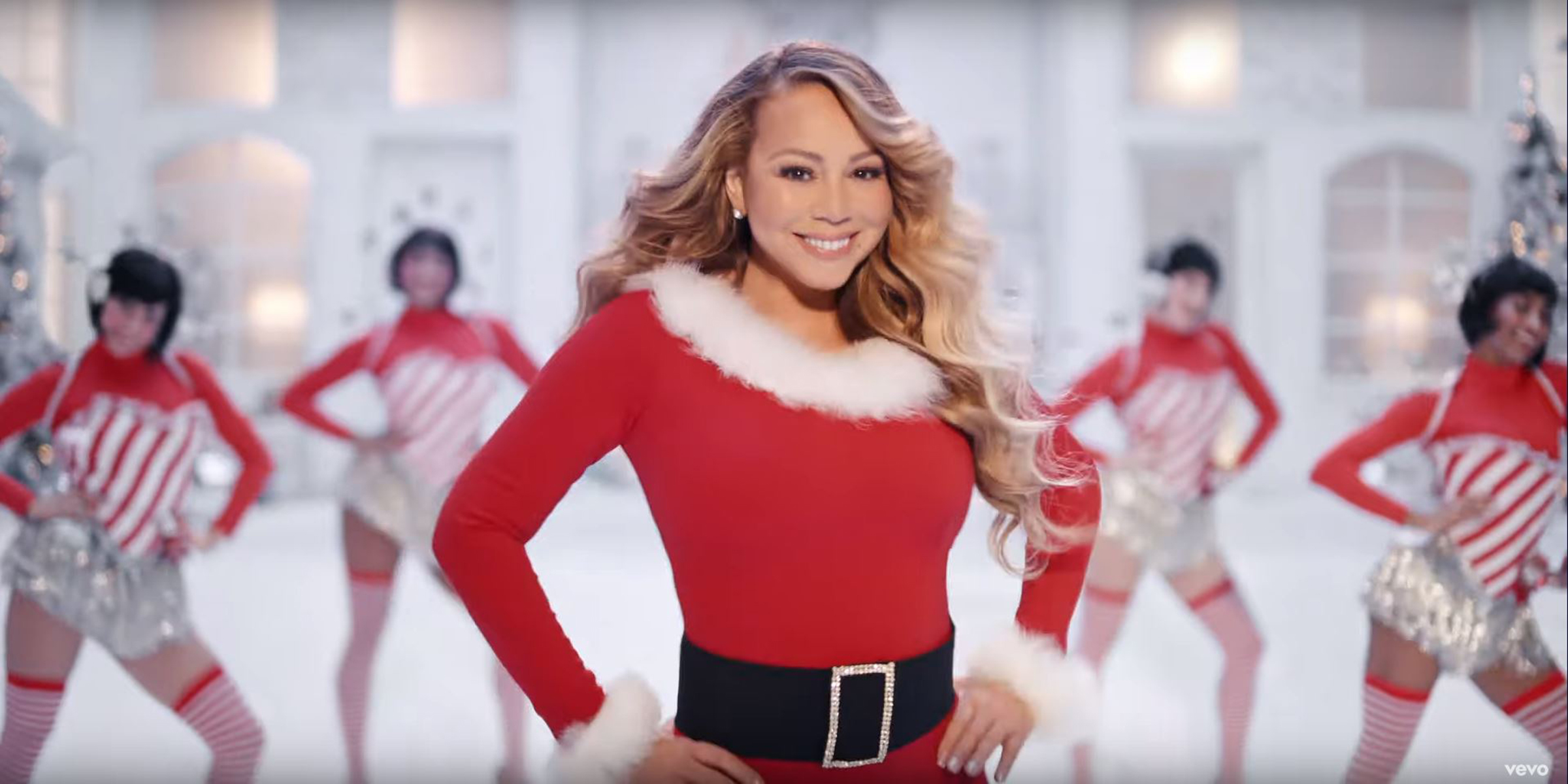
Every year, as soon as November ends, the internet braces itself. Social feeds fill with jokes about defrosting, clocks strike midnight, and suddenly Mariah Carey is everywhere again. It has become a ritual as dependable as putting up decorations or arguing about when it’s acceptable to start playing holiday music.
Rather than resist the seasonal takeover, Carey has leaned fully into it. She laughs at the memes, joins in on the jokes, and openly embraces her status as the unofficial Queen of Christmas. What makes it work is that her enthusiasm isn’t manufactured. By her own admission, Christmas has always been her favorite time of year, long before it became a branding empire.
That genuine love for the season is part of the reason a simple musical idea she had in the early 1990s turned into something far bigger than anyone could have predicted. What began as a melody tapped out on a small Casio keyboard would eventually become the most dominant holiday song of the modern era.
A song born from real holiday obsession
When Carey first started working on All I Want for Christmas Is You, she wasn’t trying to chase trends or manufacture a hit. In fact, she has said her main goal was to create something timeless — a song that didn’t sound locked into a specific decade.
“I really, truly love the holidays,” she once explained. “It’s not fake.”
That authenticity matters. While many Christmas songs feel like novelty tracks or commercial afterthoughts, this one carried the warmth, longing, and simplicity that define enduring holiday classics. It borrowed from classic Christmas songwriting traditions while still sounding unmistakably like Mariah Carey.
Released in 1994 as part of her album Merry Christmas, the song didn’t immediately dominate charts the way pop singles do today. Instead, it followed a slower, more organic path — reappearing every December, growing a little bigger each year, embedding itself deeper into global holiday culture.
From festive favorite to cultural takeover
By the time streaming reshaped the music industry, Carey’s Christmas anthem was perfectly positioned. Each December, listeners across the world returned to it — not out of obligation, but tradition. Shopping malls, radio stations, TV adverts, movies, social media clips, and family playlists all leaned on the same familiar opening bells.
The result? A song that doesn’t just resurface annually — it explodes.
Today, it holds the title of the most streamed Christmas song of all time. Every holiday season, it races back up global charts, often outperforming brand-new releases from current artists. Few songs in music history, holiday or otherwise, have shown that kind of long-term consistency.
And naturally, with that level of saturation comes money — though for years, the scale of it remained mostly a curiosity whispered about rather than openly discussed.
The moment everyone asks the same question
At some point in every December conversation, someone inevitably asks: How much does she actually make from this song?
It’s a fair question. After all, the track is nearly 30 years old, yet it behaves like a brand-new hit every winter. It generates revenue from streams, radio play, public performances, film placements, advertisements, and retail use — across dozens of countries simultaneously.
Music industry experts have long hinted that the earnings are enormous. But even by superstar standards, the numbers are enough to make seasoned executives raise an eyebrow.
Here’s where the jaw-drop happens.
The staggering annual payday
Estimates suggest that Mariah Carey earns between $2.6 million and $4 million every single year from All I Want for Christmas Is You alone — from one song released in 1994 that truly dominates for only about six weeks each year.
Over time, the total revenue generated by the track has reportedly surpassed $100 million. And unlike touring income or album cycles, this money arrives reliably every December, regardless of what else Carey is doing professionally.
As famously joked in About a Boy, if you write a truly great Christmas song, you might never have to work again. Carey didn’t just write one — she wrote the one.
A holiday lifestyle to match the legend
Unsurprisingly, Carey doesn’t treat Christmas as a casual affair. She has described it as the highlight of her entire year, something she plans for long before December even arrives.
One of her favorite traditions involves heading to Aspen with her family, a setting that feels like it was pulled straight from a Christmas card. Sleigh rides, extended family gatherings, elaborate meals, and full festive immersion are all part of the routine. In classic Mariah fashion, she has even joked that she knows Santa Claus personally.
Live reindeer, over-the-top decorations, and a theatrical sense of celebration come naturally to someone whose voice has become synonymous with the season itself. It’s not just a holiday — it’s a production.
How her Christmas earnings compare to others
Carey may dominate the modern era, but she isn’t the only artist cashing in when December rolls around.
Slade’s Merry Xmas Everybody is estimated to earn between £500,000 and £1 million each year, while Wham!’s Last Christmas reportedly brings in hundreds of thousands annually as well. These are impressive numbers — yet they still sit well below Carey’s yearly haul.
The difference lies in reach and ownership. Carey co-wrote her song and retains significant publishing rights, meaning she benefits heavily every time it’s played, streamed, or licensed. As streaming continues to grow globally, that annual figure is unlikely to shrink anytime soon.
A legacy that grows louder every December
What makes this story remarkable isn’t just the money. It’s the staying power. Nearly three decades after its release, All I Want for Christmas Is You continues to define the sound of the holidays for an entire generation — and then some.
For many artists, a hit song is a moment. For Mariah Carey, it became a season, a tradition, and a financial phenomenon that reawakens every winter like clockwork.
And as long as Christmas exists, chances are her voice will be right there with it — ringing in the holidays, and quietly adding another few million to her already legendary legacy.

Emily Johnson is a critically acclaimed essayist and novelist known for her thought-provoking works centered on feminism, women’s rights, and modern relationships. Born and raised in Portland, Oregon, Emily grew up with a deep love of books, often spending her afternoons at her local library. She went on to study literature and gender studies at UCLA, where she became deeply involved in activism and began publishing essays in campus journals. Her debut essay collection, Voices Unbound, struck a chord with readers nationwide for its fearless exploration of gender dynamics, identity, and the challenges faced by women in contemporary society. Emily later transitioned into fiction, writing novels that balance compelling storytelling with social commentary. Her protagonists are often strong, multidimensional women navigating love, ambition, and the struggles of everyday life, making her a favorite among readers who crave authentic, relatable narratives. Critics praise her ability to merge personal intimacy with universal themes. Off the page, Emily is an advocate for women in publishing, leading workshops that encourage young female writers to embrace their voices. She lives in Seattle with her partner and two rescue cats, where she continues to write, teach, and inspire a new generation of storytellers.