NOTE: VIDEO AT THE END OF THE ARTICLE.
On Friday, coordinated Immigration and Customs Enforcement (ICE) and FBI raids across Los Angeles sparked significant confrontation between federal agents and left-wing protesters, amid apparent support from local city officials. The enforcement actions, targeting undocumented immigrants, took place at multiple locations throughout the city, including two Home Depot stores and the headquarters of Ambient Apparel in the fashion district. The raids covered a wide geographical area, stretching from downtown Los Angeles to neighborhoods such as Westlake, Cypress Park, and Skid Row.
Shortly after the raids began, Los Angeles Mayor Karen Bass (D) publicly condemned the federal operations. Using the social media platform X, Bass issued a strong statement denouncing the enforcement efforts. “This morning, we received reports of federal immigration enforcement actions in multiple locations in Los Angeles. As mayor of a proud city of immigrants, who contribute to our city in so many ways, I am deeply angered by what has taken place,” she wrote.
Bass criticized the federal agents’ tactics, saying, “These tactics sow terror in our communities and disrupt basic principles of safety in our city.” She also confirmed that her office was working closely with immigrant rights organizations, pledging that the city would not tolerate such enforcement actions.
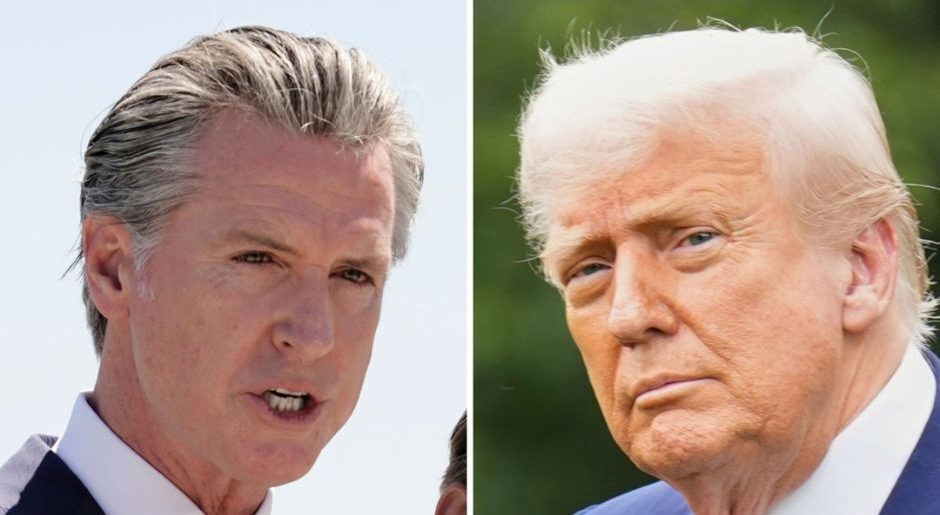
California Governor Gavin Newsom also voiced his opposition, aligning with local leaders in condemning the raids. Newsom emphasized California’s role as a sanctuary state, reiterating that the state government would continue protecting immigrant communities against what he described as aggressive federal enforcement tactics.
Protesters, seemingly galvanized by Bass’s and Newsom’s comments, quickly mobilized at several raid sites. At one location, demonstrators reportedly trapped ICE agents inside a building, surrounding the premises and preventing their exit. The situation escalated to the point where FBI agents were called in to help de-escalate the standoff.
The chaotic scenes continued as protesters swarmed federal vehicles during the agents’ attempts to leave, running alongside and sometimes in front of moving SUVs. The intensity of the confrontations was captured on video, including footage showing at least one protester being struck by a vehicle amid the commotion.
In contrast, former President Donald Trump defended the federal enforcement efforts, framing the raids as necessary actions targeting criminal elements within the undocumented population. Trump criticized Democratic officials for what he called “weak leadership” that undermined law enforcement and public safety.
Representative Sydney Kamlager-Dove (D-CA) echoed the mayor’s stance, highlighting a Korean American-owned store in her district affected by the enforcement. She stated, “I am closely monitoring the ICE raids that are currently happening across Los Angeles. L.A. has long been a safe haven for immigrants. Trump claims he’s targeting criminals, but he’s really just tearing families apart and destabilizing entire communities.”
The clashes between protesters and federal authorities during the raids reflect the broader national tensions over immigration enforcement policies. With local officials like Bass and Newsom vocally opposing federal actions, and Trump and his supporters emphasizing law and order, the events in Los Angeles underscore the deep political divisions surrounding immigration in the United States.
PLAY:
https://www.youtube.com/watch?v=ze-WemqULAo
James Jenkins is a celebrated Pulitzer Prize-winning author whose work has reshaped the way readers think about social justice and human rights in America. Raised in Atlanta, Georgia, James grew up in a community that instilled in him both resilience and a strong sense of responsibility toward others. After studying political science and creative writing at Howard University, he worked as a journalist covering civil rights issues before dedicating himself fully to fiction. His novels are known for their sharp, empathetic portraits of marginalized communities and for weaving personal stories with broader political realities. Jenkins’s breakout novel, Shadows of Freedom, won national acclaim for its unflinching look at systemic inequality, while his more recent works explore themes of identity, resilience, and the fight for dignity in the face of oppression. Beyond his novels, James is an active public speaker, lecturing at universities and participating in nonprofit initiatives that support literacy and community empowerment. He believes that storytelling is a way to preserve history and inspire change. When not writing, James enjoys jazz music, mentoring young writers, and traveling with his family to explore cultures and stories around the world.