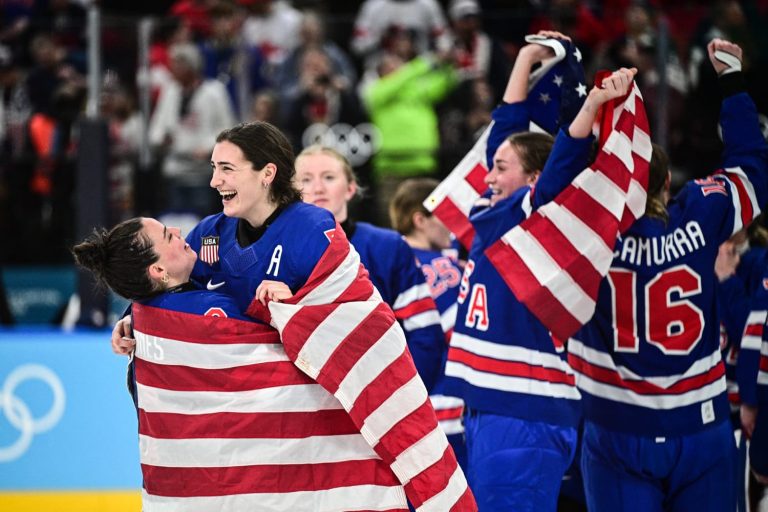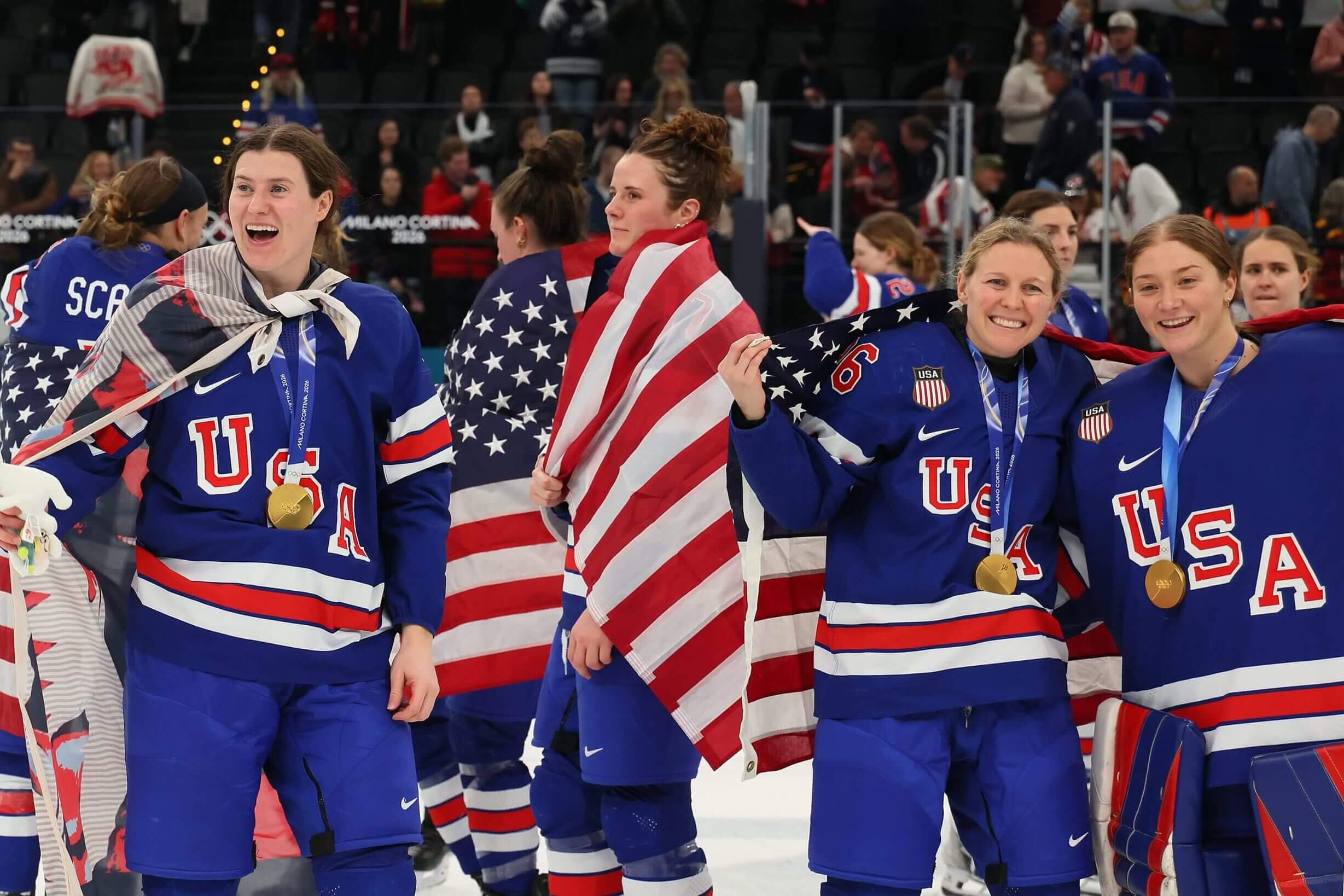
The United States women’s national hockey team has declined an invitation to attend the upcoming State of the Union address delivered by Donald Trump, choosing instead to prioritize previously scheduled commitments following their Olympic triumph.
The invitation, extended shortly after the team secured a dramatic gold-medal victory at the 2026 Winter Games in Milan and Cortina, was intended as a high-profile recognition of their achievement. However, according to a spokesperson for USA Hockey, the athletes were unable to attend due to prior academic and professional obligations already in place following the conclusion of the Olympic tournament.
“We are sincerely grateful for the invitation extended to our gold medal–winning U.S. Women’s Hockey Team and deeply appreciate the recognition of their extraordinary achievement,” the organization said in a formal statement. “Due to the timing and previously scheduled academic and professional commitments following the Games, the athletes are unable to participate. They were honored to be included and are grateful for the acknowledgment.”
Olympic Glory and a Historic Victory
The decision comes just days after the women’s team captured gold in one of the most memorable games in Olympic hockey history. Facing longtime rivals Canada, the United States staged a dramatic comeback late in the final before securing a 2-1 overtime victory.
Trailing in the closing minutes of regulation, veteran forward Hilary Knight tied the game by deflecting a puck into the net with roughly two minutes remaining. The momentum carried into overtime, where defenseman Megan Keller executed a remarkable individual play, skating past a defender and scoring the decisive goal to secure the gold medal.
The game quickly became the most-watched women’s hockey broadcast of all time, underscoring the growing popularity and visibility of women’s sports on the global stage. Analysts and fans alike described the contest as a defining moment for the sport, showcasing both skill and resilience at the highest level.
Parallel Success for the Men’s Team
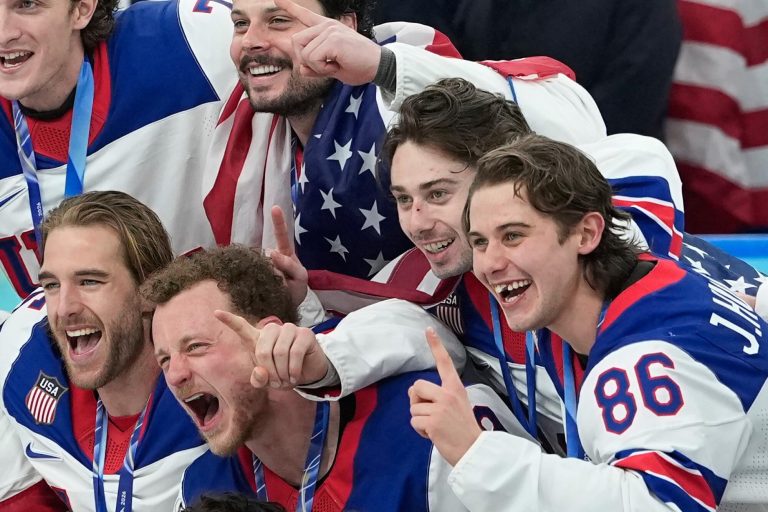
The men’s national team also delivered a historic performance just days later, defeating Canada by the same 2-1 scoreline in overtime. Center Jack Hughes scored the game-winning goal, sealing the United States’ first Olympic gold medal in men’s hockey since the legendary 1980 “Miracle on Ice” squad.
That parallel success — with both the men’s and women’s teams capturing gold in nearly identical fashion — created a wave of national excitement and renewed attention to American hockey. The victories were celebrated widely, including calls and messages from government officials and public figures recognizing the teams’ accomplishments.
The Invitation and the Response
In the days following the men’s gold-medal win, Donald Trump spoke with players by phone to congratulate them. During that call, he joked about the possibility of inviting the women’s team as well, remarking with a laugh that he “probably would be impeached” if he did not include them. The comment drew laughter from players in the locker room but also sparked some criticism online.
Despite the joking tone of the remark, the White House subsequently extended a formal invitation to the women’s team to attend the State of the Union. The invitation was framed as a recognition of their achievement and a celebration of their Olympic success alongside the men’s team.
Ultimately, the athletes chose not to attend, citing scheduling conflicts rather than political reasons. USA Hockey emphasized that the team appreciated the honor and the recognition but was committed to fulfilling obligations that had been arranged long before the invitation was issued.
Broader Context and Public Reaction
The decision has generated discussion across sports and political circles, with reactions ranging from support for the team’s priorities to speculation about the broader context surrounding the invitation. Some observers have noted that Olympic athletes often return home to packed schedules, including academic responsibilities, professional commitments, media appearances, and team obligations.
Others pointed to the heightened political environment surrounding high-profile events like the State of the Union, which can place athletes in the spotlight beyond their athletic achievements. In recent years, sports teams visiting the White House or attending political events have sometimes found themselves navigating complex public reactions and expectations.
USA Hockey’s statement, however, focused squarely on logistics and timing, avoiding any political framing. By emphasizing previously scheduled commitments, the organization underscored that the decision was based on practical considerations rather than controversy.
Celebrating Women’s Sports Momentum
Regardless of the decision regarding the State of the Union, the U.S. women’s hockey team’s Olympic victory has been widely celebrated as a milestone for women’s sports. The record-breaking viewership of the gold-medal game, combined with the dramatic nature of the win, has further elevated the profile of women’s hockey both in the United States and internationally.
Players such as Hilary Knight and Megan Keller have become central figures in the sport’s growth, inspiring a new generation of athletes and fans. Their performance in Milan and Cortina demonstrated not only elite athletic ability but also the increasing competitiveness and visibility of women’s hockey on the global stage.
The dual gold-medal victories by the U.S. men’s and women’s teams have also reinforced the strength of American hockey programs, highlighting the depth of talent and development systems that support athletes at every level.
Looking Ahead
As the players return to their respective teams, schools, and professional obligations, attention now turns to what comes next for the athletes who delivered one of the most memorable Olympic performances in recent history. Many will continue competing in professional leagues, international tournaments, and future Olympic cycles, while also serving as ambassadors for the sport.
The declined invitation does not diminish the significance of their achievement or the recognition they have received. Instead, it reflects the complex and often demanding schedules that elite athletes must balance in the aftermath of major competitions.
In the end, the story of the 2026 U.S. women’s hockey team remains centered on their on-ice success — a comeback victory, an overtime finish, and a gold medal that captured the attention of millions. Whether celebrated in arenas, on television screens, or from the halls of government, their accomplishment stands as one of the defining sporting moments of the year.

James Jenkins is a celebrated Pulitzer Prize-winning author whose work has reshaped the way readers think about social justice and human rights in America. Raised in Atlanta, Georgia, James grew up in a community that instilled in him both resilience and a strong sense of responsibility toward others. After studying political science and creative writing at Howard University, he worked as a journalist covering civil rights issues before dedicating himself fully to fiction. His novels are known for their sharp, empathetic portraits of marginalized communities and for weaving personal stories with broader political realities. Jenkins’s breakout novel, Shadows of Freedom, won national acclaim for its unflinching look at systemic inequality, while his more recent works explore themes of identity, resilience, and the fight for dignity in the face of oppression. Beyond his novels, James is an active public speaker, lecturing at universities and participating in nonprofit initiatives that support literacy and community empowerment. He believes that storytelling is a way to preserve history and inspire change. When not writing, James enjoys jazz music, mentoring young writers, and traveling with his family to explore cultures and stories around the world.