The U.S. Supreme Court has agreed to hear a case that could reshape one of the most fundamental principles of American law. The decision, announced Friday, sets the stage for what legal experts are calling one of the most significant constitutional battles in decades — one that could redefine who is recognized as a citizen of the United States.
The case arrives at the high court after a series of conflicting rulings from lower federal courts across the country. Those courts temporarily blocked enforcement of a controversial federal policy that has sparked widespread legal challenges, political opposition, and intense national debate.
At the center of the dispute is a sweeping executive action issued earlier this year that directly challenges long-standing interpretations of the U.S. Constitution. While the order itself was quickly halted by judges in multiple states, the Supreme Court’s decision to review the matter now places the issue squarely in the nation’s highest judicial arena.
Arguments are expected early next year, with a final ruling likely by the summer — positioning the decision to land during a highly charged election cycle.
A Question That Has Shaped America for Over a Century
For more than 120 years, the United States has operated under a widely accepted interpretation of the 14th Amendment’s Citizenship Clause. That clause states that all persons born or naturalized in the United States, and subject to its jurisdiction, are citizens.
This language has long been understood to mean that nearly every child born on U.S. soil is automatically granted citizenship, regardless of the immigration status of their parents. The principle, commonly known as birthright citizenship, has served as a foundational element of American identity and law since the late 19th century.
Now, for the first time in generations, the Supreme Court is preparing to revisit that understanding in a case that could rewrite modern citizenship policy.
How the Case Reached the High Court
The controversy began earlier this year when a new federal directive was issued that sought to dramatically narrow who qualifies for automatic citizenship at birth. Almost immediately, the order was challenged in federal courts across several states.
Judges in Massachusetts, Washington state, and New Hampshire issued injunctions blocking enforcement, citing concerns that the policy likely violates the Constitution. One judge warned that stripping newborns of citizenship — even temporarily — could cause lasting harm to families and children.
A coalition of state attorneys general also filed suit, arguing that the order directly contradicts both the clear wording and historical intent of the 14th Amendment. Their lawsuits described the policy as legally indefensible and warned that it would create chaos in immigration law and public administration.
Despite these early defeats, federal attorneys pressed forward, asking the Supreme Court to intervene and settle the constitutional question once and for all.
On Friday, the Court agreed.
Why This Case Is Unusually Powerful
The Supreme Court receives thousands of requests each year but agrees to hear only a small fraction of them. The decision to take up this case signals that a majority of justices believe it raises a fundamental constitutional question that demands resolution at the highest level.
If the Court upholds the challenged policy, it would represent the most sweeping change to U.S. citizenship law since Reconstruction. If it strikes the policy down, it would reaffirm one of the most deeply entrenched interpretations of the Constitution.
Either outcome would send shockwaves through immigration law, federal agencies, and millions of families across the country.
The Long Legal Shadow of an 1898 Precedent
Much of the coming legal battle is expected to center on a single Supreme Court ruling from 1898: United States v. Wong Kim Ark.
In that case, the Court ruled that a child born in San Francisco to foreign parents legally residing in the U.S. was entitled to automatic citizenship. For more than a century, that decision has served as the bedrock for birthright citizenship.
Lower courts blocking the current policy have cited Wong Kim Ark repeatedly as settled law. But government attorneys argue that the ruling has been misapplied over time — particularly when it comes to children born to parents who are in the country unlawfully.
This dispute over how far that precedent truly extends will be central to the Supreme Court’s review.
Mid-Article Core Reveal
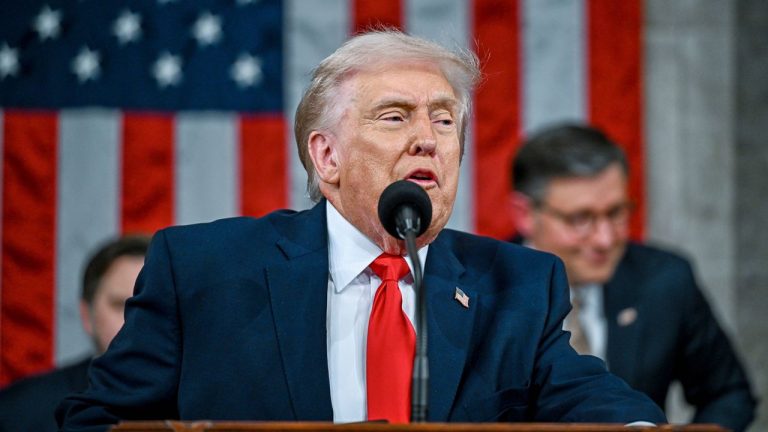
The policy now headed to the Supreme Court was issued by President Donald Trump on his first day back in office in January.
Trump’s executive order declared that children born on U.S. soil to parents who are either in the country illegally or only temporarily would no longer be entitled to automatic U.S. citizenship. The move immediately ignited fierce political and legal backlash.
Trump framed the action as a necessary correction to what he called a “century-long misreading” of the Constitution. The order argued that the 14th Amendment’s Citizenship Clause had been “grossly distorted” by judges and federal agencies over decades.
“It is the policy of the United States that no department or agency of the government shall issue or recognize documents purporting to confer U.S. citizenship” to certain children born in the U.S., the order states.
His administration contends that the phrase “subject to the jurisdiction thereof” excludes children whose parents owe allegiance to another nation or who lack lawful status in the United States.
The Administration’s Legal Argument
Federal attorneys defending the order insist that the Constitution never intended to create universal birthright citizenship. They argue that the 14th Amendment was designed to secure citizenship for formerly enslaved people after the Civil War — not to provide automatic status to anyone born within U.S. borders regardless of circumstance.
Solicitor General D. John Sauer urged the Supreme Court to take the case, calling the modern interpretation of birthright citizenship “a mistaken view that has produced destructive consequences.” He argued that automatic citizenship for the children of those in the country unlawfully encourages illegal entry and weakens national sovereignty.
The administration has also maintained that Wong Kim Ark does not apply to cases involving unlawful presence, a position that directly challenges decades of legal consensus.
Lower Courts Push Back Forcefully
Federal judges have thus far shown little sympathy for the administration’s arguments.
In Massachusetts, U.S. District Judge Leo Sorokin blocked the order in February, warning that stripping newborns of citizenship could leave “permanent scars” even if later reversed. In Seattle, U.S. District Judge John Coughenour issued a nationwide injunction earlier, stopping enforcement across the entire country.
In New Hampshire, a federal court certified a nationwide class of plaintiffs — families and infants affected by the policy — and ruled that the order was likely unconstitutional.
Even the U.S. Court of Appeals for the 9th Circuit declined to side with the administration earlier this year, dealing another setback before the Supreme Court finally stepped in.
What’s at Stake for Millions of Families
If the Supreme Court ultimately upholds the order, its impact would be immediate and far-reaching.
Children born in the U.S. to parents without legal status — as well as to certain temporary visa holders — could be denied citizenship at birth. That would affect access to Social Security numbers, passports, voting rights, federal benefits, and even basic identity documentation.
Legal scholars warn that such a shift would create a new class of stateless or quasi-stateless children, many of whom may have no legal ties to any other country.
State governments, hospitals, school systems, and social services would all be forced to adjust overnight to a dramatically altered citizenship framework.
A Ruling Timed for Political Impact
The Court is expected to hear arguments early next year, with a final decision likely in late June or early July.
That timing places the ruling squarely in the middle of the 2026 election season — ensuring that immigration, citizenship, and constitutional interpretation will dominate the national political conversation.
Both supporters and critics of the policy are already preparing for mass mobilization, regardless of how the justices rule.
A Defining Moment for the Supreme Court
For the Supreme Court itself, the case represents a defining test of its role in reshaping long-standing constitutional doctrines.
Few modern rulings would carry consequences as sweeping as redefining birthright citizenship. The Court’s decision will either cement the century-old interpretation or upend it in one of the most dramatic shifts in constitutional law in modern history.
Regardless of the outcome, the ruling will reverberate through every level of government — and through generations of American families.

Emily Johnson is a critically acclaimed essayist and novelist known for her thought-provoking works centered on feminism, women’s rights, and modern relationships. Born and raised in Portland, Oregon, Emily grew up with a deep love of books, often spending her afternoons at her local library. She went on to study literature and gender studies at UCLA, where she became deeply involved in activism and began publishing essays in campus journals. Her debut essay collection, Voices Unbound, struck a chord with readers nationwide for its fearless exploration of gender dynamics, identity, and the challenges faced by women in contemporary society. Emily later transitioned into fiction, writing novels that balance compelling storytelling with social commentary. Her protagonists are often strong, multidimensional women navigating love, ambition, and the struggles of everyday life, making her a favorite among readers who crave authentic, relatable narratives. Critics praise her ability to merge personal intimacy with universal themes. Off the page, Emily is an advocate for women in publishing, leading workshops that encourage young female writers to embrace their voices. She lives in Seattle with her partner and two rescue cats, where she continues to write, teach, and inspire a new generation of storytellers.