On February 20, 2026, the United States Supreme Court delivered one of the most consequential separation-of-powers rulings of President Donald Trump’s second term, striking down the bulk of a tariff regime that had reshaped American trade policy over the past several years.
In a 6–3 decision, the Court concluded that the president overstepped his statutory authority by invoking a national emergency law to impose sweeping tariffs on a wide range of imported goods. The ruling represents a notable rebuke to the administration and, perhaps more significantly, a reaffirmation of Congress’s constitutional role in setting tariffs.
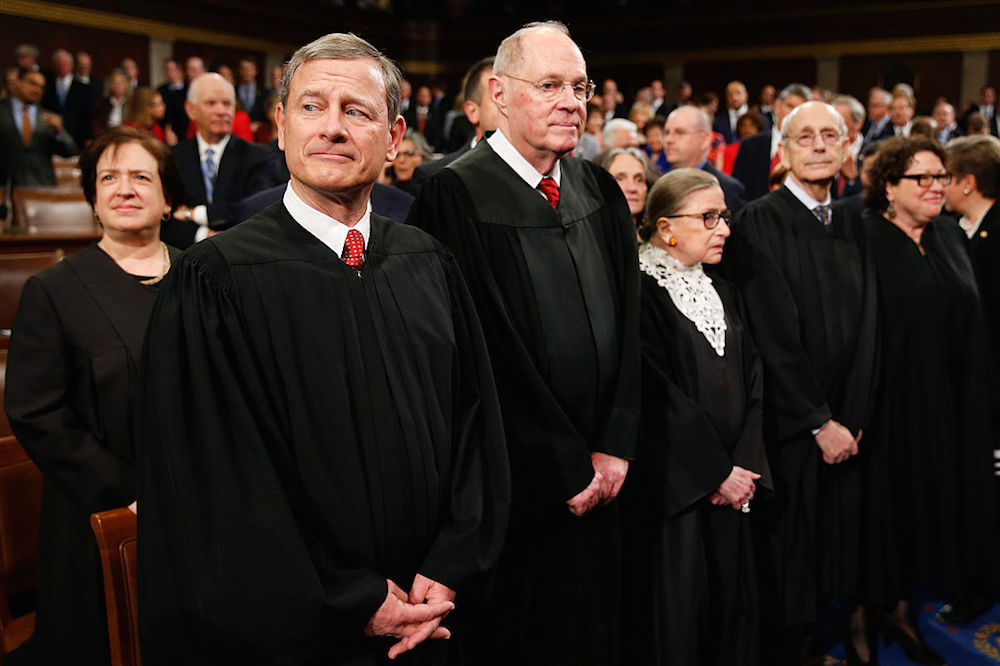
The opinion was authored by Chief Justice John Roberts, who wrote for the majority that the administration “points to no statute” granting authority to impose the challenged tariffs under the law it relied upon. The three dissenting justices warned that the decision could have far-reaching financial and geopolitical consequences.
At issue was the president’s use of the International Emergency Economic Powers Act (IEEPA), a statute enacted in 1977 that grants presidents authority to regulate certain economic transactions after declaring a national emergency. The administration had argued that the law permitted the imposition of tariffs as part of emergency economic measures.
The Court disagreed.
The Legal Core of the Dispute
The IEEPA has historically been used to freeze assets, block transactions, and impose sanctions in response to foreign threats. It has not, until now, served as a primary vehicle for imposing broad import tariffs. The Trump administration contended that the statute’s language authorizing the regulation of economic transactions was sufficiently expansive to include tariff measures.
Writing for the majority, Chief Justice Roberts rejected that interpretation. While acknowledging the president’s broad authority in matters of foreign affairs, the opinion emphasized that tariff-setting power is explicitly delegated to Congress under Article I of the Constitution. Delegations of such authority, the Court held, must be clear and specific.
“Emergency powers,” the opinion stated, “do not displace structural constitutional assignments absent unmistakable statutory authorization.”
The ruling did not question the president’s ability to declare national emergencies under the IEEPA. Rather, it drew a line at the use of that declaration as a basis for imposing what the Court characterized as revenue-generating import taxes without express congressional approval.
Which Tariffs Were Affected
The decision does not invalidate all tariffs imposed during the Trump administration. Instead, it targets specific categories enacted under the IEEPA framework.
Among the tariffs struck down were so-called “reciprocal” tariffs directed at countries accused of maintaining unfair trade practices, including measures targeting China that reached rates as high as 34 percent. The Court also invalidated a 25 percent tariff applied to certain goods from Canada, China, and Mexico. The administration had justified those measures as part of a broader effort to combat fentanyl trafficking and related cross-border criminal activity.
However, tariffs on steel and aluminum remain intact. Those duties were imposed under separate statutory authorities, including provisions of the Trade Expansion Act that allow tariffs on national security grounds. Because those measures were not challenged under the IEEPA framework at issue in this case, they were unaffected by the ruling.
The distinction underscores the narrow but significant scope of the Court’s holding: it does not eliminate the executive branch’s role in trade policy but constrains the legal mechanisms available for sweeping action.
Financial and Economic Implications
The immediate economic impact of the ruling could be substantial.
Businesses that paid tariffs under the invalidated regime may now seek refunds from the Treasury Department. Several companies, including V.O.S. Selections Inc. and Plastic Services and Products, had already filed lawsuits arguing that the tariffs imposed heavy financial burdens on their operations.
In dissent, Justice Brett Kavanaugh warned that the financial ramifications could run into the billions of dollars. If refund claims proceed successfully, the Treasury may be required to reimburse significant sums collected under the challenged tariffs.
Beyond refunds, the decision introduces uncertainty into ongoing trade relationships. Foreign governments that had negotiated around the tariff structure may reassess their positions. Markets, which often react sharply to trade developments, are likely to watch closely for signals about the administration’s next steps.
For American importers and manufacturers, the ruling provides potential relief from certain cost pressures. For domestic producers who benefited from protective tariffs, it introduces fresh competitive concerns.
A Rare Judicial Setback
The 6–3 alignment in the case drew attention given the Court’s conservative majority. While the justices’ votes do not always align predictably along ideological lines, the decision marks a notable setback for President Trump before a Court that includes several justices appointed by Republican presidents.
Legal analysts suggest that the ruling reflects less a policy disagreement and more a structural concern about executive overreach. The majority opinion focused heavily on constitutional architecture—specifically, the allocation of taxing and tariff authority to Congress.
In doing so, the Court signaled a willingness to police the boundaries of emergency powers, even when exercised by a president from a political coalition aligned with much of the Court’s membership.
Constitutional Separation of Powers
At its heart, the case centers on the balance of power between Congress and the presidency.
The Constitution grants Congress the authority to “lay and collect Taxes, Duties, Imposts and Excises.” Over time, Congress has delegated aspects of trade policy authority to the executive branch, particularly in areas involving national security and foreign negotiations. However, such delegations are typically accompanied by procedural requirements or defined limits.
The Court’s decision reinforces the principle that delegations must be explicit. Broad statutory language, the majority held, cannot be stretched to authorize sweeping fiscal measures absent clear congressional intent.
This reasoning may extend beyond trade. Scholars note that the Court’s approach to emergency powers could influence future disputes involving executive authority in areas such as sanctions, border policy, and national security.
What Comes Next
The ruling does not foreclose the administration’s ability to pursue tariffs altogether. Instead, it limits reliance on the IEEPA as the legal vehicle.
President Trump could seek to reimpose tariffs under alternative statutory frameworks, provided those laws offer explicit authorization. He could also request that Congress enact new legislation granting broader trade authority.
Such legislative action, however, would require navigating the political landscape on Capitol Hill. Trade policy has long been a source of bipartisan division, and efforts to expand executive tariff authority may encounter resistance from lawmakers wary of concentrating power in the presidency.
In the interim, businesses and policymakers face a period of adjustment. Supply chains, pricing structures, and contractual arrangements built around the invalidated tariffs may require revision.
Broader Trade Policy Implications
The decision may mark a turning point in U.S. trade governance.
Over the past decade, trade policy has increasingly become a central tool of executive strategy, used to pursue economic leverage, geopolitical goals, and domestic political priorities. The Court’s ruling underscores that even in an era of expansive executive action, constitutional limits remain operative.
Internationally, the decision could recalibrate diplomatic negotiations. Trading partners may view the ruling as evidence that certain tariff measures are less durable than previously assumed. Conversely, it may prompt foreign governments to push for more formalized agreements through congressional channels.
Domestically, the ruling revives debate about the appropriate balance between flexibility in foreign affairs and adherence to constitutional structure. Supporters of strong executive authority argue that rapid economic measures are often necessary in response to global threats. Critics contend that bypassing Congress undermines democratic accountability.
Conclusion
The Supreme Court’s February 20 ruling represents more than a dispute over tariffs. It is a constitutional statement about who holds the power to tax and regulate trade.
By invalidating major tariffs imposed under the IEEPA while leaving others intact, the Court charted a middle course: affirming executive authority where clearly granted, but rejecting its expansion beyond statutory bounds.
For President Trump, the decision presents both a legal constraint and a political challenge. For Congress, it reasserts a constitutional prerogative. And for businesses and consumers, it signals potential financial and policy shifts in the months ahead.
As the implications unfold, one principle stands clear: even in times framed as emergencies, the structure of American government continues to shape—and limit—the tools available to its leaders.

Emily Johnson is a critically acclaimed essayist and novelist known for her thought-provoking works centered on feminism, women’s rights, and modern relationships. Born and raised in Portland, Oregon, Emily grew up with a deep love of books, often spending her afternoons at her local library. She went on to study literature and gender studies at UCLA, where she became deeply involved in activism and began publishing essays in campus journals. Her debut essay collection, Voices Unbound, struck a chord with readers nationwide for its fearless exploration of gender dynamics, identity, and the challenges faced by women in contemporary society. Emily later transitioned into fiction, writing novels that balance compelling storytelling with social commentary. Her protagonists are often strong, multidimensional women navigating love, ambition, and the struggles of everyday life, making her a favorite among readers who crave authentic, relatable narratives. Critics praise her ability to merge personal intimacy with universal themes. Off the page, Emily is an advocate for women in publishing, leading workshops that encourage young female writers to embrace their voices. She lives in Seattle with her partner and two rescue cats, where she continues to write, teach, and inspire a new generation of storytellers.