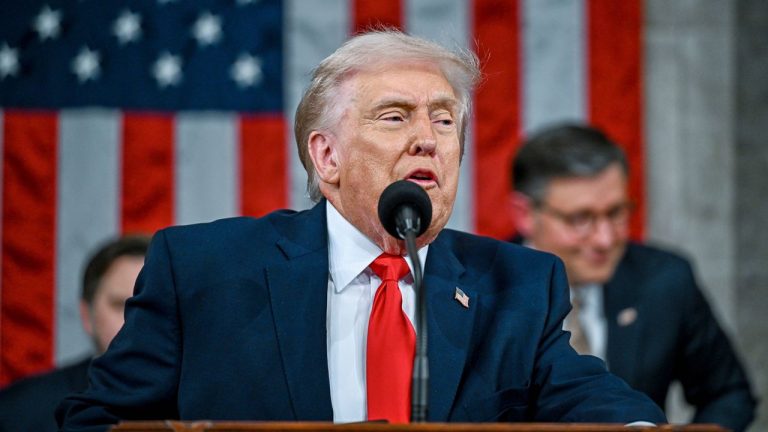

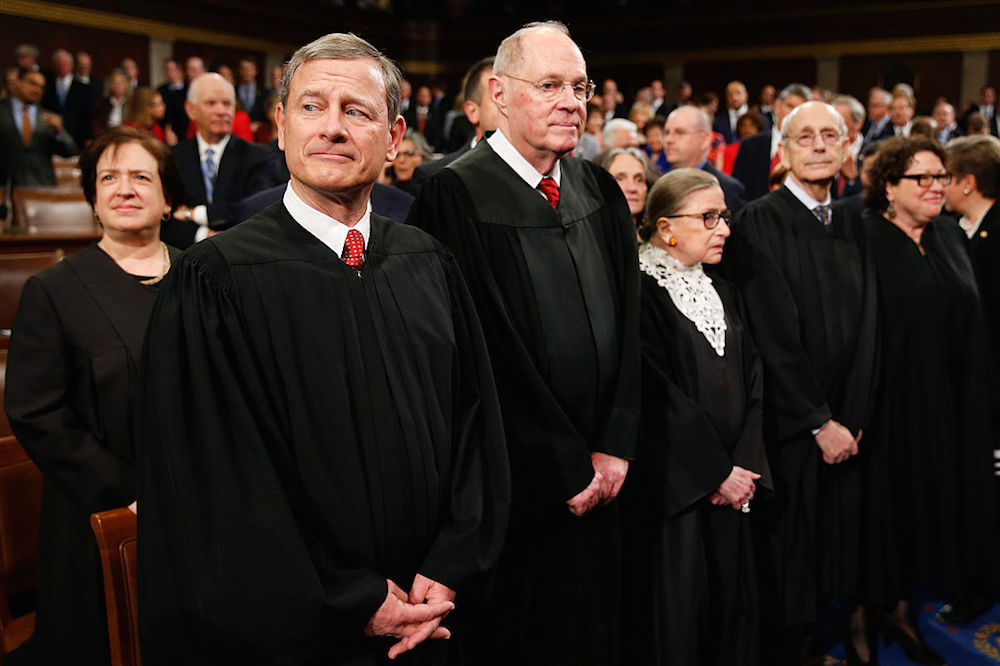
Treasury Secretary Scott Bessent said Sunday that he believes the U.S. Supreme Court is unlikely to block President Donald Trump’s use of emergency powers to impose sweeping new tariffs, with a ruling potentially arriving as soon as this week.
Speaking during an appearance on Meet the Press, Bessent framed the legal challenge as one the high court would be reluctant to upend, particularly given the broader economic and geopolitical implications.
“I believe that it is very unlikely that the Supreme Court will overrule a president’s signature economic policy,” Bessent said. “They did not overrule Obamacare. I believe that the Supreme Court does not want to create chaos.”
His remarks come as the justices consider cases tied to Trump’s use of emergency authorities to levy tariffs—an issue that could define the scope of presidential power over trade policy.
Context of the Court’s Review
Last month, the Supreme Court upheld a central provision of the Affordable Care Act allowing a federal panel to determine preventive services insurers must cover at no cost, a decision Bessent cited as evidence of judicial restraint in cases involving major policy frameworks.
The Court is now expected to rule before the end of its term on whether Trump lawfully invoked the International Emergency Economic Powers Act (IEEPA) to impose tariffs—though observers say a decision could come earlier.
IEEPA grants presidents broad authority to enact economic measures in response to what the statute defines as an “unusual and extraordinary threat” to national security, foreign policy, or the U.S. economy.
New Tariffs Linked to Greenland Dispute
Bessent’s comments followed President Trump’s announcement of a new round of tariffs targeting European nations, tied explicitly to his administration’s escalating dispute over Greenland.
Trump said the tariffs would remain in place until what he described as “a Deal is reached for the Complete and Total purchase of Greenland.” While he did not specify the precise statutory authority being used, the move mirrors previous tariff actions taken under IEEPA during what Trump labeled “Liberation Day” trade measures.
Under the plan, tariffs on goods from Denmark, Norway, Sweden, France, Germany, the United Kingdom, the Netherlands, and Finland would begin at 10 percent on February 1, rising to 25 percent by June 1.
Trump argued that the United States has shouldered disproportionate economic and security burdens for Europe over decades and that the current moment demands a recalibration.
“We have subsidized Denmark, and all of the Countries of the European Union, and others, for many years by not charging them Tariffs, or any other forms of remuneration,” Trump wrote in a post. “Now, after centuries, it is time for Denmark to give back.”
Security Rationale and Escalating Tensions
The president has repeatedly emphasized Greenland’s strategic value, citing growing Russian and Chinese activity in the Arctic and arguing that only the United States has the capacity to secure the region long-term.
The tariffs will apply to several European countries that have pledged military deployments to Greenland in support of Danish sovereignty—moves Trump says have heightened tensions rather than stabilized them.
“This is a very dangerous situation for the safety, security, and survival of our planet,” Trump wrote. “These countries have put a level of risk in play that is not tenable or sustainable.”
Bessent defended the administration’s approach, characterizing the tariffs as a preventative measure rather than an act of escalation.
“The national emergency is avoiding a national emergency,” he said. “It is a strategic decision by the president. He is able to use the economic might of the U.S. to avoid a hot war.”
International Pushback
European leaders have strongly rejected both the proposed acquisition of Greenland and the tariff threats. Greenland is an autonomous territory within the Kingdom of Denmark, and officials in Copenhagen and Nuuk have repeatedly stated that it is not for sale.
In a joint statement released Sunday, leaders from Denmark, Finland, France, Germany, the Netherlands, Norway, Sweden, and the United Kingdom warned that the tariffs could severely damage transatlantic relations.
“We stand in full solidarity with the Kingdom of Denmark and the people of Greenland,” the statement read. “Any dialogue on the future of the Arctic must respect sovereignty and territorial integrity.”
Diplomatic Engagement Continues
Despite the public rhetoric, diplomatic discussions remain ongoing. Vice President JD Vance and Secretary of State Marco Rubio met last week at the White House with Danish Foreign Minister Lars Løkke Rasmussen and Greenland Foreign Affairs Minister Vivian Motzfeldt.
Following the meeting, officials from both sides said they would establish a high-level working group to explore future cooperation and address disputes related to Greenland’s security and governance.
The Trump administration has maintained that acquiring Greenland is essential to U.S. national security interests, arguing that failure to act could leave the Arctic vulnerable to adversarial influence.
Legal Questions Remain
While the administration expresses confidence in its legal footing, questions remain about the precise statutory basis for the tariffs. CNBC reported it has contacted both the White House and the Treasury Department seeking clarification on the authority Trump is invoking.
Legal scholars note that while IEEPA provides sweeping powers, its use for broad, sustained tariff regimes—particularly those tied to territorial acquisition—could test the limits of precedent.
For now, administration officials appear unfazed.
If the Supreme Court agrees, the ruling could cement one of the most expansive uses of presidential economic power in modern U.S. history—and further redefine the balance between Congress, the courts, and the executive branch.

Emily Johnson is a critically acclaimed essayist and novelist known for her thought-provoking works centered on feminism, women’s rights, and modern relationships. Born and raised in Portland, Oregon, Emily grew up with a deep love of books, often spending her afternoons at her local library. She went on to study literature and gender studies at UCLA, where she became deeply involved in activism and began publishing essays in campus journals. Her debut essay collection, Voices Unbound, struck a chord with readers nationwide for its fearless exploration of gender dynamics, identity, and the challenges faced by women in contemporary society. Emily later transitioned into fiction, writing novels that balance compelling storytelling with social commentary. Her protagonists are often strong, multidimensional women navigating love, ambition, and the struggles of everyday life, making her a favorite among readers who crave authentic, relatable narratives. Critics praise her ability to merge personal intimacy with universal themes. Off the page, Emily is an advocate for women in publishing, leading workshops that encourage young female writers to embrace their voices. She lives in Seattle with her partner and two rescue cats, where she continues to write, teach, and inspire a new generation of storytellers.