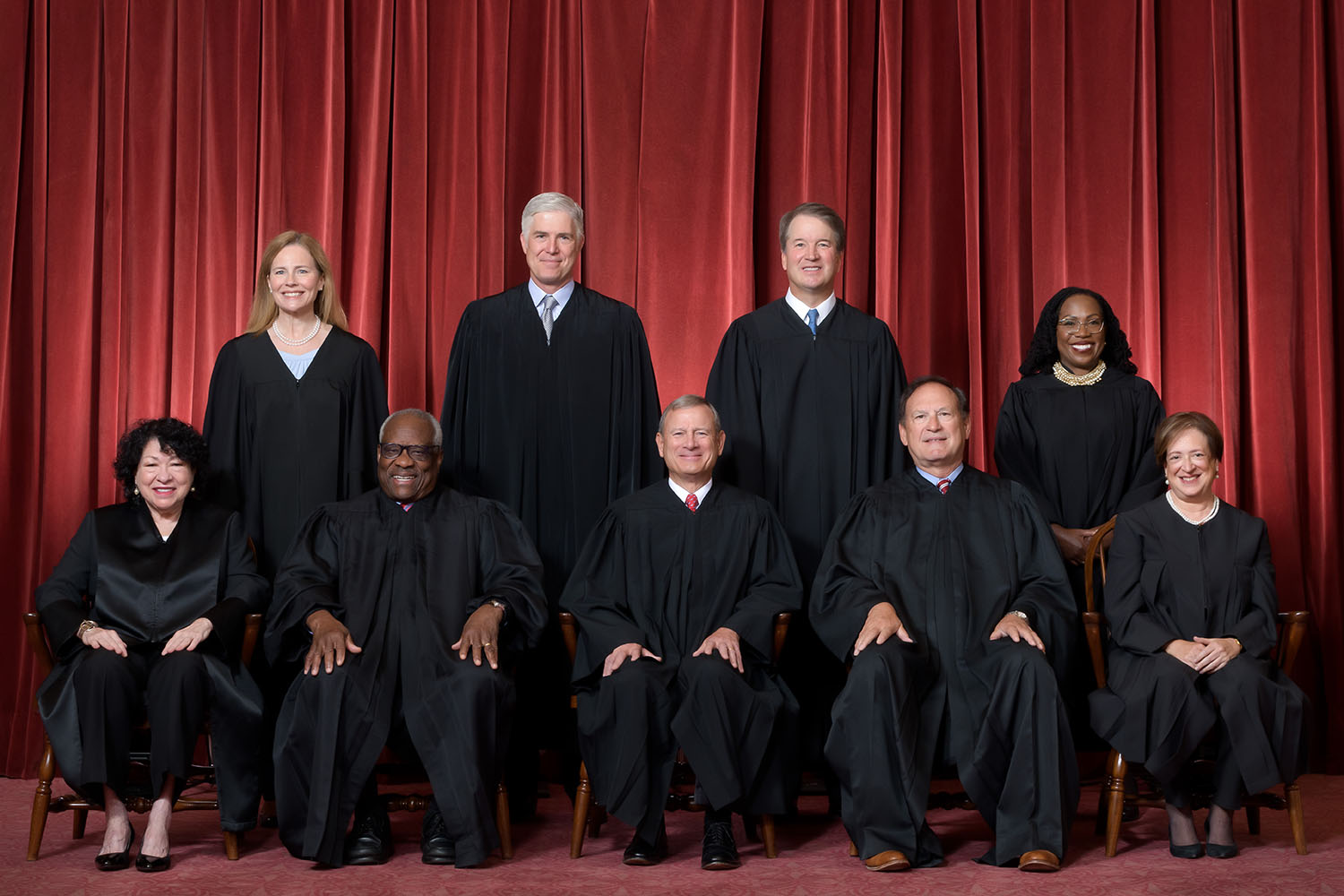
The U.S. Supreme Court is preparing to hear arguments in a closely watched case that could redefine the balance of power between the White House and the Federal Reserve, placing renewed focus on whether a president has the authority to remove a sitting member of the nation’s central bank.
At the center of the dispute is a challenge to President Donald Trump’s decision to dismiss a Federal Reserve Board governor, a move that has been blocked by lower courts and now heads to the nation’s highest judicial body. The case, scheduled for argument this week, raises broader questions about the legal independence of the Federal Reserve, the scope of executive power, and how far a president may go in shaping economic policy.
The matter arrives at the Supreme Court amid ongoing tensions between the Trump administration and the Federal Reserve, tensions that have spilled into public statements, legal filings, and political debate over interest rates, inflation, and monetary policy ahead of the 2026 midterm elections.
A Rare Test of Central Bank Independence
The Federal Reserve occupies a unique position within the federal government. Though its leadership is appointed by the president and confirmed by the Senate, the institution has long operated with a degree of insulation from direct political control. That independence, enshrined in statute and reinforced by tradition, is intended to protect monetary policy decisions from short-term political pressures.
The case now before the Supreme Court threatens to test those protections.
The dispute stems from President Trump’s attempt to remove a sitting member of the Federal Reserve’s Board of Governors, citing allegations of misconduct that predate her appointment. The governor in question has denied the accusations, arguing they are unfounded and politically motivated, and has challenged her removal in federal court.
Lower courts sided with her, ruling that the president failed to meet the legal standard required to dismiss a Federal Reserve governor under existing law.
The Legal Framework at Issue
Under the Federal Reserve Act, members of the Board of Governors serve staggered 14-year terms and may only be removed “for cause.” That language has historically been interpreted to mean serious misconduct or incapacity, not policy disagreements or political considerations.
Federal judges reviewing the case found that the administration did not sufficiently demonstrate cause as required by statute. As a result, the governor was allowed to remain in her post while the legal challenge proceeded.
In late summer, the Supreme Court declined to intervene at that stage, allowing her to continue serving pending a full review of the case. That temporary decision signaled caution but did not resolve the underlying constitutional questions.
Now, the justices are poised to address the issue directly.
A Governor at the Center of the Storm
The governor whose removal is being challenged is an economist appointed to the Federal Reserve by President Joe Biden and confirmed by the Senate. She was reappointed to a full 14-year term in 2023 and became the first Black woman to serve on the Fed’s Board of Governors.
Her dismissal attempt followed allegations from the Trump administration that she committed mortgage fraud prior to her appointment. Federal housing regulators later issued criminal referrals related to discrepancies in property filings, though no criminal conviction has been announced.
She has consistently denied wrongdoing and accused the administration of weaponizing regulatory processes to justify her removal.
Supporters argue that the allegations are being used as a pretext to undermine the Federal Reserve’s independence, while critics say the seriousness of the claims warrants scrutiny regardless of her position.
Broader Implications Beyond One Seat
Legal scholars say the case could have consequences far beyond a single Fed governor.
“The Federal Reserve has always been treated differently than other agencies,” said John Yoo, a former Justice Department official under President George W. Bush. “There is a longstanding concern about what happens when political leaders gain direct control over interest rates and the money supply.”
Yoo noted that countries with politicized central banks often experience higher inflation and economic instability, adding that U.S. courts have traditionally been cautious about disrupting that balance.
“It’s a basic principle of macroeconomics,” he said, “that central bank independence is critical to long-term economic health.”
The Supreme Court has recently taken a more expansive view of presidential authority in cases involving independent agencies, allowing Trump to remove officials at bodies such as the Federal Trade Commission. However, the Fed has so far been treated as an exception due to its structure and historical role.
A Court Divided on Executive Power
The current Supreme Court has shown a willingness to revisit long-standing precedents governing administrative agencies. Several justices have expressed skepticism about limits on executive authority, particularly when Congress restricts a president’s ability to remove appointed officials.
At the same time, the court has repeatedly described the Federal Reserve as “uniquely structured,” emphasizing its hybrid public-private design and its role in stabilizing the economy.
That tension sets the stage for a potentially narrow ruling—or a sweeping one.
Columbia Law School professor Kathryn Judge said the outcome could help define how much unilateral authority a president has over economic policy.
“This case, combined with other challenges involving tariffs and emergency powers, will be key in determining the scope of presidential control,” she said. “The court has expanded executive authority, but it has not said that authority is unlimited.”
Pressure on the Fed Leadership
The dispute involving the governor is unfolding alongside separate tensions between the Trump administration and Federal Reserve Chair Jerome Powell.
Powell has publicly criticized a Justice Department investigation into his conduct related to congressional testimony about a costly Federal Reserve building renovation. He has suggested the probe is politically motivated and designed to pressure the Fed into lowering interest rates.
The administration has denied that claim, but critics argue the investigation fits a broader pattern of efforts to influence the central bank’s leadership.
University of Illinois Chicago law professor Steve Schwinn said the cumulative effect of these actions may actually reinforce judicial support for Fed independence.
“With each new confrontation,” Schwinn said, “the court may increasingly recognize the value of insulating the Fed from political retaliation.”
Political Stakes Ahead of 2026
The timing of the case is also significant. With midterm elections approaching, monetary policy remains a politically sensitive issue. Interest rates, inflation, and economic growth are likely to feature prominently in campaign messaging.
Opponents of Trump’s actions argue that removing a Fed governor could set a dangerous precedent, allowing future presidents to manipulate monetary policy for electoral advantage.
Supporters counter that no official—regardless of position—should be immune from removal if credible allegations of misconduct exist.
CNN legal analyst Elie Honig previously described the mortgage-related allegations as “really problematic,” acknowledging that the matter raises legitimate concerns even as it intersects with political considerations.
What the Court Must Decide
At its core, the Supreme Court must decide whether the statutory protections afforded to Federal Reserve governors are constitutional and whether the president met the legal standard required to invoke them.
The justices could issue a narrow ruling focused on the specific facts of the case, or they could use the opportunity to revisit decades-old precedent governing independent agencies.
Either outcome would shape the future relationship between the presidency and the Federal Reserve.
A decision is expected by June.
Until then, the case stands as one of the most consequential legal tests of central bank independence in modern U.S. history—one that could alter the balance between democratic accountability and economic stability for years to come.

Emily Johnson is a critically acclaimed essayist and novelist known for her thought-provoking works centered on feminism, women’s rights, and modern relationships. Born and raised in Portland, Oregon, Emily grew up with a deep love of books, often spending her afternoons at her local library. She went on to study literature and gender studies at UCLA, where she became deeply involved in activism and began publishing essays in campus journals. Her debut essay collection, Voices Unbound, struck a chord with readers nationwide for its fearless exploration of gender dynamics, identity, and the challenges faced by women in contemporary society. Emily later transitioned into fiction, writing novels that balance compelling storytelling with social commentary. Her protagonists are often strong, multidimensional women navigating love, ambition, and the struggles of everyday life, making her a favorite among readers who crave authentic, relatable narratives. Critics praise her ability to merge personal intimacy with universal themes. Off the page, Emily is an advocate for women in publishing, leading workshops that encourage young female writers to embrace their voices. She lives in Seattle with her partner and two rescue cats, where she continues to write, teach, and inspire a new generation of storytellers.