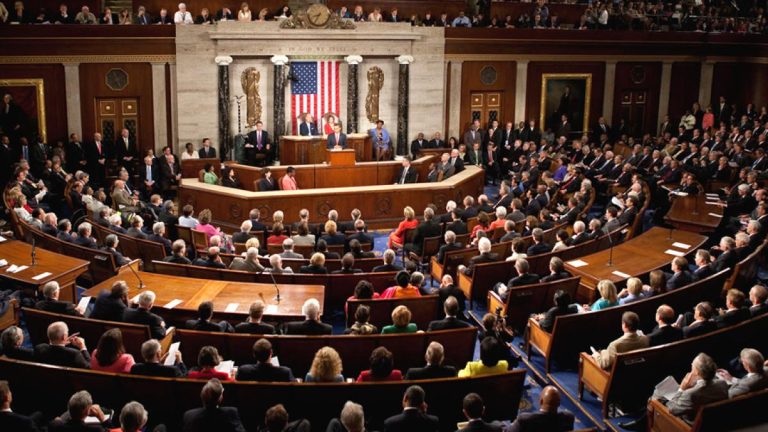



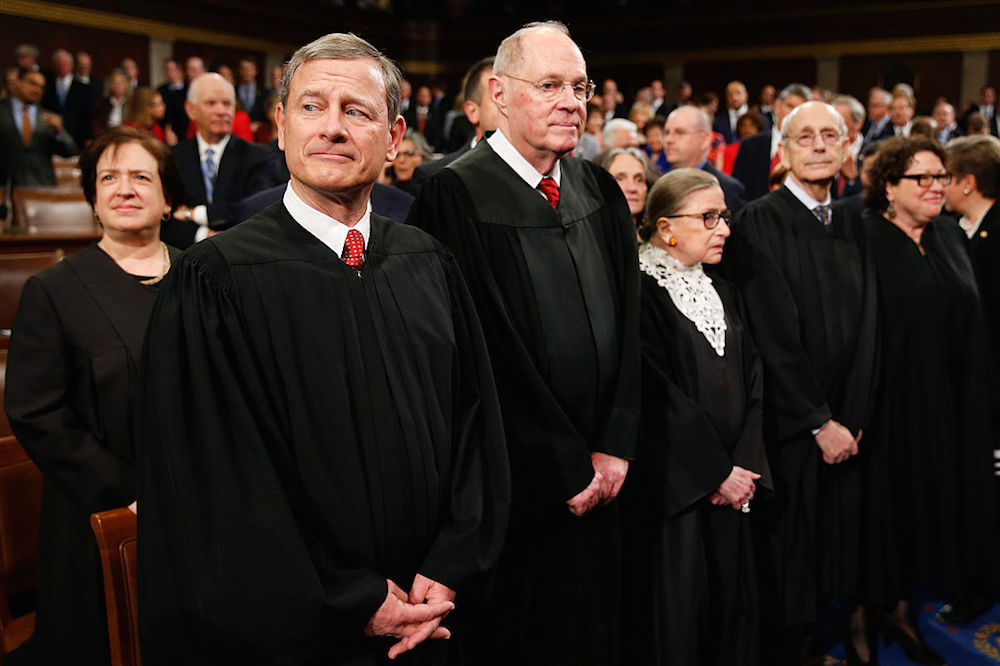
In a decision that could have significant implications for the balance of power in the U.S. House of Representatives, the United States Supreme Court on Wednesday allowed California to use a newly approved congressional map in the upcoming midterm elections. The action came in response to an emergency request from state Republicans — backed by the Trump administration — that sought to block the map’s use on constitutional grounds, but the justices declined that request in a brief unsigned order.
The ruling leaves intact lines that were drawn and approved by California voters last year through a ballot initiative known as Proposition 50. Those new district boundaries are engineered to make several Republican-held seats more competitive, and in some cases could flip them into seats favorable to Democrats. Analysts have said the shift could help the Democratic Party make gains in the House, where control is narrowly divided and every seat matters in determining legislative agendas and oversight powers.
Because the court did not issue a published opinion explaining its reasoning for the decision, legal observers are closely watching both the political and judicial implications of the order, and what it might signal about how the justices view similar disputes over electoral maps across the country.
Redistricting and the National Battle Over House Control
Redrawing congressional district boundaries — a process known as redistricting — typically takes place once every 10 years after the U.S. Census. The goal is to reflect population changes, but the way lines are drawn can also affect which political party has the best chance of winning each seat. In the current political climate, redistricting has become a particularly heated battleground.
California’s decision to redraw its map mid-decade was unusual and came in direct response to similar actions taken by Republican lawmakers elsewhere. Last year, Republicans in Texas passed a new map aimed at increasing their party’s representation in the House by creating more districts where Republican candidates would have a statistical advantage. That move, championed by leaders aligned with former President Donald Trump, was itself controversial and drew legal challenges, including a temporary block by a lower federal court before the Supreme Court allowed it to be used.
In reaction, California’s Democratic leadership and voter advocates championed Proposition 50 as a way to counterbalance Texas’s effort by adjusting the state’s own congressional map in favor of districts where Democratic candidates could be more competitive. Proposition 50 was approved by a strong majority of voters last November, giving Democrats in the state increased power to influence the selection of candidates to the U.S. House.
The Supreme Court’s Order and Legal Arguments
California’s Republican Party and allied plaintiffs argued that the new map violated constitutional protections because race was allegedly given too much weight in drawing the lines. They asserted that some districts had borders drawn in ways that favored specific racial or ethnic groups, which they claimed amounted to unconstitutional racial gerrymandering rather than acceptable political considerations.
However, lower federal courts had already rejected that argument. Judges ruled that, while the map was explicitly drawn with political advantage in mind, the evidence did not show that race was the predominant motivating factor, and that partisan gerrymandering claims are generally considered non-justiciable at the federal level under existing Supreme Court precedent.
When the case reached the Supreme Court as an emergency request, the justices — in a one-sentence order — declined to block the map from taking effect for the 2026 midterm election cycle. No justice publicly dissented from the decision, which aligns with long-standing practice on emergency docket actions where explanations are not provided and orders simply grant or deny temporary relief.
Because the court’s order was unsigned and did not include a written opinion, it leaves open questions about how individual justices view the broader issues surrounding mid-decade redistricting. Typically, the Supreme Court has shown reluctance to intervene in disputes over partisan gerrymandering, leaving such matters to state courts and legislatures unless clear constitutional violations are evident.
What the New Map Could Mean Politically
Under the voter-approved map, analysts estimate that up to five seats currently held by Republicans could become more competitive or potentially flip to Democratic control. In a closely divided House — where every single seat can determine which party holds the majority — such shifts could have a decisive impact on legislative priorities and oversight responsibilities.
If Democrats succeed in flipping these seats, it could not only affect committee leadership and the passage of legislation but also any future investigations or hearings targeting executive branch actions. A shift in control of the House would influence federal policy direction and could shape the broader national political landscape.
Republicans, who currently hold a narrow majority in the House, have criticized the map and the court’s decision to let it stand. They argue that allowing mid-decade map changes for purely political purposes opens the door to increasingly competitive and cyclical judicial battles over voting lines, potentially destabilizing electoral predictability.
Supporters of the new map counter that districts should reflect current political realities and demographics, and that voters themselves had the opportunity to approve the change at the ballot box. In November, California’s electorate overwhelmingly supported the initiative that produced the new map, which advocates say enhances fair representation for communities that had felt underrepresented.
Broader Redistricting Trends Across the U.S.
The California map decision comes amid a broader wave of redistricting activity across the United States. Several states with closely contested elections have pursued new district boundaries outside the usual post-census cycle, with both Democratic and Republican states seeking advantages. For example, North Carolina, Missouri, Ohio, and Utah have also implemented mid-decade changes to their maps, some of which have been challenged in court.
Legal and political experts note that such mid-decade changes are rare but not unprecedented in U.S. history. Generally, redistricting is carried out once every 10 years based on census data, but this cycle has seen an unusual level of partisanship and tactical strategy employed by both major parties in an effort to shape the composition of the next Congress.
Critics of the trend argue it risks undermining public confidence in the fairness of elections. They say that when states redraw maps explicitly to benefit one party, the resulting lines can favor partisanship over equal representation. Advocates of mid-decade redistricting argue that the political process permits such changes as long as they align with legal constraints and reflect voter preferences, as was the case with California’s ballot initiative.
What Happens Next
With the Supreme Court’s order now in place, California’s new congressional districts will be used in the 2026 midterm elections unless future rulings intervene. Candidates planning to run for office will file under the new lines, and primaries are now scheduled around the revised districts.
Legal challenges to the map may continue as cases progress through federal and state courts, but for the immediate election cycle, the status quo set by the Supreme Court’s decision stands. Legislators, candidates, interest groups, and voters alike are preparing for campaigns that could be influenced by newly drawn district boundaries.
As control of the House of Representatives hangs in the balance and electoral stakes remain high, the California redistricting decision underscores the ongoing importance of redistricting battles and the role they play in shaping American democracy.

Emily Johnson is a critically acclaimed essayist and novelist known for her thought-provoking works centered on feminism, women’s rights, and modern relationships. Born and raised in Portland, Oregon, Emily grew up with a deep love of books, often spending her afternoons at her local library. She went on to study literature and gender studies at UCLA, where she became deeply involved in activism and began publishing essays in campus journals. Her debut essay collection, Voices Unbound, struck a chord with readers nationwide for its fearless exploration of gender dynamics, identity, and the challenges faced by women in contemporary society. Emily later transitioned into fiction, writing novels that balance compelling storytelling with social commentary. Her protagonists are often strong, multidimensional women navigating love, ambition, and the struggles of everyday life, making her a favorite among readers who crave authentic, relatable narratives. Critics praise her ability to merge personal intimacy with universal themes. Off the page, Emily is an advocate for women in publishing, leading workshops that encourage young female writers to embrace their voices. She lives in Seattle with her partner and two rescue cats, where she continues to write, teach, and inspire a new generation of storytellers.