
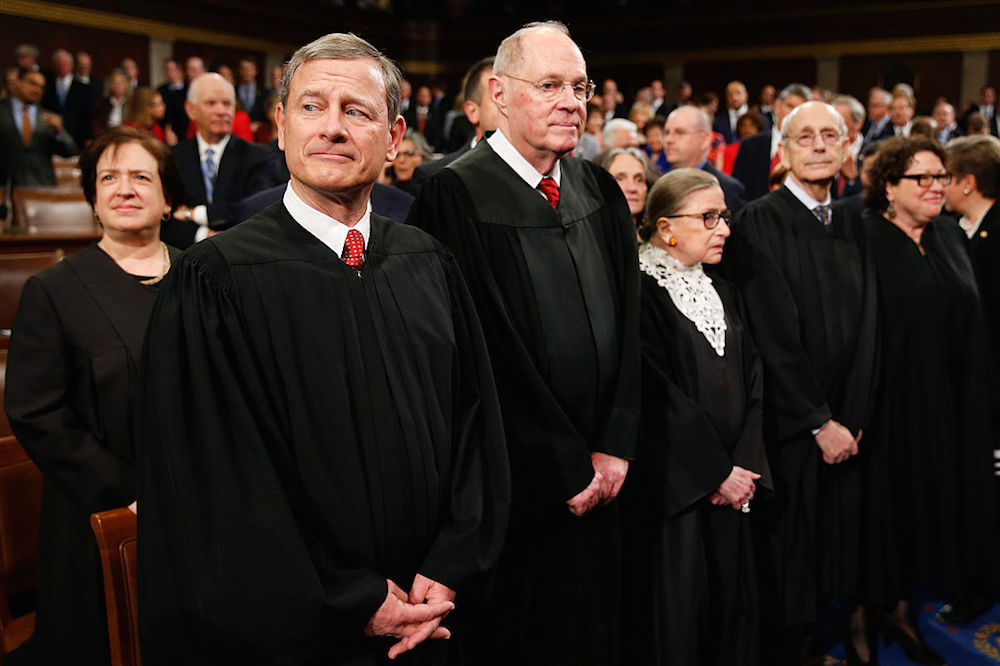
In a decision that could have far-reaching consequences for how American elections are contested, the U.S. Supreme Court ruled 7–2 that federal candidates have the legal right to challenge certain state election rules governing how votes are counted. The ruling does not strike down any specific election law, nor does it declare any state practice unconstitutional. Instead, it resolves a fundamental procedural question that has divided lower courts for years: who has the right to sue.
By answering that question, the Court has potentially opened the door to a new wave of election-related lawsuits ahead of the 2026 midterm elections and beyond.
At the heart of the case was the issue of legal standing. Standing determines whether a plaintiff is sufficiently affected by a law or policy to bring a lawsuit in federal court. In recent election cases, lower courts had frequently dismissed challenges to state voting rules by ruling that candidates lacked standing because their alleged harms were too speculative or indirect. The Supreme Court’s ruling rejects that reasoning, at least in the context of federal candidates.
The majority concluded that candidates for federal office are directly impacted by rules that govern how ballots are counted and therefore have a legitimate interest in challenging those rules in court.
The case arose from a dispute over state regulations allowing certain mail-in ballots to be counted after Election Day under specific conditions. A federal candidate argued that such rules diluted lawful votes and affected the outcome of the election. Lower courts dismissed the lawsuit, saying the candidate had not demonstrated a concrete injury. The Supreme Court disagreed.
Writing for the majority, the Court explained that election outcomes are not abstract concerns for candidates but the very basis of their participation in the democratic process. When states adopt rules that determine which votes are counted and when, candidates are among those most directly affected. As a result, the Court held that they have standing to bring constitutional challenges to those rules.
Importantly, the ruling does not decide whether counting mail-in ballots after Election Day is legal or illegal. It also does not mandate changes to state election systems. Instead, it clarifies that courts cannot dismiss such challenges solely on the ground that candidates lack standing. Each case, the Court emphasized, must still be evaluated on its merits.
The decision was supported by a broad majority, with seven justices joining the opinion. The two dissenting justices warned that the ruling could flood federal courts with politically motivated lawsuits and destabilize election administration. They argued that allowing candidates to sue over election rules risks turning courts into constant referees of political disputes.
The majority acknowledged those concerns but said they were outweighed by the need to ensure access to the courts when constitutional questions are at stake. Federal judges, the opinion noted, already possess tools to dismiss frivolous cases and prevent abuse of the legal system.
Legal scholars say the ruling represents a significant shift in election law litigation. For years, standing requirements served as a major barrier preventing courts from reaching the substance of election disputes. By lowering that barrier for candidates, the Supreme Court has effectively changed the starting point of many future cases.
“This is a gate-opening decision,” said one constitutional law professor. “The Court isn’t saying challengers will win. It’s saying they’re entitled to be heard.”
Supporters of the ruling argue that it strengthens accountability and judicial oversight. They contend that election rules should be subject to meaningful review, especially when they affect close races. From this perspective, denying candidates standing risks shielding potentially unconstitutional practices from scrutiny.
Critics, however, fear the decision will encourage losing candidates to challenge election outcomes more aggressively, particularly in polarized political environments. They warn that increased litigation could delay certification of results, strain election officials, and undermine public confidence in democratic processes.
Election administrators are watching closely. While the ruling does not require immediate changes to how states conduct elections, it increases the likelihood that state laws and regulations will be tested in court. Officials may face legal uncertainty as cases move forward through federal courts, potentially leading to conflicting rulings across jurisdictions.
The timing of the decision is also notable. With the 2026 midterm elections approaching, both major political parties are expected to scrutinize state election laws more closely. Rules governing mail-in voting, ballot deadlines, signature verification, and vote counting procedures could all become targets of legal challenges.
The ruling fits into a broader pattern of Supreme Court involvement in election-related issues over the past decade. The Court has repeatedly been asked to weigh in on voting rights, redistricting, campaign finance, and election administration. This latest decision reinforces the judiciary’s role as an arbiter in disputes that sit at the intersection of law and democracy.
Still, the Court was careful to frame its ruling narrowly. The justices emphasized that standing is only the first step in any lawsuit. Plaintiffs must still prove that a challenged law violates the Constitution or federal statutes. States retain significant authority to administer elections, and courts are expected to show deference where appropriate.
For voters, the implications may not be immediately visible. Ballots will still be cast, counted, and certified under existing laws unless courts order changes. But behind the scenes, the legal landscape has shifted in a way that could influence how election disputes unfold in the future.
The dissenting justices warned that the decision risks politicizing the judiciary. They argued that elections are inherently competitive and that allowing candidates to claim injury whenever they dislike election rules could draw courts deeper into partisan conflict. The majority countered that constitutional rights do not disappear simply because an issue is politically charged.
As with many Supreme Court rulings, the full impact of the decision will only become clear over time. Lower courts will now apply the new standard, and future cases will test its limits. Some lawsuits may succeed, others will fail, but more of them will reach the stage where judges must address the substance of election laws rather than dismissing cases on procedural grounds.
In the end, the 7–2 ruling underscores a central tension in American democracy: balancing the need for fair and accessible elections with the risk of endless legal battles over the rules. By granting candidates a clearer path to the courthouse, the Supreme Court has ensured that election laws will face increased scrutiny—while leaving it to future courts to decide where the constitutional lines are drawn.

Emily Johnson is a critically acclaimed essayist and novelist known for her thought-provoking works centered on feminism, women’s rights, and modern relationships. Born and raised in Portland, Oregon, Emily grew up with a deep love of books, often spending her afternoons at her local library. She went on to study literature and gender studies at UCLA, where she became deeply involved in activism and began publishing essays in campus journals. Her debut essay collection, Voices Unbound, struck a chord with readers nationwide for its fearless exploration of gender dynamics, identity, and the challenges faced by women in contemporary society. Emily later transitioned into fiction, writing novels that balance compelling storytelling with social commentary. Her protagonists are often strong, multidimensional women navigating love, ambition, and the struggles of everyday life, making her a favorite among readers who crave authentic, relatable narratives. Critics praise her ability to merge personal intimacy with universal themes. Off the page, Emily is an advocate for women in publishing, leading workshops that encourage young female writers to embrace their voices. She lives in Seattle with her partner and two rescue cats, where she continues to write, teach, and inspire a new generation of storytellers.