
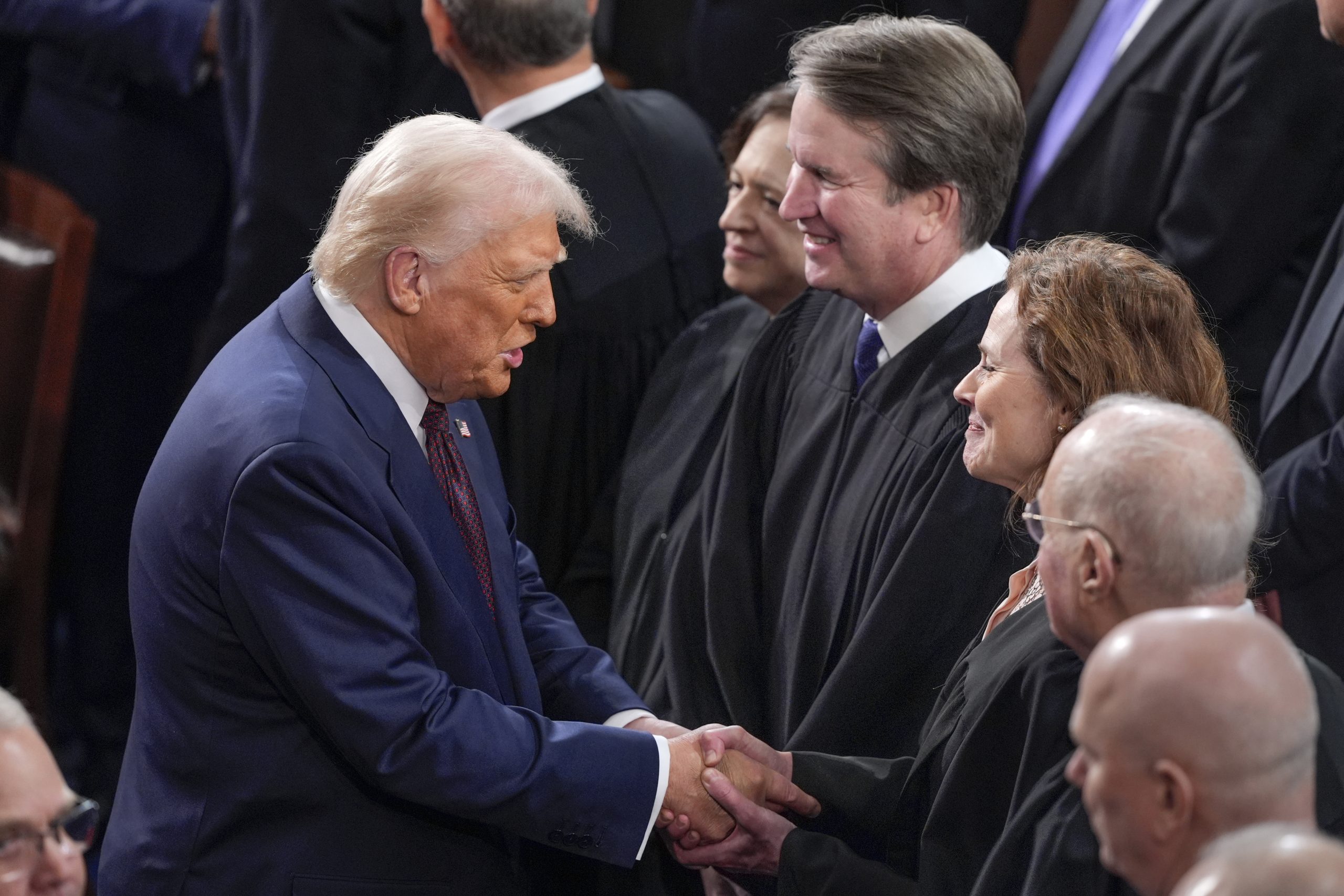
WASHINGTON — The U.S. Supreme Court on Wednesday once again declined to issue a ruling in the closely watched legal challenge to former President Donald Trump’s expansive global tariffs, leaving a cloud of uncertainty over a case with profound implications for presidential authority, U.S. trade policy, and the global economy.
The case has drawn attention not only from policymakers and legal experts but also from industries and foreign governments, highlighting the broad ripple effects of presidential trade actions. The justices heard oral arguments on November 5, 2025, yet, as of this week, they have not indicated when a decision might be released. This delay prolongs a period of uncertainty for businesses, consumers, and international partners while keeping alive central questions about whether Trump exceeded the authority granted to the executive branch when he imposed sweeping tariffs on foreign goods.
Observers note that this case could redefine the scope of presidential power in trade and national security matters, particularly in instances where Congress has delegated authority but not explicitly authorized the broad measures taken. It has also raised questions about the balance of power between the legislative and executive branches, a debate that has long been central to U.S. constitutional law.
A Case With Global Implications
At the heart of the dispute is Trump’s use of broad statutory powers to levy tariffs on a wide array of imported goods, ranging from steel and aluminum to technology products and agricultural commodities. The administration argued that these tariffs were essential to protect U.S. economic and national security interests, citing laws that grant the president significant discretion in responding to foreign trade practices deemed harmful to the country.
Lower courts previously found against the administration, ruling that Trump had exceeded the authority provided under existing trade laws. These decisions questioned whether the statutes cited by the president were intended to support such extensive, global trade restrictions without congressional approval. The Supreme Court’s eventual ruling is expected to provide a definitive answer to this question, clarifying how far presidents may go when acting unilaterally in the name of national security or economic protection.
Economists and legal scholars have emphasized that the stakes extend far beyond the immediate legal dispute. Depending on how the court rules, future presidents could gain more expansive authority to respond to perceived threats in international trade, or conversely, face tighter limits that require closer coordination with Congress. The decision could also influence global supply chains, consumer prices, and the overall stability of international markets.
The Stakes for Businesses and the Economy
The tariffs at issue in this case have affected virtually every sector of the U.S. economy. Manufacturing, agriculture, technology, and retail businesses have all felt the impact, with some companies facing higher input costs for imported materials and others contending with retaliatory measures from trading partners.
International observers have monitored the case closely, as its outcome could signal how aggressively future U.S. administrations might wield trade tools in response to global economic pressures. For countries that export goods to the United States, the decision may determine how much confidence they can place in the stability and predictability of trade relations with Washington.
For U.S. companies, the prolonged uncertainty complicates long-term planning. Firms that rely on imported components may face fluctuating costs, while exporters could be exposed to potential retaliatory tariffs depending on the court’s final ruling. Investment decisions, supply chain strategies, and even hiring plans can hinge on the outcome of the case, underscoring the real-world consequences of what might otherwise seem like an abstract legal dispute.
A Test of Presidential Power
Legal experts describe the case as a fundamental test of presidential authority in the context of trade. Central to the debate is the question of how much power Congress has delegated to the executive branch and whether there are meaningful limits to that delegation.
Critics argue that Trump relied on statutes that were never designed to justify broad, global trade actions. They contend that Congress intended these laws for narrow responses to specific threats rather than sweeping tariffs affecting hundreds of products across the globe. From this perspective, the president’s unilateral actions may have overstepped the boundaries of executive authority, raising concerns about unchecked presidential power.
Supporters of the tariffs counter that Congress deliberately granted presidents broad discretion to respond swiftly to economic threats. They argue that the global economy moves too quickly for the legislative process to address every trade issue and that national security considerations justify rapid executive action. For them, the tariffs were a legitimate exercise of presidential authority aimed at protecting American jobs and industries from unfair foreign competition.
The Supreme Court’s decision, whenever it is issued, will likely provide important guidance on the boundaries of executive power. A ruling against the administration could limit the scope of presidential action in future trade disputes, requiring more explicit congressional authorization for broad economic measures. A ruling in favor of the administration, on the other hand, could cement the president’s ability to act decisively in matters of trade and national security, potentially expanding the executive’s role in shaping global economic policy.
The Delay and Its Consequences
While the Supreme Court often takes months to issue rulings after oral arguments, the prolonged absence of a decision has attracted heightened scrutiny due to the stakes involved. The case’s significance is not only legal but also economic, political, and geopolitical.
For U.S. industries, the delay has left businesses in a state of uncertainty. Manufacturers and retailers that rely on imported goods face unpredictable costs, while agricultural exporters wait to see whether tariffs imposed on foreign competitors will be maintained or overturned. Global markets, too, are affected: investors and foreign governments closely track the outcome, as it may signal how the United States will wield its trade powers in the years to come.
Some analysts have suggested that the delay may also reflect the court’s recognition of the case’s complexity and potential consequences. It is not merely a matter of statutory interpretation but also a question of constitutional balance, international trade relations, and domestic economic policy. In other words, the justices may be proceeding with extra caution, aware that their ruling could shape U.S. trade policy for decades.
Looking Ahead
The Supreme Court does not provide a fixed timeline for issuing rulings, and major cases are often decided throughout the spring and early summer. However, some high-profile cases have been resolved later in the year, suggesting that patience will be necessary for those awaiting a final decision.
Until the ruling is announced, the uncertainty surrounding Trump’s tariffs will persist. Lower court decisions remain in effect, leaving policy debates and global markets in a holding pattern. Policymakers, business leaders, and international trade partners will continue to monitor the situation closely, knowing that the court’s eventual decision could have broad and lasting impacts.
Implications for the Future
The Supreme Court’s eventual ruling is expected to resonate far beyond the immediate case. It could redefine how presidents invoke trade and national security powers, clarify the scope of congressional delegation, and establish new legal precedents for evaluating executive authority.
For Congress, the decision could either reinforce its role in shaping trade policy or signal a need to update and clarify trade laws to prevent future disputes. For future presidents, it may determine the latitude they have in responding to economic threats, foreign competition, or global crises.
On a global scale, the ruling could influence how other countries perceive and respond to U.S. trade actions. Allies and competitors alike will watch closely, assessing whether American trade policy is predictable, restrained by law, or subject to broad unilateral action.
In short, the case is not just about tariffs imposed during a previous administration; it is a defining moment in the ongoing negotiation of power between the branches of government and a reminder of how closely domestic legal decisions can intersect with the global economy.
Conclusion
For now, the Supreme Court’s silence underscores the high stakes of the case. Trump’s global tariffs are more than a policy dispute; they are a test of constitutional principles, executive authority, and the United States’ role in the global economy. Until the justices issue their ruling, uncertainty will continue to shape business decisions, policy debates, and international relations.
Whatever the outcome, the decision will likely be a landmark one, carrying implications for future presidents, Congress, and the broader global trade system. It serves as a reminder that presidential authority, while powerful, exists within a carefully structured legal framework—and that the courts play a pivotal role in defining the boundaries of that power.

Emily Johnson is a critically acclaimed essayist and novelist known for her thought-provoking works centered on feminism, women’s rights, and modern relationships. Born and raised in Portland, Oregon, Emily grew up with a deep love of books, often spending her afternoons at her local library. She went on to study literature and gender studies at UCLA, where she became deeply involved in activism and began publishing essays in campus journals. Her debut essay collection, Voices Unbound, struck a chord with readers nationwide for its fearless exploration of gender dynamics, identity, and the challenges faced by women in contemporary society. Emily later transitioned into fiction, writing novels that balance compelling storytelling with social commentary. Her protagonists are often strong, multidimensional women navigating love, ambition, and the struggles of everyday life, making her a favorite among readers who crave authentic, relatable narratives. Critics praise her ability to merge personal intimacy with universal themes. Off the page, Emily is an advocate for women in publishing, leading workshops that encourage young female writers to embrace their voices. She lives in Seattle with her partner and two rescue cats, where she continues to write, teach, and inspire a new generation of storytellers.