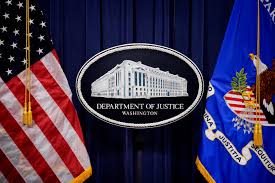
The U.S. Department of Justice has filed a lawsuit against the Commonwealth of Virginia, alleging that state election officials failed to comply with federal law by refusing to provide requested voter registration records. The legal action, announced Friday, marks the latest escalation in the Trump administration’s broader effort to pressure states to turn over election data in the name of voter roll accuracy and election integrity.
According to a Justice Department news release, the lawsuit was filed after Virginia declined to produce statewide voter registration records requested by federal officials. The DOJ argues that the state’s refusal violates federal transparency requirements and undermines the integrity of federal elections.
The case adds Virginia to a growing list of jurisdictions targeted by the administration. With this filing, the Justice Department has now sued 24 states along with the District of Columbia over similar disputes related to voter roll access. Federal officials say these actions reflect a coordinated campaign to enforce election laws nationwide, while critics argue the lawsuits amount to federal overreach.
Assistant Attorney General Harmeet Dhillon, who leads the Justice Department’s Civil Rights Division, publicly announced the lawsuit Friday evening in a social media post. Writing on X, Dhillon accused Virginia officials of disregarding federal law and signaled that the department intends to pursue similar cases aggressively.
Dhillon said the Justice Department is determined to compel states to comply with federal election statutes and framed the lawsuit as part of a broader push to clean up voter registration systems. Her remarks underscored the administration’s view that accurate voter rolls are essential to preventing fraud and maintaining confidence in election outcomes.
Attorney General Pam Bondi echoed that position in the DOJ’s formal announcement. She said her office has already taken legal action against dozens of jurisdictions and plans to continue filing lawsuits where states fail to meet federal requirements. Bondi emphasized that transparency in voter registration systems is not optional and warned that states that resist oversight should expect litigation.
Bondi described accurate voter lists as the backbone of secure elections, arguing that public trust depends on confidence that voter rolls reflect only eligible voters. She said the Justice Department would use all available legal tools to enforce compliance with federal election laws.
At the center of the lawsuit is Virginia Elections Commissioner Susan Beals. In the DOJ’s court filing, federal attorneys accuse Beals of violating provisions of the Civil Rights Act by failing to provide election records after receiving a formal request from the attorney general. The Justice Department argues that federal law requires states to make such records available upon demand.
The DOJ has asked the U.S. District Court for the Eastern District of Virginia to compel Beals to release the statewide voter registration database. According to court documents, the department is seeking detailed information on registered voters, including names, dates of birth, residential addresses, and identifying numbers.
Specifically, the Justice Department is requesting that the records include either each voter’s driver’s license number, the last four digits of their Social Security number, or a unique identifier assigned under the Help America Vote Act. Federal officials are asking the court to order that the data be turned over within five days of any ruling in their favor.
In statements accompanying the lawsuit, Dhillon said accurate and complete voter rolls are critical to ensuring that elections function as intended. She argued that maintaining reliable registration lists helps guarantee that each eligible voter casts only one ballot and that ineligible individuals are not included in the system.
Dhillon added that the Justice Department views enforcement of election laws as a core responsibility and warned that states refusing to cooperate with federal oversight would be held accountable. According to her, the department’s actions are aimed at protecting free and fair elections rather than targeting any particular state for political reasons.
Lindsey Halligan, the U.S. attorney for the Eastern District of Virginia, also issued a statement supporting the lawsuit. Halligan said the state’s refusal to provide voter registration records not only violates federal law but also damages public confidence in the electoral process.
Halligan emphasized that her office would continue enforcing federal statutes to ensure that both the public and federal authorities receive information they are legally entitled to access. She framed the lawsuit as a matter of transparency and accountability rather than partisan conflict.
The lawsuit against Virginia comes amid a rapid series of similar legal actions across the country. Just one day earlier, a federal judge dismissed a comparable DOJ lawsuit filed against California. In that case, California officials declined to release unredacted voter registration data, citing state privacy protections.
California instead offered to provide redacted records, arguing that releasing sensitive personal information would violate state law and expose voters to potential harm. The Justice Department rejected that proposal and proceeded with litigation.
The federal judge overseeing the California case ruled against the DOJ, calling the department’s demand for voter data “unprecedented and illegal.” The decision marked a significant setback for the administration’s legal strategy and raised questions about how courts may view similar lawsuits in other states, including Virginia.
Despite the ruling in California, Justice Department officials have shown no signs of retreating. The lawsuit against Virginia suggests the administration intends to continue pressing its interpretation of federal election law, even as courts weigh competing claims about privacy, transparency, and states’ rights.
Virginia election officials have so far remained largely silent on the lawsuit. When contacted for comment, emails sent to Commissioner Beals reportedly bounced back twice. The Virginia Department of Elections did not immediately respond to media inquiries seeking clarification or reaction to the Justice Department’s claims.
The lack of response leaves unanswered questions about the state’s legal strategy and whether Virginia plans to contest the lawsuit aggressively or seek a negotiated resolution. It is also unclear whether Virginia will cite privacy laws or other statutory protections as justification for withholding the requested records.
The dispute reflects a broader national debate over who controls election data and how voter information should be handled. Supporters of the Justice Department’s approach argue that federal oversight is necessary to ensure consistency and prevent irregularities across states. They contend that transparency is essential to maintaining public trust, particularly in federal elections.
Opponents, including several state officials and civil liberties advocates, warn that releasing detailed voter data could expose citizens to identity theft, harassment, or misuse of personal information. They argue that states have a responsibility to balance transparency with voter privacy and that federal demands may exceed statutory authority.
Legal experts say the Virginia case could become another test of the limits of federal power over state-run election systems. While federal law governs certain aspects of election administration, states traditionally retain broad authority over voter registration and data management.
As the case proceeds, the Eastern District of Virginia will be asked to weigh competing interpretations of the Civil Rights Act and related election statutes. The court’s decision could have implications not only for Virginia but also for other states facing similar lawsuits.
For now, the Justice Department appears committed to continuing its campaign. With more than two dozen jurisdictions already named in lawsuits, federal officials have made clear that they view access to voter rolls as a non-negotiable element of election integrity.
Whether courts ultimately side with the administration or with states asserting privacy and autonomy remains to be seen. What is certain is that the legal battle over voter registration records is far from over, and Virginia’s case is likely to play a prominent role in shaping how election data disputes are resolved nationwide.

Emily Johnson is a critically acclaimed essayist and novelist known for her thought-provoking works centered on feminism, women’s rights, and modern relationships. Born and raised in Portland, Oregon, Emily grew up with a deep love of books, often spending her afternoons at her local library. She went on to study literature and gender studies at UCLA, where she became deeply involved in activism and began publishing essays in campus journals. Her debut essay collection, Voices Unbound, struck a chord with readers nationwide for its fearless exploration of gender dynamics, identity, and the challenges faced by women in contemporary society. Emily later transitioned into fiction, writing novels that balance compelling storytelling with social commentary. Her protagonists are often strong, multidimensional women navigating love, ambition, and the struggles of everyday life, making her a favorite among readers who crave authentic, relatable narratives. Critics praise her ability to merge personal intimacy with universal themes. Off the page, Emily is an advocate for women in publishing, leading workshops that encourage young female writers to embrace their voices. She lives in Seattle with her partner and two rescue cats, where she continues to write, teach, and inspire a new generation of storytellers.