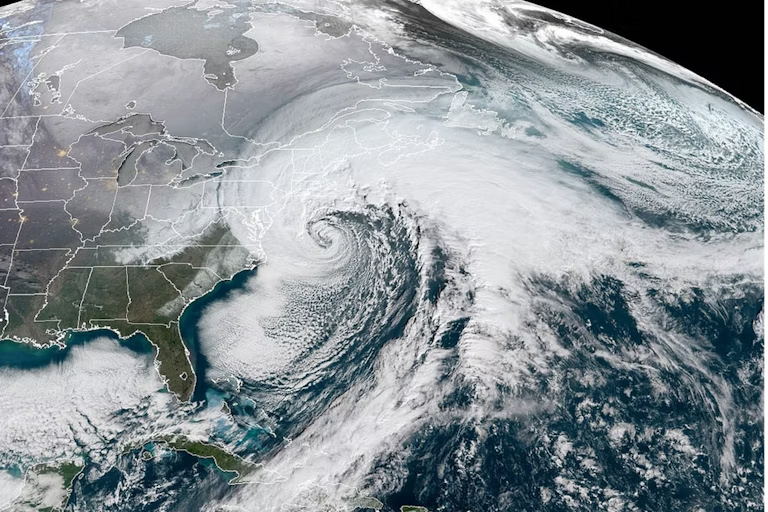
State officials across large portions of the United States are mobilizing emergency resources ahead of a powerful winter storm expected to bring heavy snow, ice, and extreme cold to much of the country over the coming days. Forecasters warn the system could affect more than 200 million people across roughly 30 states, making it one of the most far-reaching winter weather events of the season.
Governors in multiple states have already declared states of emergency or preparedness, enabling authorities to activate emergency response plans, deploy the National Guard if necessary, and coordinate with federal agencies. Meteorologists say conditions could deteriorate rapidly from Friday through early next week, with impacts stretching from the Plains and Midwest to the South and Northeast.
According to the National Weather Service (NWS), “nearly everyone east of the Rockies” is expected to feel the effects of the storm in some form, whether through snow, sleet, freezing rain, or dangerously low temperatures. Additional winter storm warnings and advisories are expected to be issued as the system moves closer.
Extreme cold and dangerous wind chills
The storm is expected to usher in a surge of Arctic air from Canada, driving temperatures far below seasonal norms. In parts of the Dakotas and Michigan, temperatures could plunge as much as 30 degrees below average, while wind chills may drop to between 35 and 50 degrees below zero in the coldest areas, according to forecasts cited by the Weather Channel.
Meteorologists warn that prolonged exposure to such conditions can lead to frostbite within minutes and pose serious risks to people without reliable heat. In the South and Midwest, where infrastructure is often less equipped for extended cold, officials are particularly concerned about frozen pipes, power outages, and hazardous road conditions.
By Sunday morning, cities such as Dallas, Austin, and Oklahoma City could experience wind chills below zero. On Monday, record-low temperatures are possible from Texas to Mississippi, with the NWS warning of widespread pipe damage and heating system failures.
After gripping the central and southern states, the cold air is expected to push eastward into New England. The Northeast may see temperatures as much as 20 degrees below average for this time of year, accompanied by snow and gusty winds.
Snow, ice, and widespread disruption
The storm system is forecast to draw moisture-rich air north from the Gulf of Mexico, setting the stage for heavy precipitation as it collides with the frigid Arctic air. Forecasters say this combination could produce broad swaths of snow, sleet, and freezing rain that may linger into next week.
Under current projections, parts of the Appalachian region could receive up to two feet of snow. AccuWeather estimates that New York City could see up to a foot of snow by Sunday, though exact totals will depend on the storm’s track.
Farther south, the greatest concern is icing. Central Texas, northern Louisiana, Mississippi, Alabama, Georgia, and the Carolinas face a heightened risk of significant ice accumulation. Jennifer Tate, a meteorologist at the Weather Prediction Center, told The New York Times that even small shifts in temperature could dramatically alter impacts, turning rain into dangerous glaze ice.
Ice accumulation poses a particular threat because of its weight. Experts warn that heavy ice can snap tree limbs, topple trees, and bring down power lines, leading to prolonged outages. In extreme cold, trees can also crack or split suddenly as sap freezes and expands — a phenomenon sometimes referred to as “tree explosions.”
States activate emergency measures
In anticipation of the storm, several governors have issued emergency declarations. South Carolina has declared a state of emergency, allowing officials to mobilize resources and coordinate response efforts statewide. In Texas, Governor Greg Abbott activated state emergency response resources earlier this week to prepare for potential impacts.
North Carolina Governor Josh Stein declared a state of emergency on Wednesday, urging residents to prepare immediately. “Please get ready,” Stein said, encouraging people to gather essential supplies, plan for possible power outages, and avoid travel unless absolutely necessary.
“Stay home and off the roads this weekend unless it is essential,” Stein added, emphasizing that reduced travel helps emergency responders operate safely and effectively.
Maryland Governor Wes Moore declared a “State of Preparedness,” aimed at strengthening coordination among state agencies and local governments. “The safety and security of our residents is our top priority,” Moore said, urging vigilance and common-sense precautions.
Georgia Governor Brian Kemp echoed similar advice, asking residents to secure food, fuel their vehicles, and prepare for potential power disruptions.
Travel disruptions and event cancellations
The approaching storm is already prompting widespread schedule changes. Several college athletic conferences have adjusted basketball game times or moved contests earlier to avoid peak storm conditions. In Texas, Major League Baseball’s Texas Rangers canceled their annual Fan Fest event, citing safety concerns for players, staff, and fans.
Transportation providers are also bracing for disruptions. Delta Air Lines and American Airlines have announced change-fee waivers for travelers scheduled to fly between Friday and Sunday in dozens of cities. Amtrak has begun canceling or shortening routes in affected regions to limit exposure to hazardous conditions.
Travel officials warn that road conditions may deteriorate quickly, especially in areas unaccustomed to snow and ice. Slick roads have already contributed to serious accidents in recent winter weather events, underscoring the dangers of unnecessary travel.
Panic buying and public response
As warnings intensified, reports of panic buying began to surface across several southern and central states. Social media users in Alabama, Oklahoma, Tennessee, and Texas posted videos showing grocery shelves stripped of essentials such as milk, bread, bottled water, and diapers.
Some residents expressed frustration, noting that early panic buying can leave vulnerable populations without access to necessities. Others said past winter storms had taught them to prepare early, particularly in regions where power outages can last days.
Emergency management officials continue to stress preparedness without panic, advising households to stock several days’ worth of food and water, ensure medications are filled, charge devices, and have backup heating plans where possible.
Federal response and warnings
At the federal level, Department of Homeland Security Secretary Kristi Noem said emergency management resources are being positioned in anticipation of the storm. DHS and the Federal Emergency Management Agency (FEMA) are coordinating with state and local officials to monitor conditions and prepare for potential requests for assistance.
“We are anticipating a major winter weather event expected to impact much of the U.S. population this weekend, especially the Midwest and East Coast,” Noem said. She urged Americans to prepare for power outages, road closures, airport delays, and freezing temperatures.
As the storm approaches, officials at all levels continue to emphasize the same message: prepare early, avoid unnecessary travel, and take the warnings seriously. With extreme cold, heavy snow, and ice all possible, authorities say caution over the coming days could prevent injuries, property damage, and loss of life.

Emily Johnson is a critically acclaimed essayist and novelist known for her thought-provoking works centered on feminism, women’s rights, and modern relationships. Born and raised in Portland, Oregon, Emily grew up with a deep love of books, often spending her afternoons at her local library. She went on to study literature and gender studies at UCLA, where she became deeply involved in activism and began publishing essays in campus journals. Her debut essay collection, Voices Unbound, struck a chord with readers nationwide for its fearless exploration of gender dynamics, identity, and the challenges faced by women in contemporary society. Emily later transitioned into fiction, writing novels that balance compelling storytelling with social commentary. Her protagonists are often strong, multidimensional women navigating love, ambition, and the struggles of everyday life, making her a favorite among readers who crave authentic, relatable narratives. Critics praise her ability to merge personal intimacy with universal themes. Off the page, Emily is an advocate for women in publishing, leading workshops that encourage young female writers to embrace their voices. She lives in Seattle with her partner and two rescue cats, where she continues to write, teach, and inspire a new generation of storytellers.