What was supposed to be a routine vote to keep the government open spiraled into a new GOP firestorm this week after House Republicans uncovered a “quietly inserted” Senate provision — one that grants special legal protections to eight Republican senators targeted during the Biden administration’s Jan. 6–related surveillance operations.
The discovery left many House Republicans blindsided, frustrated, and accusing the Senate of slipping in a self-serving benefit while bypassing their colleagues across the Capitol.
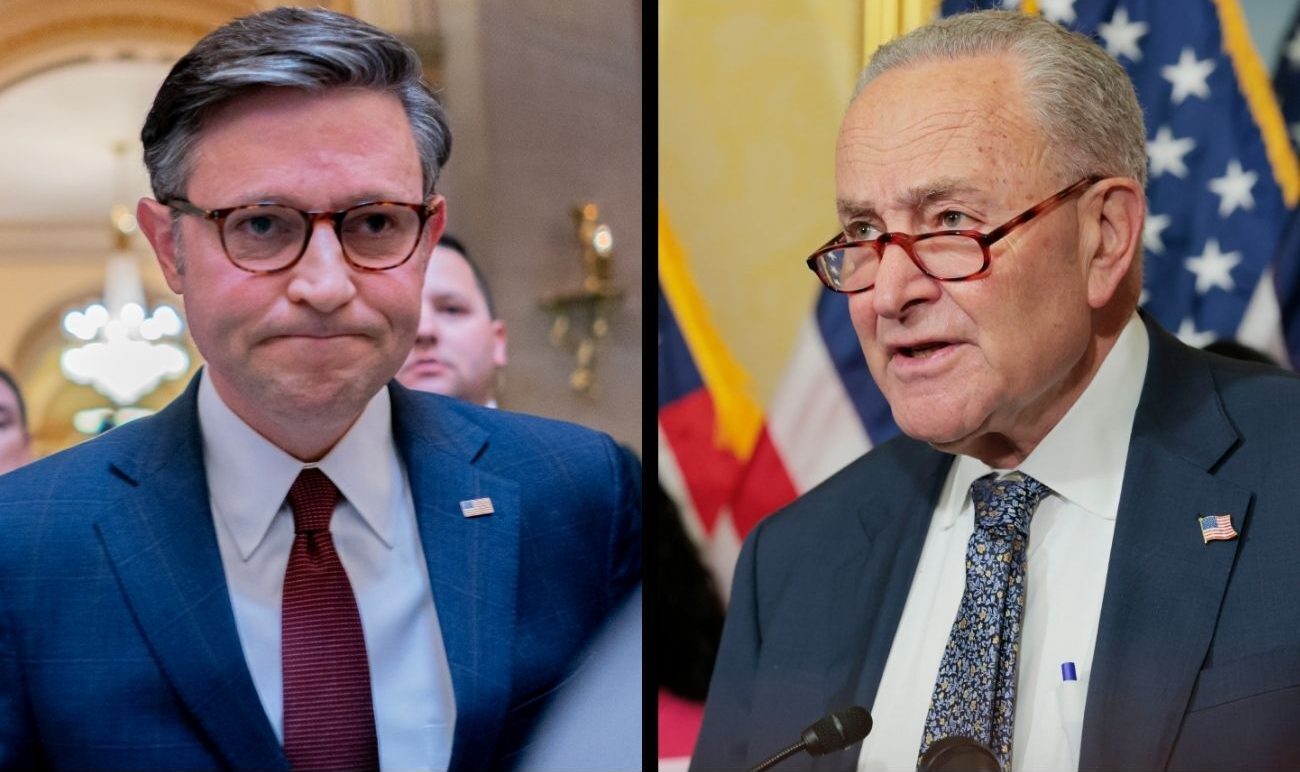
Speaker Mike Johnson made clear he wasn’t amused.
And now the dispute threatens to deepen internal party tensions at a time when Republicans hoped to project unity following the end of the 43-day shutdown.
The Provision No One Mentioned
The controversy centers around a provision tucked into the Senate’s government funding package — one that was reportedly added late in the negotiating process.
The language gives senators who were targets of former special counsel Jack Smith’s “Arctic Frost” investigation the right to sue the federal government if surveillance was conducted without prior notice.
Eight Republican senators fall under this category:
-
Lindsey Graham
-
Bill Hagerty
-
Josh Hawley
-
Dan Sullivan
-
Tommy Tuberville
-
Ron Johnson
-
Cynthia Lummis
-
Marsha Blackburn
If they choose to pursue a claim, each could be eligible for up to $500,000 in compensation.
To House Republicans, the issue wasn’t that senators had legal recourse — the concern was that only senators had it.
And they had no idea the clause even existed.
Johnson Calls the House Back Early
Speaker Mike Johnson was blunt about the surprise addition.
“We had no idea that was dropped in at the last minute, and I did not appreciate that, nor did most of the House members,” Johnson told reporters.
He immediately recalled the House from its scheduled 54-day recess, forcing members to return and address the provision before allowing the full funding bill to move forward.
The move underscored how seriously Johnson viewed the issue — and how willing he was to halt Congress’ break to demand transparency.
Republicans also expressed irritation that the Senate provided no equivalent remedy for House members, especially given that surveillance concerns under the Biden administration extended far beyond the Senate.
Critics Blast the Senate for “Self-Dealing”
The backlash spread quickly.
Rep. John Rose (R-TN) condemned the provision on X, saying:
“Republican Senators secretly tucked in a clause to hand THEMSELVES up to $500,000 of your money… Half a million for them, but NOTHING for the thousands of J6ers.”
The contrast — legal protections for senators but no comparable measure for thousands of lower-level defendants, many of whom still argue they were wrongfully targeted — landed heavily among GOP voters online.
Rep. Anna Paulina Luna (R-FL) was even more direct, calling the Senate’s maneuver “shady” and a “fubar.”
“These senators slipped in a provision… that guarantees them $500k if DOJ settles their Arctic Frost lawsuit,” she wrote. “And we’re supposed to be okay with that?”
She accused Senate leaders of crossing an ethical line.
“You can’t self-deal like this — especially not by leveraging a government shutdown.”
Rep. Greg Steube (R-FL) voted against the funding bill entirely, arguing he would not support any measure that gave “special protections for senators” while leaving the House out.
He predicted the Senate would block any attempt to remove or rewrite the language, calling the provision “exactly the kind of insider privilege Americans are sick of.”
Why This Provision Hit a Nerve
The outrage isn’t merely about money — it’s about what the provision symbolizes.
For years, Republican lawmakers have accused federal agencies of weaponizing surveillance tools against political opponents. The “Arctic Frost” investigation, conducted under former special counsel Jack Smith, targeted certain senators in connection with Jan. 6 as well as unrelated communications.
Republicans say the surveillance was politically motivated.
Now, the Senate’s provision grants a financial and legal remedy to senators but no one else — despite thousands of subpoenaed citizens, activists, staffers, and other lawmakers being caught up in the same dragnet.
And new reports this week revealed that the surveillance extended even further.
BREAKING: McCarthy and Gohmert Were Also Surveilled
According to new reporting, Smith’s team also obtained phone records belonging to:
-
Former Speaker Kevin McCarthy (R-CA)
-
Former Rep. Louie Gohmert (R-TX)
The revelation further inflamed tensions within the House GOP, strengthening the argument that any legal remedies should apply to all affected lawmakers, not only senators.
If anything, the scope of surveillance was broader than previously acknowledged — and the Senate’s carve-out appears even more arbitrary.
Republicans Say Biden-Era Surveillance Overreach Is Now Unavoidable
The Senate’s quiet inclusion of the measure effectively forced Republicans in both chambers to confront the larger issue: surveillance practices conducted during the Biden administration remain a contentious, unresolved topic.
House Judiciary Committee members privately indicated that the newly uncovered surveillance details will increase pressure to:
-
expand FISA reforms
-
investigate Jack Smith’s conduct
-
scrutinize DOJ data collection during Jan. 6 cases
But House Republicans believe the Senate’s attempt to carve out protections only for themselves undermines the broader push for oversight.
One senior House Republican put it bluntly:
“If senators get compensation, then every improperly targeted American should too.”
Despite Tensions, the House Moves the Funding Bill Forward
Even with the internal drama, House Republicans ultimately voted to move the funding bill forward, aiming to avoid another shutdown standoff.
The measure funds:
-
Veterans Affairs
-
Agriculture
-
multiple federal agencies
through January.
Democrats attempted to add language extending Obamacare subsidies — a major point of contention — but the final bill excluded that provision.
Senate leaders, however, said they plan to revisit the issue next month.
A Divided GOP Faces a New Challenge
The episode highlights growing friction between House and Senate Republicans:
-
House members want equal treatment
-
Senators defend the legal provision as necessary
-
Leadership on both sides faces pressure from their base to address surveillance abuses
-
And Speaker Johnson must navigate both the legislative fallout and the political messaging
While Republicans agree the Biden administration misused surveillance tools, they disagree sharply over how to respond — and who deserves compensation.
The Senate’s provision, whether intentional or bureaucratic, has now become a symbol of the gap between the two chambers.
What This Means Moving Forward
Several key threads will shape the next phase of the fight:
1. Will the House demand equal protections?
Many members believe they must — both for themselves and for constituents affected by Jan. 6–related surveillance.
2. Will the Senate double down?
Some senators insist the provision only clarifies existing rights and wasn’t meant as favoritism. Others are avoiding public comment.
3. Does this open the door to broader surveillance reform?
The renewed scrutiny could fuel support for tighter oversight of DOJ and FBI investigative practices.
4. Will Trump weigh in?
Given the political dynamics, Trump’s potential response could significantly shape public opinion.
Conclusion
What started as an ordinary funding bill quickly erupted into a major confrontation between the House and Senate — and into a much larger debate about surveillance abuses, fairness, and transparency.
For Speaker Johnson, the message was clear: Congress cannot operate on hidden provisions and special carve-outs. And for House Republicans, the episode reinforced a long-standing frustration — one that will likely resurface in the next round of negotiations.

James Jenkins is a celebrated Pulitzer Prize-winning author whose work has reshaped the way readers think about social justice and human rights in America. Raised in Atlanta, Georgia, James grew up in a community that instilled in him both resilience and a strong sense of responsibility toward others. After studying political science and creative writing at Howard University, he worked as a journalist covering civil rights issues before dedicating himself fully to fiction. His novels are known for their sharp, empathetic portraits of marginalized communities and for weaving personal stories with broader political realities. Jenkins’s breakout novel, Shadows of Freedom, won national acclaim for its unflinching look at systemic inequality, while his more recent works explore themes of identity, resilience, and the fight for dignity in the face of oppression. Beyond his novels, James is an active public speaker, lecturing at universities and participating in nonprofit initiatives that support literacy and community empowerment. He believes that storytelling is a way to preserve history and inspire change. When not writing, James enjoys jazz music, mentoring young writers, and traveling with his family to explore cultures and stories around the world.