Senator John Fetterman, D-Pennsylvania, is facing renewed scrutiny following the fatal shooting of 37-year-old ICU nurse Alex Pretti in Minneapolis by a federal Border Patrol agent. The incident has drawn widespread condemnation from lawmakers and civil rights advocates nationwide, but Fetterman has notably remained silent, prompting criticism not only from political observers but also from his own family.
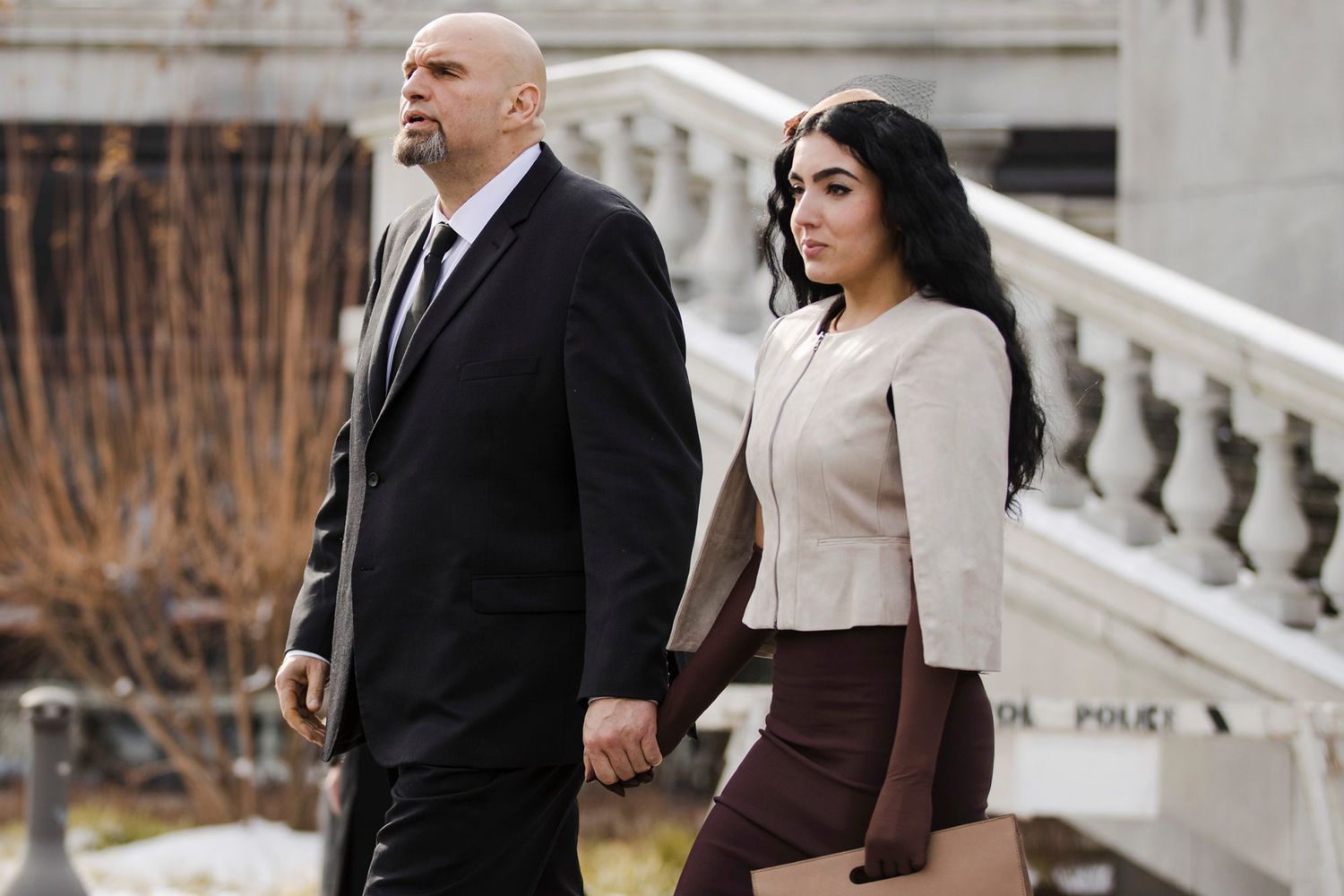
In a statement issued on social media platform X, Fetterman’s wife, Gisele Barreto Fetterman, openly criticized the federal immigration enforcement agency ICE, labeling its operations “cruel and un-American.” Gisele, 43, a former Second Lady of Pennsylvania and a Brazilian immigrant who spent more than a decade living undocumented in the United States, recounted her own experiences of fear and uncertainty in the country. She described the Pretti shooting as part of what she called a “shared national wound” of daily violence inflicted on people contributing to American society.
“For more than a decade, I lived undocumented in the US. Every day carried the same uncertainty and fear lived in my body – a tight chest, shallow breaths, racing heart,” Barreto Fetterman wrote. “What I thought was my private, chronic dread has now become a shared national wound. This now-daily violence is not law and order. It is terror inflicted on people who contribute, love and build their lives here. It’s devastatingly cruel and un-American.”
Her comments have placed Fetterman in a politically delicate position. While Barreto Fetterman emphasizes a humanitarian perspective grounded in her personal history, the senator has repeatedly voiced strong support for ICE operations and federal immigration enforcement policies, including under the Trump administration.
Fetterman’s alignment with federal enforcement agencies has included vocal defenses of ICE during contentious moments, such as the July 4, 2025, alleged coordinated attack on an ICE facility in Alvarado, Texas, which he described in a Fox News interview as “absolutely unacceptable” and “terrible.” He has also defended Trump’s immigration priorities and advocated for increased border security funding, even participating in White House meetings on the topic with the former president.
These positions, while applauded by conservative observers, have drawn ire from progressives within his own party. Fetterman has frequently spoken against abolishing ICE—a slogan embraced by the Democratic progressive movement—arguing that the agency performs “an important job for our nation” and dismissing calls to dismantle it as “100 percent inappropriate and outrageous.”
The tension between his stance and his wife’s criticism is particularly notable given Barreto Fetterman’s background. She immigrated to the U.S. from Brazil and lived without legal status for years, a perspective she has cited as shaping her views on the treatment of undocumented individuals and the ethical obligations of the federal government in enforcing immigration laws. Her public denouncement underscores a deep ideological and ethical rift, highlighting contrasting approaches to law enforcement and immigrant protections within the Fetterman household.
Saturday’s shooting in Minneapolis, which killed Alex Pretti during a targeted enforcement operation, has intensified scrutiny. Federal officials claimed Pretti approached Border Patrol officers with a 9mm semi-automatic handgun prior to being shot. However, critics, including Democratic lawmakers and advocacy groups, argue that the aggressive tactics employed by federal agents have resulted in unnecessary deaths and overreach, especially against U.S. citizens. Pretti’s death came only weeks after Renee Nicole Good, 37, was killed by ICE in a separate incident in the city.
While most Democratic senators, as well as several Republicans, issued statements condemning the use of force and calling for accountability, Fetterman has remained notably silent in the aftermath. This has drawn attention not only to his political positions but also to the seeming contradiction with his wife’s public denunciation. Barreto Fetterman’s comments were seen as particularly striking, given her intimate understanding of life under the threat of federal enforcement and her close connection to the senator.
President Trump responded to the shooting with a statement emphasizing a nuanced stance: “I don’t like any shooting. I don’t like it. But I don’t like it when somebody goes into a protest and he’s got a very powerful, fully loaded gun with two magazines loaded up with bullets also. That doesn’t play good either.” The president further indicated that his administration would investigate the incident and review federal agent operations in Minneapolis.
Trump’s broader approach has included directing state and local officials to cooperate fully with ICE, including transferring incarcerated immigrants to federal custody. He also called for legislation to end sanctuary city policies, which he framed as the root cause of enforcement challenges. These actions have drawn criticism from Minnesota Governor Tim Walz, who accused the Trump administration of launching a “smear campaign” against Pretti while overstepping federal authority. Walz urged a withdrawal of federal agents from the state and called for a more measured, humane approach to immigration enforcement.
Fetterman’s continued support of federal enforcement stands in stark contrast to these calls for restraint. He has repeatedly defended ICE publicly, even as his wife condemned its actions. In July 2025, he broke with his own party to defend the agency, accusing Democrats of unfairly vilifying ICE. His remarks have drawn attention not only from party leadership but also from progressive voters who helped propel him to the Senate in 2022.
The senator’s engagement with Trump on immigration matters, including a White House meeting last year where the president praised Fetterman for his positions, further complicates the optics. Trump referred to Fetterman as a “commonsense person” and lauded his cooperation on issues like border security, highlighting a bipartisan alignment that has attracted both political support and criticism.
Fetterman has also addressed his personal connections to immigration in public statements, referencing the role his wife’s family played in shaping his life and family. He noted in interviews that his appreciation for her family’s courage in migrating to the U.S. was integral to the existence of their three children, an acknowledgment that contrasts with his firm policy stances on ICE enforcement.
The divide between Fetterman and his wife reflects a broader national conversation on immigration, enforcement, and civil liberties. While Fetterman emphasizes law enforcement and national security priorities, Barreto Fetterman highlights humanitarian concerns and the lived experience of undocumented immigrants. This tension illustrates the challenges politicians face in balancing personal convictions, party expectations, and public accountability.
In the wake of Pretti’s death, the debate over federal enforcement tactics in Minneapolis and elsewhere is likely to intensify. President Trump has pledged a federal investigation and warned state and local leaders to comply with federal law, while Minnesota officials call for restraint and review. The issue raises significant questions about the role of ICE, the limits of federal authority, and the ethical responsibilities of elected officials when federal actions result in the death of a U.S. citizen.
As Democrats and Republicans weigh the implications, Fetterman’s silence has become a focal point of discussion. Analysts note that his public positions in favor of ICE, combined with his wife’s sharp criticism, may influence voter perceptions, party dynamics, and future legislative debates on immigration enforcement and federal oversight.
The controversy surrounding the Pretti shooting and Fetterman’s stance exemplifies the difficult intersection of policy, personal experience, and public accountability. With federal investigations underway and political pressures mounting, the senator faces scrutiny both within his party and from the public, while his wife’s statements highlight the human costs of aggressive federal enforcement operations.

Emily Johnson is a critically acclaimed essayist and novelist known for her thought-provoking works centered on feminism, women’s rights, and modern relationships. Born and raised in Portland, Oregon, Emily grew up with a deep love of books, often spending her afternoons at her local library. She went on to study literature and gender studies at UCLA, where she became deeply involved in activism and began publishing essays in campus journals. Her debut essay collection, Voices Unbound, struck a chord with readers nationwide for its fearless exploration of gender dynamics, identity, and the challenges faced by women in contemporary society. Emily later transitioned into fiction, writing novels that balance compelling storytelling with social commentary. Her protagonists are often strong, multidimensional women navigating love, ambition, and the struggles of everyday life, making her a favorite among readers who crave authentic, relatable narratives. Critics praise her ability to merge personal intimacy with universal themes. Off the page, Emily is an advocate for women in publishing, leading workshops that encourage young female writers to embrace their voices. She lives in Seattle with her partner and two rescue cats, where she continues to write, teach, and inspire a new generation of storytellers.