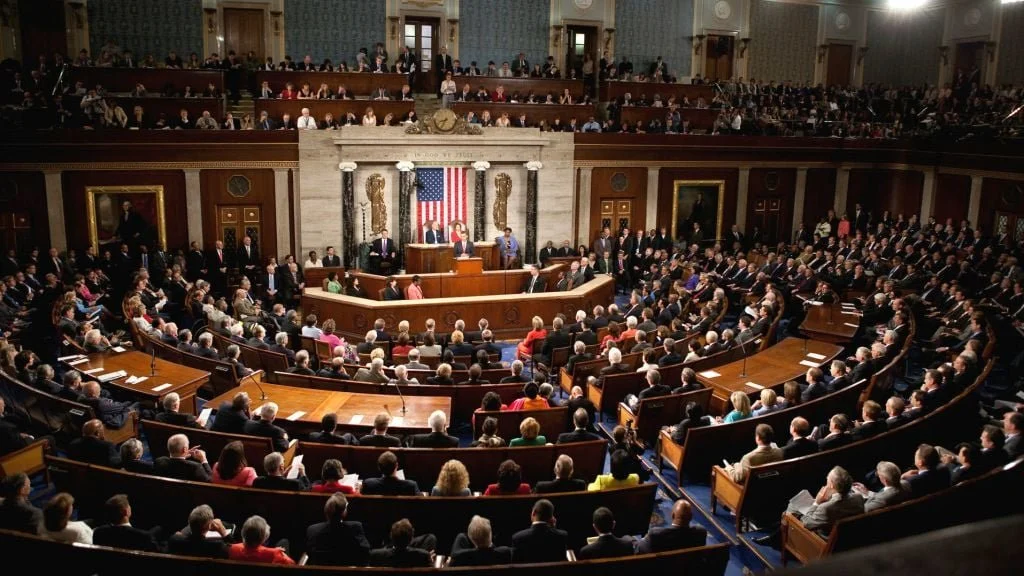
In a decisive bipartisan move, the United States Senate approved a $901 billion draft of the National Defense Authorization Act (NDAA) on Monday evening, sending the landmark legislation to President Donald Trump for his signature. The Senate passed the bill in a 77–20 vote, reflecting broad support for the measure despite lingering controversy over specific policy provisions.
The NDAA, which has been passed by Congress every year since 1961, sets funding levels and policy guidelines for the Department of Defense and establishes priorities for military programs and national security initiatives. While the bill does not directly allocate funds—a separate appropriations process handles actual spending—it authorizes defense programs and provides the legal framework for implementing national security policy.
The House of Representatives approved its version of the bill on December 10, passing it in a 312–112 vote. The House vote saw 18 Republicans and 94 Democrats oppose the package, signaling some partisan reservations but ultimately affirming overwhelming support. The Senate’s approval came after weeks of negotiations aimed at reconciling differences between the House and Senate proposals.
The House version of the NDAA adhered to the White House’s budget request of $893 billion, while the Senate originally drafted legislation authorizing $925 billion in defense spending. The compromise $901 billion figure represents a middle ground, ensuring that both chambers could pass the legislation and deliver it to the president in time for enactment before the start of the fiscal year. If signed, this NDAA will become the largest in U.S. history, surpassing the $886 billion record set in the fiscal year 2024 bill.
Key Provisions of the 2026 NDAA
The NDAA authorizes a wide range of programs, including military personnel pay, nuclear weapons modernization, defense research, and acquisition of new equipment for the Army, Navy, Air Force, Marine Corps, and Space Force. Lawmakers emphasized that the legislation addresses both traditional defense priorities and emerging security threats, including cyberattacks, space-based defense, and the modernization of strategic capabilities.
One of the most debated elements of this year’s bill relates to military aircraft regulations. The NDAA includes language allowing certain military aircraft to operate without broadcasting their precise location, a policy shift designed to enhance operational security in sensitive missions. Since January, military aircraft had been required to broadcast location data, a rule that contributed to a deadly crash over the Potomac River near Ronald Reagan National Airport, which killed all 67 passengers aboard two aircraft.
Critics of the provision, including Senators Ted Cruz (R-Texas) and Maria Cantwell (D-Wash.), have raised safety concerns, arguing that waiving location-broadcasting requirements could create new risks for civilian air traffic and military personnel alike. Families of the victims of the Potomac crash joined the senators in a press conference urging Congress to remove the waiver provisions. Cruz warned that failure to address the issue could result in another government shutdown in January, highlighting the delicate balance between national security and public safety.
Despite these objections, Senate Majority Leader John Thune (R-S.D.) indicated that Congress could consider incorporating the ROTOR Act, legislation introduced last summer by Cruz and Cantwell, into a future government funding package. The ROTOR Act would tighten operational oversight for military aircraft and limit exceptions to location broadcasting, potentially mitigating safety concerns.
Bipartisan Support and Political Implications
The NDAA’s passage reflects broad bipartisan support for defense policy, with lawmakers citing the need to maintain military readiness amid evolving global threats. Supporters note that the bill addresses challenges posed by strategic competitors such as China and Russia, while also enhancing U.S. capabilities in emerging domains like cyber defense, artificial intelligence, and space operations.
Senator Markwayne Mullen (R-Okla.) pointed out that under previous administrations, including that of President Barack Obama, the U.S. conducted hundreds of similar military operations without extensive public scrutiny. “We’re proud of what we’re doing to strengthen national security and protect Americans,” Mullen said. “This bill ensures that our armed forces have the resources and authority to operate effectively around the world.”
Secretary of State Marco Rubio also highlighted the Trump administration’s focus on dismantling terrorist organizations and drug cartels as part of the broader “America First” agenda. Rubio emphasized that the NDAA supports these efforts by authorizing intelligence gathering, military operations, and coordination with international partners in the Western Hemisphere and beyond.
Funding Priorities
The $901 billion figure encompasses a range of priorities, including a 4.5 percent pay raise for military personnel, modernized equipment for the Army and Air Force, expanded Navy and Marine Corps capabilities, and investments in space and cyber defense. A portion of the budget is also earmarked for missile defense systems, nuclear modernization programs, and strategic deterrence initiatives, ensuring that the U.S. maintains a credible defense posture in the face of global threats.
Additionally, the NDAA allocates funds for infrastructure improvements at military bases, veteran support services, and advanced research programs. Lawmakers have emphasized that investments in cutting-edge technologies, including hypersonic weapons, autonomous systems, and AI-driven defense solutions, are critical to maintaining U.S. military superiority in the 21st century.
Controversial Provisions
Beyond aircraft regulation, the NDAA includes provisions addressing social and administrative policies within the military. These provisions have sparked debate among lawmakers, military leaders, and advocacy groups. Critics argue that certain language could impact operational effectiveness, while supporters claim the policies are necessary to modernize the armed forces and promote equity and accountability.
Despite these disagreements, the bipartisan consensus reflects recognition of the broader national security challenges facing the United States. Lawmakers emphasized that failure to pass the NDAA could jeopardize military readiness and undermine the U.S. position in strategic regions around the world.
Process and Next Steps
After Senate approval, the NDAA was sent to President Trump’s desk for signature. Given the broad support in both chambers, it is expected that the president will sign the legislation into law in the coming days. Once enacted, the NDAA will serve as the primary framework for U.S. defense policy and military planning for fiscal year 2026.
The bill represents a compromise between competing interests in Congress, balancing fiscal responsibility with robust investment in military capabilities. Analysts note that while the NDAA does not directly appropriate funding, it lays the legal and policy groundwork for appropriations, ensuring that the military can execute its priorities efficiently.
Historical Context
The NDAA has historically been one of the few pieces of legislation passed annually with consistent bipartisan support. Its passage is often considered essential to maintaining military readiness and addressing emerging threats. Over the decades, the NDAA has authorized key defense programs, including missile defense initiatives, nuclear modernization projects, and the expansion of military operations globally.
In recent years, the NDAA has grown in complexity and size, reflecting the increasing demands on the U.S. military and the evolving nature of global security threats. The 2026 draft, at $901 billion, continues this trend, representing a record investment in national defense policy.
Congressional Oversight and Transparency
While the NDAA sets policy and authorizes programs, oversight and transparency remain critical. Senators and House members have stressed the importance of accountability in defense spending, particularly given the size of the budget and the complexity of military operations. Committees such as Armed Services and Appropriations play a vital role in monitoring the implementation of the NDAA, ensuring that programs achieve their intended outcomes without waste or inefficiency.
The legislation also reflects ongoing debates about military transparency, operational security, and public oversight. Provisions such as the aircraft location waivers have sparked discussions about how to balance secrecy with safety, demonstrating the challenges inherent in modern defense policy.
Conclusion
The passage of the $901 billion NDAA marks a significant milestone for U.S. defense policy, providing the legal and policy framework necessary for maintaining military readiness, advancing strategic capabilities, and addressing emerging threats. While certain provisions remain controversial, the bill reflects broad bipartisan support for ensuring that the United States continues to lead in global defense and security.
As the bill moves to President Trump’s desk for signature, lawmakers, military leaders, and analysts will continue to monitor its implementation, evaluating its impact on personnel, operations, and strategic priorities. With the NDAA now poised to become the largest in U.S. history, it underscores the nation’s commitment to maintaining a strong, capable, and modern military in an increasingly complex and competitive world.

Emily Johnson is a critically acclaimed essayist and novelist known for her thought-provoking works centered on feminism, women’s rights, and modern relationships. Born and raised in Portland, Oregon, Emily grew up with a deep love of books, often spending her afternoons at her local library. She went on to study literature and gender studies at UCLA, where she became deeply involved in activism and began publishing essays in campus journals. Her debut essay collection, Voices Unbound, struck a chord with readers nationwide for its fearless exploration of gender dynamics, identity, and the challenges faced by women in contemporary society. Emily later transitioned into fiction, writing novels that balance compelling storytelling with social commentary. Her protagonists are often strong, multidimensional women navigating love, ambition, and the struggles of everyday life, making her a favorite among readers who crave authentic, relatable narratives. Critics praise her ability to merge personal intimacy with universal themes. Off the page, Emily is an advocate for women in publishing, leading workshops that encourage young female writers to embrace their voices. She lives in Seattle with her partner and two rescue cats, where she continues to write, teach, and inspire a new generation of storytellers.