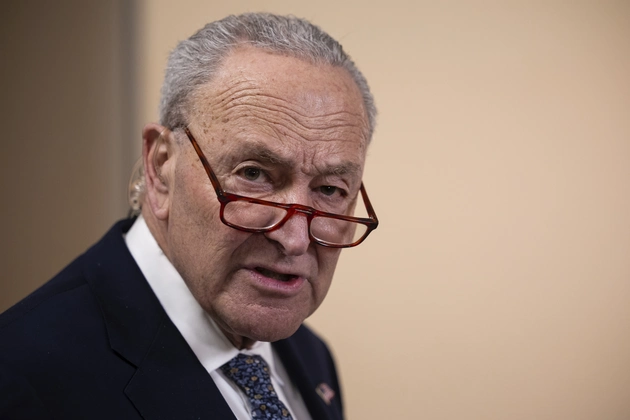
WASHINGTON — In recent months, concerns about political violence in the United States have reached new heights, with lawmakers and their staff facing threats that would have once been considered almost unthinkable. From online harassment campaigns to incidents of physical intimidation, members of Congress increasingly operate under heightened security protocols, reflecting a broader national conversation about civility, democracy, and the safety of public officials. Among the figures navigating this tense environment is Senate Minority Leader Chuck Schumer, whose New York offices have recently come under alarming scrutiny.
As a senior Democratic leader in the Senate, Schumer’s role is both politically prominent and strategically influential. He is responsible not only for leading the Democratic caucus in the upper chamber but also for negotiating with the majority party, coordinating legislative priorities, and representing his constituents in New York state. These responsibilities, while central to democratic governance, have placed him in the crosshairs of political adversaries who may view high-profile leaders as symbolic targets.
Over the past decade, the political climate has become increasingly charged. Heated rhetoric, amplified on social media platforms, has blurred the line between political debate and threats of violence. Analysts point to an environment in which extreme partisanship, disinformation, and ideological polarization create conditions in which public officials and their staff are subjected to unprecedented threats. In addition, recent cases of political targeting, including high-profile attacks and attempted assassinations, have drawn attention to the vulnerabilities inherent in public service.
It was against this backdrop that news emerged on December 1 that Schumer’s offices in New York were subjected to bomb threats. The warnings, which prompted immediate intervention by law enforcement, were received at three locations: Rochester, Binghamton, and Long Island. While details of the messages themselves were initially withheld for security reasons, Schumer confirmed that the subject line of the emails read “MAGA,” signaling a potential ideological motivation linked to supporters of former President Donald Trump.
The emails reportedly contained claims asserting that “the 2020 election was rigged,” reflecting long-standing conspiracy theories that have circulated widely in certain political circles. Law enforcement officials responded immediately, conducting thorough security sweeps of all affected offices. According to Schumer, no individuals were harmed, and staff members remained safe throughout the incidents. Local and federal authorities collaborated closely to ensure that the offices were secure and to investigate the origins of the threatening communications.
“These kinds of violent threats have absolutely no place in our political system,” Schumer said in a statement. “No one—no public servant, no staff member, no constituent, no citizen—should ever be targeted for simply doing their job. I am grateful to law enforcement for their quick and professional response, ensuring that these offices remain safe and secure for all New Yorkers.”
The bomb threats against Schumer are part of a broader pattern of increasing concern over the safety of elected officials and public servants. In recent months, several members of Congress have faced harassment, threats, and even direct attacks. In some cases, these incidents have involved firearms, explosives, or other forms of physical intimidation, heightening awareness of the need for enhanced protective measures.
For example, earlier this year, the House of Representatives authorized a series of steps aimed at strengthening security for members, including a $20,000 monthly allowance to fund additional protection measures. The House also implemented the “Mobile Duress Program,” which allows representatives and their staff to summon rapid assistance during emergencies. Despite these measures, threats continue to emerge with alarming frequency, prompting ongoing discussions about the adequacy of existing protocols.
Concerns about safety are not limited to Congress. Governors, local officials, and candidates for state and municipal offices have also faced an increase in threats, ranging from aggressive social media campaigns to targeted physical attacks. In one high-profile case, Pennsylvania Governor Josh Shapiro was targeted in an arson attack at a state facility. In another, Minnesota state lawmakers were shot in what authorities characterized as politically motivated violence. Even conservative figures, such as the late Charlie Kirk, have been victims of lethal attacks. These incidents reflect a growing willingness among certain individuals or groups to translate political grievances into acts of violence.
The political climate surrounding Schumer’s bomb threats is also intensified by the lingering influence of former President Donald Trump. Many analysts note that rhetoric framing political opponents as illegitimate or hostile has contributed to an environment in which some individuals feel emboldened to take extreme measures. While Trump himself did not issue the threats, Schumer’s offices were explicitly targeted with messages referencing “MAGA,” tying the incidents to the broader movement of Trump supporters who continue to propagate narratives of election fraud and governmental illegitimacy.
Schumer’s response to the threats has emphasized both vigilance and resilience. He has underscored the need for public discourse to remain civil and constructive, warning against the normalization of intimidation or violence in politics. By highlighting the dangers posed to public servants and staff, he has also sought to draw attention to the broader responsibility of elected officials, media outlets, and civic organizations to counteract extremism and protect democratic institutions.
In addition to his public statements, Schumer has worked closely with law enforcement agencies, including the U.S. Capitol Police, local police departments, and federal authorities, to ensure that security protocols are rigorously followed. Authorities are investigating the origin of the threatening emails, tracing IP addresses, analyzing metadata, and working to identify any individuals responsible. The collaborative approach underscores the seriousness with which such threats are taken and the importance of interagency cooperation in safeguarding public officials.
The targeting of Schumer’s offices also resonates with previous security concerns raised earlier in 2025. Last month, he requested special protection for Senators Mark Kelly (D-Ariz.) and Elissa Slotkin (D-Mich.) after they were publicly criticized by Trump for urging military personnel to “refuse illegal orders.” In response, Trump accused the senators of “seditious behavior” and undermining military discipline, prompting heightened attention to their safety. These incidents collectively illustrate a growing tension between political expression, public safety, and the responsibilities of elected leaders.
Lawmakers from both parties have responded to the threats in New York and elsewhere with calls for calm and increased vigilance. House and Senate members have emphasized that political disagreements must be resolved through dialogue, legislation, and the electoral process rather than intimidation or coercion. Republican and Democratic members alike have voiced support for measures to enhance security and ensure the continuity of government operations in the face of potential threats.
Meanwhile, staff members in Schumer’s offices have continued to perform their duties under the protective measures implemented by law enforcement. Employees have been briefed on safety protocols, received training in emergency response procedures, and participated in drills designed to mitigate potential risks. These steps, while routine in some high-profile offices, have become increasingly standard as political violence grows in frequency and intensity.
Experts in political security emphasize that the incidents involving Schumer’s offices are emblematic of a broader societal challenge. The United States faces a confluence of technological, social, and political factors that amplify the reach and impact of threats. Online platforms allow for rapid dissemination of messages encouraging violence or harassment, while polarized political discourse can create echo chambers in which extreme views are normalized. Officials argue that coordinated efforts, encompassing law enforcement, legislative action, and public education, are necessary to address these dynamics effectively.
Schumer’s situation also raises questions about the long-term impact of political threats on governance. Persistent threats to safety may influence the decisions of public servants to seek or maintain office, alter the way they interact with constituents, or shape legislative priorities. In some cases, lawmakers have opted to retire or resign due to safety concerns, highlighting the potential consequences of a climate in which intimidation is increasingly common.
The New York bomb threats underscore the importance of maintaining secure channels for official communication, ensuring rapid response capabilities, and reinforcing the legal consequences for individuals who engage in threatening behavior. Authorities have stressed that such acts are criminal offenses subject to prosecution and that deterrence is a critical component of protecting the democratic process.
In the aftermath of the threats, Schumer has called for a renewed commitment to civility and responsibility in political discourse. He emphasized that public officials must be able to carry out their duties without fear of reprisal or intimidation and that citizens have a role in supporting a safe and functioning democracy. By framing the threats within a broader narrative of political safety, Schumer has sought to highlight the systemic issues underlying acts of intimidation and the need for sustained vigilance at every level of government.
Ultimately, the targeting of Schumer’s offices is part of a growing pattern of political threats in the United States. The emails referencing “MAGA” serve as a stark reminder of the continued influence of partisan rhetoric and conspiracy theories on real-world behavior. Law enforcement investigations are ongoing, and federal and local authorities are coordinating to ensure that the responsible parties are identified and held accountable.
While the immediate danger to staff and constituents has been mitigated, the incident raises fundamental questions about the relationship between political expression, extremism, and public safety. Schumer has urged colleagues and citizens alike to reject intimidation, to engage in respectful political discourse, and to uphold the principles of democracy that allow elected officials to serve their constituents without fear.
In sum, the bomb threats targeting Senate Minority Leader Chuck Schumer’s New York offices reflect the intersection of political polarization, extremist messaging, and public safety concerns. Law enforcement continues to investigate, ensuring the security of staff and the continuity of government operations. The events also serve as a sobering reminder of the growing challenges faced by elected officials in an era of heightened political tension and the need for vigilance, accountability, and civic responsibility across all levels of governance.

Emily Johnson is a critically acclaimed essayist and novelist known for her thought-provoking works centered on feminism, women’s rights, and modern relationships. Born and raised in Portland, Oregon, Emily grew up with a deep love of books, often spending her afternoons at her local library. She went on to study literature and gender studies at UCLA, where she became deeply involved in activism and began publishing essays in campus journals. Her debut essay collection, Voices Unbound, struck a chord with readers nationwide for its fearless exploration of gender dynamics, identity, and the challenges faced by women in contemporary society. Emily later transitioned into fiction, writing novels that balance compelling storytelling with social commentary. Her protagonists are often strong, multidimensional women navigating love, ambition, and the struggles of everyday life, making her a favorite among readers who crave authentic, relatable narratives. Critics praise her ability to merge personal intimacy with universal themes. Off the page, Emily is an advocate for women in publishing, leading workshops that encourage young female writers to embrace their voices. She lives in Seattle with her partner and two rescue cats, where she continues to write, teach, and inspire a new generation of storytellers.