
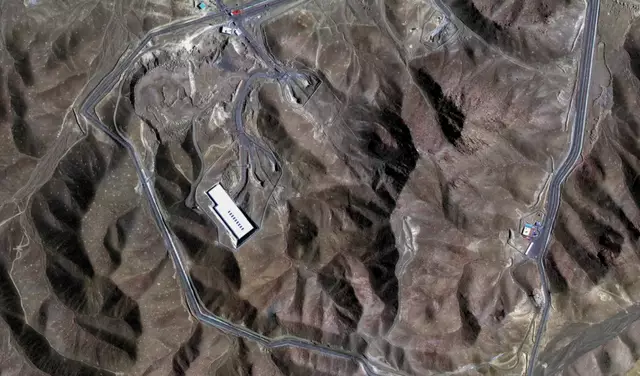
Satellite photos have revealed dramatic transformations at Iran’s nuclear facilities following the United States’ precision airstrikes, raising alarm about the future of the country’s nuclear ambitions and regional stability. Images captured by commercial provider Maxar reveal craters, ash, and earth-filled tunnel entrances at three critical sites: Fordow, Natanz, and Isfahan.
BEFORE
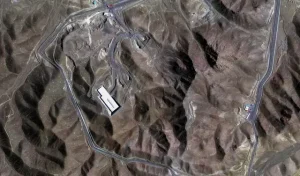
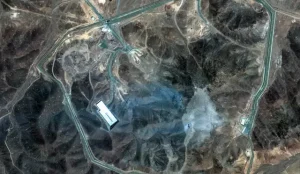
At Fordow, deep within a mountain, at least six impact craters and a dusting of debris are visible. Analysts say these indicators point to the use of bunker-busting bombs designed to tunnel deep and destroy fortified underground facilities. Though surface buildings remain largely intact, scorch marks and blast holes suggest serious subterranean damage.
Natanz, known for sprawling underground enrichment halls, shows fresh dark patches and disrupted terrain above key areas. Military experts believe the strikes targeted centrifuge chambers essential to Iran’s uranium enrichment process. The bomb damage pattern also hints at shockwave effects on surrounding underground infrastructure.
AFTER
The Isfahan complex, Iran’s largest nuclear research and conversion center, shows even more visible surface destruction. Several buildings are reduced to rubble, and large swaths of dust and ash cover the grounds. Satellite data confirms that entrances to underground tunnels appear deliberately filled in with earth—likely to contain blast effects or hide damage.
Strategic experts argue that this three-site strike was carefully calibrated to strike fear and stall Tehran’s nuclear momentum. By hitting every major stage of Iran’s uranium cycle—from conversion at Isfahan to enrichment at Natanz and hardened Fordow—the U.S. aimed to cripple the program across the board.
Publicly, Iranian officials have warned of retaliation, heightening global alert, especially in the Gulf region. Diplomats fear the strikes could destabilize the Middle East and trigger confrontations at sea or across shared borders.
Yet Washington insists the operation did not target Iran’s government; instead, it aimed to protect global security by limiting nuclear escalation. The use of stealth bombers, decoys, precision munitions, and submarine-launched cruise missiles underscores a campaign designed to hit hard—and vanish quietly.
The satellite imagery, dust, and bomb craters are more than just pictures. They symbolize a pivotal moment that could delay Iran’s nuclear capability—but also raise the specter of a new, dangerous chapter in U.S.–Iran relations, with global repercussions still unfolding.

James Jenkins is a celebrated Pulitzer Prize-winning author whose work has reshaped the way readers think about social justice and human rights in America. Raised in Atlanta, Georgia, James grew up in a community that instilled in him both resilience and a strong sense of responsibility toward others. After studying political science and creative writing at Howard University, he worked as a journalist covering civil rights issues before dedicating himself fully to fiction. His novels are known for their sharp, empathetic portraits of marginalized communities and for weaving personal stories with broader political realities. Jenkins’s breakout novel, Shadows of Freedom, won national acclaim for its unflinching look at systemic inequality, while his more recent works explore themes of identity, resilience, and the fight for dignity in the face of oppression. Beyond his novels, James is an active public speaker, lecturing at universities and participating in nonprofit initiatives that support literacy and community empowerment. He believes that storytelling is a way to preserve history and inspire change. When not writing, James enjoys jazz music, mentoring young writers, and traveling with his family to explore cultures and stories around the world.