A newly released promotional video from a senior U.S. Cabinet official is drawing widespread attention — and raising eyebrows — after blending political messaging, fitness routines, and celebrity flair in an unexpected way.
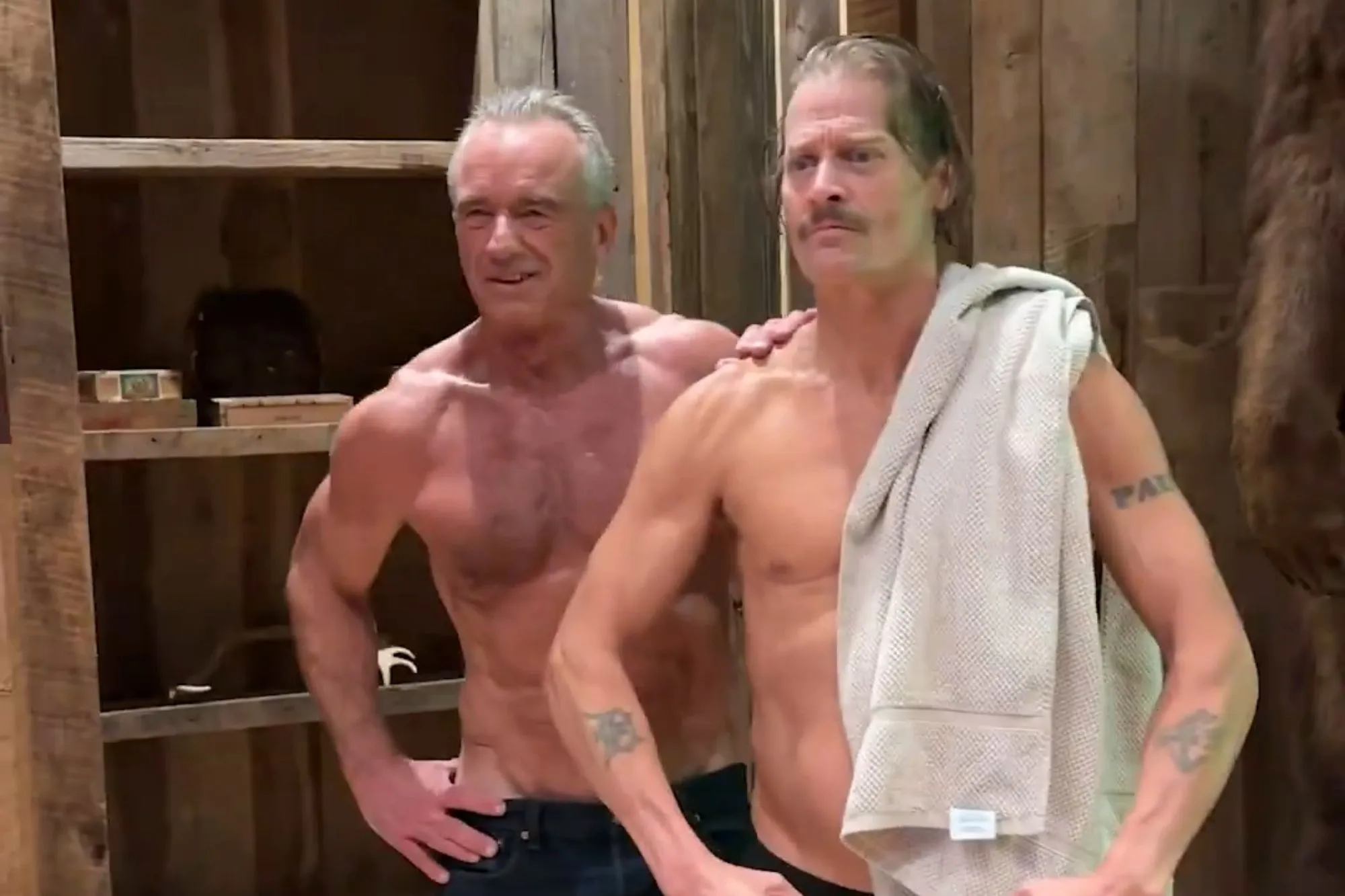
The 90-second clip, posted to social media earlier this week, features the head of a major federal agency alongside a well-known rock musician. The pair appear shirtless in portions of the video, cycling through a series of workout scenes set to loud music, patriotic imagery and bold on-screen slogans. The message is direct: Americans should exercise more and rethink what they eat.
But it is not simply the call to “get active” or “eat real food” that has generated conversation. Instead, critics and commentators have focused on the presentation — including sauna workouts, cold plunges performed in jeans, pickleball rallies, and a hot-tub toast featuring glasses of whole milk. The tone, at times theatrical and defiant, has prompted discussion about the evolving nature of public health messaging in the social media era.
The video is part of the Trump administration’s broader “Make America Healthy Again” campaign, an initiative aimed at reframing national conversations around diet, exercise and chronic disease. The campaign’s branding echoes other political slogans but places its emphasis squarely on lifestyle choices, nutritional guidelines and physical fitness.
It is only midway through the viral clip that the identities of the two central figures become fully clear: the Secretary of Health and Human Services, Robert F. Kennedy Jr., and musician Kid Rock.
Kennedy, 72, has been a polarizing figure in American public life for years, known for his environmental advocacy, skepticism of certain public health policies, and outspoken views on nutrition and wellness. Kid Rock, 55, has long aligned himself publicly with conservative politics and has been a vocal supporter of President Donald Trump. Their collaboration, while surprising in its visuals, is less unexpected in ideological alignment.
The video opens with high-energy music — Kid Rock’s 1999 hit “Bawitdaba” — blasting in the background as the two men pose before transitioning into a montage of gym exercises. Sit-ups, arm curls and stationary cycling are intercut with patriotic imagery, including an American flag and a vintage car. In one sequence, the pair perform push-ups inside a sauna. In another, Kennedy is seen submerging himself in a cold plunge while still dressed in jeans.
The montage continues with a pickleball match before culminating in a hot-tub scene in which both men raise glasses of milk and toast the camera. The words “Whole Milk” appear prominently on screen before the video concludes with the phrase “Make America Healthy Again.”
In a caption accompanying the post, Kennedy wrote that he had teamed up with Kid Rock to deliver “two simple messages to the American people: GET ACTIVE + EAT REAL FOOD.”
The collaboration arrives amid a broader shift in dietary guidance from the Department of Health and Human Services. Last month, Kennedy introduced updated federal nutritional recommendations, describing them as an “upside down” food pyramid. The revised guidance places greater emphasis on foods such as steak, cheese, whole milk and vegetables, while moving away from previous federal recommendations that stressed low-fat dairy products and limited saturated fat intake.
https://twitter.com/SecKennedy/status/2023860472026669400
“My message is clear: Eat real food,” Kennedy said during a recent press briefing announcing the changes.
Supporters argue that the new framework reflects growing skepticism toward highly processed foods and industrial seed oils, aligning with a broader wellness movement that has gained traction across the political spectrum. Critics, however, have questioned both the scientific underpinnings of the recommendations and the decision to promote them through stylized, celebrity-driven content.
Public health experts note that messaging is often as important as policy. For decades, federal health campaigns have relied on sober press conferences, educational pamphlets and partnerships with schools and community organizations. The decision to produce a high-energy social media video featuring a Cabinet official exercising shirtless marks a departure from that tradition.
Communications analysts suggest the strategy reflects changing media consumption habits. Short-form video content, particularly when amplified by celebrity endorsements, can reach audiences who might otherwise ignore formal policy announcements. The blending of entertainment and governance is increasingly common, especially in an era when political figures cultivate large personal followings online.
Still, the visual choices have fueled debate. Scenes of the two men in a sauna, one gesturing provocatively toward the camera, struck some viewers as more spectacle than substance. The hot-tub milk toast, in particular, drew commentary across social media platforms, with users questioning whether the imagery undercut the seriousness of the department’s mission.
Kid Rock’s involvement adds another layer of political symbolism. The musician has appeared at numerous conservative events and recently headlined Turning Point USA’s All-American Halftime Show, an alternative event organized in response to the selection of Puerto Rican reggaeton artist Bad Bunny for the Apple Music Super Bowl LX Halftime Show. The decision to partner with him reinforces the administration’s outreach to culturally conservative audiences.
For Kennedy, the video aligns with his longstanding emphasis on physical fitness and skepticism of what he describes as “corporate-driven” food systems. Throughout his career, he has advocated for environmental reform, organic agriculture and reduced reliance on processed foods. As Health and Human Services Secretary, he now wields significant influence over federal nutrition guidelines and public health campaigns.
Whether the unconventional video succeeds in motivating behavioral change remains unclear. Research on public health messaging suggests that clear, actionable advice — such as increasing daily physical activity or incorporating more whole foods — can positively influence behavior when delivered consistently. However, experts caution that symbolic gestures and viral content alone are unlikely to produce lasting shifts without sustained policy support and community engagement.
The video also underscores broader cultural tensions surrounding health policy. Debates over dietary fat, dairy consumption and government nutritional advice have intensified in recent years. Some Americans view revised guidelines as long-overdue corrections to flawed past recommendations, while others worry about politicization of scientific consensus.
As of now, the department has not indicated whether similar promotional content will follow. Observers will likely watch closely to see whether the campaign expands into schools, workplaces or community programs, or remains primarily a social media initiative.
In the meantime, the collaboration has achieved one immediate outcome: attention. Within hours of posting, the clip circulated widely, drawing reactions from supporters who praised its energy and critics who labeled it inappropriate. In a crowded media landscape, capturing attention can be a victory in itself.
The question that lingers is whether attention translates into action. For Kennedy and his allies, the goal appears straightforward — encourage Americans to exercise more and reconsider highly processed diets. For skeptics, the method raises concerns about the blending of political branding, celebrity culture and federal authority.
Either way, the unusual pairing of a Cabinet secretary and a rock musician in a sauna has ensured that the “Make America Healthy Again” initiative is unlikely to go unnoticed.

Emily Johnson is a critically acclaimed essayist and novelist known for her thought-provoking works centered on feminism, women’s rights, and modern relationships. Born and raised in Portland, Oregon, Emily grew up with a deep love of books, often spending her afternoons at her local library. She went on to study literature and gender studies at UCLA, where she became deeply involved in activism and began publishing essays in campus journals. Her debut essay collection, Voices Unbound, struck a chord with readers nationwide for its fearless exploration of gender dynamics, identity, and the challenges faced by women in contemporary society. Emily later transitioned into fiction, writing novels that balance compelling storytelling with social commentary. Her protagonists are often strong, multidimensional women navigating love, ambition, and the struggles of everyday life, making her a favorite among readers who crave authentic, relatable narratives. Critics praise her ability to merge personal intimacy with universal themes. Off the page, Emily is an advocate for women in publishing, leading workshops that encourage young female writers to embrace their voices. She lives in Seattle with her partner and two rescue cats, where she continues to write, teach, and inspire a new generation of storytellers.