Resurfaced video shows Trump talk about Epstein and prince Andrew 11 years ago
on
Long before the latest controversy over redacted court records and vanished search results, there was a moment — brief but telling — when a future U.S. president publicly distanced himself from a scandal that had yet to fully explode into global headlines.
At the time, it barely registered beyond a few news cycles.
Today, it is being replayed with renewed scrutiny.
As fresh questions swirl around newly redacted documents in the vast trove of files connected to convicted sex offender Jeffrey Epstein, attention has once again turned to one of the most controversial figures ever linked to him: Prince Andrew, formally known as Andrew Mountbatten-Windsor.
Nearly 100 documents that once referenced the former Duke of York are now alleged to have been retrospectively redacted weeks after their public release. According to reports, dozens of emails that were previously searchable through basic keyword terms have since disappeared from easy public access.
Among the documents reportedly altered was an email exchange between Epstein and a Russian woman named Irina, in which plans were discussed for her to spend time with Andrew in August 2010. In that message, she allegedly asked whether she should contact the then-prince directly, referencing a partially visible email address beginning with “tdoy” — widely understood to stand for “The Duke of York.”
When the U.S. Department of Justice first published the material under the Epstein Files Transparency Act, users could search the document archive using that prefix and retrieve relevant records. Now, entering the same term reportedly yields no results.
Whether the redactions stem from legal complaints, administrative corrections, or technical adjustments remains unclear. Officials have not publicly confirmed the precise reason certain entries became inaccessible.
Earlier this month, the Department of Justice removed thousands of files from its website after attorneys representing alleged victims argued that flawed redaction practices had compromised private identities. The department attributed the issue to “technical or human error” and temporarily pulled flagged materials offline.
The scale of the release has been staggering: more than 3.5 million documents, including over 180,000 images and thousands of video files. The archive offers a sweeping — and deeply disturbing — glimpse into Epstein’s operations and social network.
Yet it is not only what is visible that is raising concerns.
Some members of Congress, granted access to less-redacted versions of the files under strict review conditions, have publicly questioned why certain names appear obscured while others remain visible. Maryland Representative Jamie Raskin described seeing names that were “redacted for mysterious or baffling reasons,” fueling suspicion among critics who argue that transparency remains incomplete.
Advocates for survivors say the optics are damaging. Jess Michaels, who has identified herself as an Epstein survivor, accused authorities of “thwarting justice,” arguing that inconsistencies in disclosure erode public trust.
Meanwhile, Andrew — who has repeatedly denied wrongdoing — continues to face mounting public and political pressure in the United Kingdom. Senior political figures have called for further investigation into allegations related not only to his association with Epstein but also to claims concerning his former role as the UK’s trade envoy.
It is against this backdrop that a decade-old exchange has resurfaced.
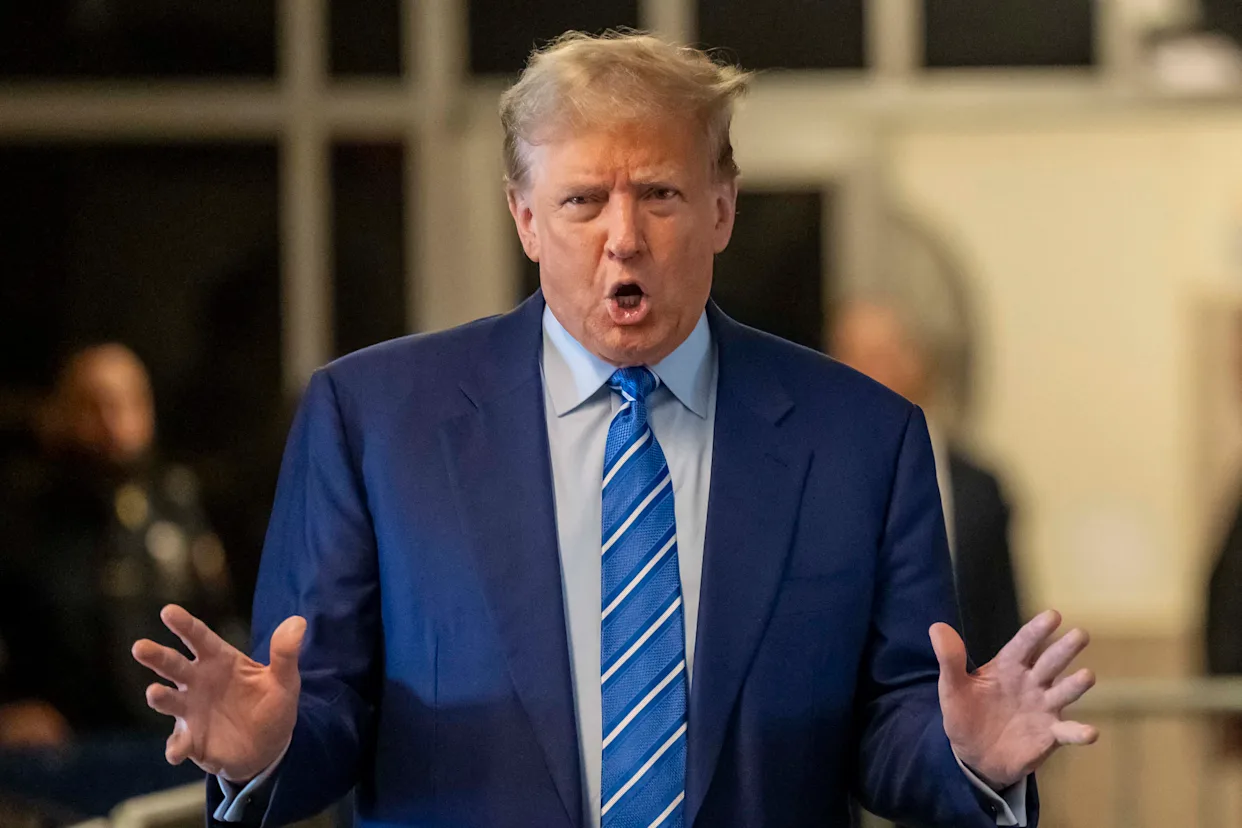
In 2015 — roughly 11 years ago — a high-profile American businessman who was then mounting a presidential campaign was asked about Andrew’s connections to Epstein. The response was blunt and unusually dismissive for someone known at the time for maintaining a broad network of wealthy acquaintances.
That businessman was Donald Trump.
Speaking to reporters, Trump stated that he did not know Andrew and had never been a fan, adding that he had no involvement in the royal’s social circle. While he did not elaborate extensively, his comments signaled clear distance from the controversy even before it had fully engulfed public consciousness.
At the time, the remarks drew limited attention.
Epstein’s earlier 2008 conviction had been widely criticized, but the scale of his alleged misconduct — and the breadth of his connections — had not yet re-entered global headlines with the force seen years later.
In retrospect, Trump’s distancing comments are now viewed by some observers as politically prescient. Others interpret them as part of a broader pattern of public figures recalibrating relationships as scrutiny intensified.
The resurfacing of that exchange underscores how long the Epstein shadow has stretched across institutions — from Wall Street and academia to Hollywood and royalty.
Prince Andrew’s association with Epstein became particularly controversial following a widely criticized television interview in 2019, in which he attempted to address allegations connected to Virginia Giuffre, who has accused him of sexual misconduct. Andrew has categorically denied the claims, and in 2022 reached an out-of-court settlement in a civil lawsuit without admitting liability.
His public standing suffered significant damage. He stepped back from royal duties and relinquished military affiliations and patronages. Official royal communications now rarely reference him in public-facing engagements.
The newly redacted files have reignited debate about accountability and transparency. The Epstein Files Transparency Act explicitly states that records cannot be withheld “on the basis of embarrassment, reputational harm, or political sensitivity.” However, it also mandates protection for victims’ identifying information — a delicate balance that has proven difficult in practice.
Complicating matters further, the document trove includes disturbing multimedia evidence, financial records, travel logs, and correspondence that illustrate the extent of Epstein’s operations. The scale of material makes oversight and consistent redaction standards a monumental task.
In the United Kingdom, calls for investigation into Andrew’s conduct have intensified. Liberal Democrat leader Ed Davey has urged greater transparency, stating that public trust depends on full accountability. Britain’s top prosecutor recently emphasized that no individual is “above the law,” a remark widely interpreted as referencing Andrew.
Police are reportedly assessing allegations connected to Andrew’s past activities, though no formal charges have been announced.
For many observers, the controversy now extends beyond any one individual. It touches on broader questions about institutional integrity, elite networks, and whether powerful figures receive preferential treatment in legal processes.
The disappearance — or redaction — of previously searchable documents only heightens those concerns.
As the legal and political fallout continues, the resurfaced 2015 comments from Donald Trump serve as a reminder of how long some leaders have attempted to create daylight between themselves and the Epstein orbit.
Whether that distancing will prove politically significant again remains uncertain.
What is clear is that more than a decade after early warnings were voiced, the questions surrounding Epstein’s network — and those who moved within it — remain far from resolved.
Emily Johnson is a critically acclaimed essayist and novelist known for her thought-provoking works centered on feminism, women’s rights, and modern relationships. Born and raised in Portland, Oregon, Emily grew up with a deep love of books, often spending her afternoons at her local library. She went on to study literature and gender studies at UCLA, where she became deeply involved in activism and began publishing essays in campus journals. Her debut essay collection, Voices Unbound, struck a chord with readers nationwide for its fearless exploration of gender dynamics, identity, and the challenges faced by women in contemporary society. Emily later transitioned into fiction, writing novels that balance compelling storytelling with social commentary. Her protagonists are often strong, multidimensional women navigating love, ambition, and the struggles of everyday life, making her a favorite among readers who crave authentic, relatable narratives. Critics praise her ability to merge personal intimacy with universal themes. Off the page, Emily is an advocate for women in publishing, leading workshops that encourage young female writers to embrace their voices. She lives in Seattle with her partner and two rescue cats, where she continues to write, teach, and inspire a new generation of storytellers.