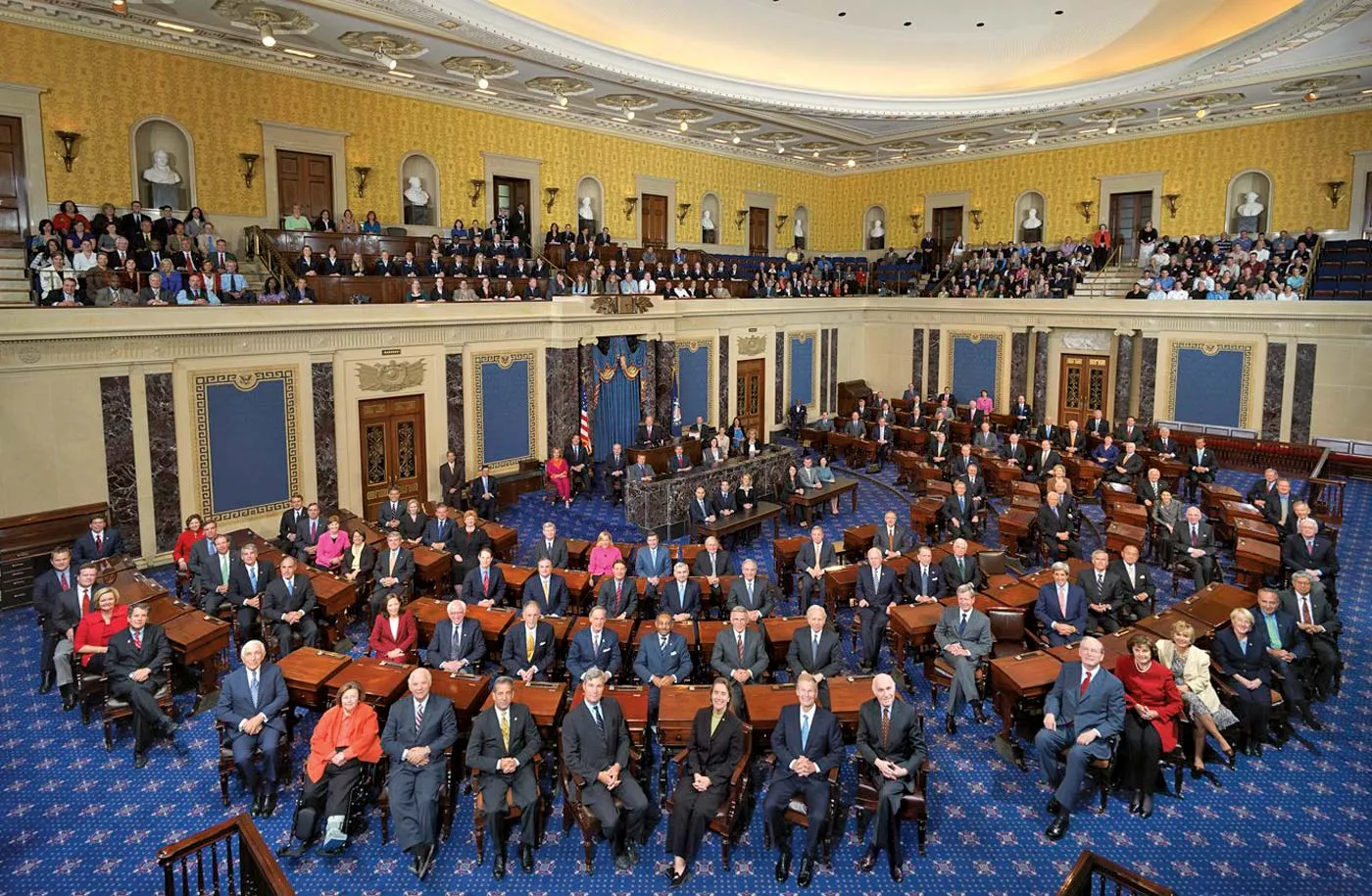
A pivotal Republican senator has now clarified her position on one of the most closely watched election bills in Washington — offering support for the measure itself while drawing a firm line against altering Senate rules to secure its passage.
For weeks, uncertainty surrounding her stance had fueled speculation on Capitol Hill. With the Senate narrowly divided and the legislation highly contentious, every vote carries outsized importance. Lawmakers on both sides of the aisle have been watching closely, knowing that a single decision could determine whether the proposal advances or stalls.
The bill in question would impose new requirements related to voter eligibility in federal elections. Supporters argue it would strengthen confidence in the electoral system by reinforcing citizenship verification standards. Critics contend that aspects of the legislation could create barriers for eligible voters and complicate participation.
As debate intensified, attention turned to a small group of Republican senators known for occasionally breaking with party leadership. Among them, one moderate voice stood out as particularly influential.
That senator is Susan Collins.
After weeks of review and deliberation, Collins confirmed she will vote in favor of the Safeguard American Voter Eligibility Act, commonly known as the SAVE Act. Her endorsement effectively brings Republican support to 50 votes — enough to pass the bill with a tie-breaking vote from Vice President JD Vance, should all members be present.
Her decision, however, comes with a significant caveat: she will not support changing Senate filibuster rules to push the legislation through.
A Decisive Vote in a Narrow Senate
The Senate’s closely divided makeup has made even routine votes high-stakes affairs. With Republicans holding a slim edge, party leaders have been working to unify their caucus behind the SAVE Act.
Not all GOP senators are on board. Lisa Murkowski has publicly announced her opposition to the measure. Meanwhile, Mitch McConnell and Thom Tillis — both of whom have previously expressed support for voter ID requirements — have not formally committed to backing this version of the bill.
Collins’ support therefore represents a critical piece of the legislative puzzle.
The Maine senator, first elected in 1996, has long cultivated a reputation as an institutionalist and bipartisan negotiator. Her vote is often viewed as a signal of how legislation might fare beyond strict party lines.
Concerns Over Earlier Provisions
Earlier drafts of the SAVE Act prompted hesitation from Collins. During conversations with reporters earlier this month, she indicated she was reviewing the language carefully and agreed with several of its underlying goals.
Her primary concern centered on a provision that would have required voters to present proof of citizenship documentation — such as a passport or birth certificate — each time they cast a ballot, including on Election Day.
Collins warned that such a requirement could impose unnecessary burdens on voters.
“Requiring voters to produce passports or birth certificates on election day, as opposed to just a state-issued ID, would have placed an unnecessary burden on the voters,” she said at the time, suggesting that revisions could win her support.
Subsequent changes to the bill appear to have addressed those concerns, paving the way for her endorsement.
In a statement explaining her decision, Collins emphasized that federal law already restricts voting in federal elections to U.S. citizens. She framed the legislation as a reinforcement of existing standards rather than a sweeping overhaul.
“The law is clear that in this country only American citizens are eligible to vote in federal elections,” she said. She also compared voter identification requirements to everyday identification checks, such as boarding an airplane or purchasing alcohol, arguing that such measures can strengthen public confidence.
The Filibuster Fight
While Collins supports the substance of the SAVE Act, she has drawn a firm line when it comes to Senate procedure.
Several Republican lawmakers — including President Donald Trump — have urged Senate leaders to consider reviving what is often referred to as the “standing” or “talking” filibuster. Under that system, senators opposing legislation must physically hold the floor and continue speaking in order to block a vote.
The modern filibuster, by contrast, allows the minority party to effectively prevent legislation from advancing unless it garners 60 votes, without requiring extended floor speeches. Critics sometimes call this the “silent” or “zombie” filibuster.
Senate Majority Leader John Thune has promised a floor vote on the SAVE Act and acknowledged discussions about potential procedural strategies. However, changing or weakening filibuster rules would require support from senators who value the chamber’s traditions — a group that includes Collins.
“I oppose eliminating the legislative filibuster,” she said plainly.
For Collins, the filibuster represents more than a procedural hurdle. She has consistently argued that it protects minority rights and encourages bipartisan cooperation. In her view, removing that safeguard could enable whichever party controls Congress to enact sweeping changes without broader consensus.
She has warned that weakening the filibuster could open the door to far-reaching policy shifts under future Democratic control, citing issues such as immigration policy and potential statehood measures as examples of what could follow.
Broader Implications
The SAVE Act debate reflects a larger national conversation about election integrity, voter access, and institutional norms.
Supporters of the bill say clearer eligibility standards would help restore trust in election outcomes, particularly amid lingering public skepticism. They argue that identification requirements are widely accepted in other areas of civic life and should not be controversial in the voting context.
Opponents counter that voter fraud is rare and that stricter requirements could disproportionately affect certain groups, including elderly voters, low-income individuals, and those who lack easy access to documentation.
Meanwhile, the procedural debate over the filibuster underscores deeper tensions about how the Senate should function in an era of intense polarization. Calls to modify or eliminate the rule have surfaced repeatedly in recent years, particularly when one party seeks to advance high-priority legislation without bipartisan backing.
Collins’ stance illustrates the balancing act facing moderate lawmakers: supporting policy goals aligned with their party while preserving institutional rules they believe safeguard long-term stability.
What Comes Next
With Collins’ support secured, Republican leaders are closer to advancing the SAVE Act to a final vote. However, the path forward remains complex.
If Democrats mount a filibuster under current rules, the bill would require 60 votes to proceed — a threshold that appears unlikely without bipartisan backing. Efforts to modify Senate procedure could face resistance from institutionalists within the Republican caucus itself.
In the coming days, attention will turn to whether additional senators declare their positions and whether leadership opts for a traditional vote or attempts procedural maneuvers.
For now, one thing is clear: the Maine senator’s endorsement has shifted the legislative landscape, but her refusal to alter filibuster rules ensures that the debate over both election policy and Senate tradition is far from over.

Emily Johnson is a critically acclaimed essayist and novelist known for her thought-provoking works centered on feminism, women’s rights, and modern relationships. Born and raised in Portland, Oregon, Emily grew up with a deep love of books, often spending her afternoons at her local library. She went on to study literature and gender studies at UCLA, where she became deeply involved in activism and began publishing essays in campus journals. Her debut essay collection, Voices Unbound, struck a chord with readers nationwide for its fearless exploration of gender dynamics, identity, and the challenges faced by women in contemporary society. Emily later transitioned into fiction, writing novels that balance compelling storytelling with social commentary. Her protagonists are often strong, multidimensional women navigating love, ambition, and the struggles of everyday life, making her a favorite among readers who crave authentic, relatable narratives. Critics praise her ability to merge personal intimacy with universal themes. Off the page, Emily is an advocate for women in publishing, leading workshops that encourage young female writers to embrace their voices. She lives in Seattle with her partner and two rescue cats, where she continues to write, teach, and inspire a new generation of storytellers.