
A long-serving Republican congressman from Florida announced this week that he will step aside at the end of his current term, closing the book on a 20-year career in Washington and triggering an open-seat race that could reshape the state’s political landscape heading into the 2026 midterm elections.
The announcement, delivered through a carefully worded statement released Tuesday, marked the end of an era for a district that has grown accustomed to stable representation amid years of partisan turbulence in Congress. While retirement decisions are often framed as deeply personal, this one carries broader political implications, particularly as both parties brace for a high-stakes election cycle defined by redistricting battles, razor-thin House margins, and a volatile national mood.
In his statement, the lawmaker emphasized gratitude rather than grievance, signaling no loss of faith in public service but rather a sense that his chapter in elected office has reached its natural conclusion. He described the decision as thoughtful and deliberate, grounded in a belief that leadership renewal is healthy for both Congress and the communities it serves.
“Serving the people of Southwest Florida has been the honor of my lifetime,” he wrote. “Every achievement worth doing began with listening to my constituents and fighting for their priorities.”
For years, the congressman positioned himself as a problem-solver focused on economic growth, tax policy, and business development—issues that resonated strongly in his coastal district, which includes retirees, entrepreneurs, and a large tourism economy. He consistently framed his role less as a partisan warrior and more as a legislator focused on tangible outcomes.
He also reflected on his original motivations for running for office, noting that he entered Congress to help working families, promote opportunity, and ensure the American economy remained competitive. After two decades, he said, the time had come to “pass the torch and begin a new chapter.”
Though the initial announcement did not dominate cable news coverage, it quickly rippled through Florida’s political class. Open congressional seats are rare opportunities, particularly in districts that have not seen a competitive primary in years. Potential successors—from state legislators to local officials and business leaders—are already expected to quietly explore bids, while national party committees monitor the district’s contours and demographics.
The retiring lawmaker has represented the same district since first winning election in the mid-2000s, surviving multiple redistricting cycles and shifts in the national political climate. During that time, he developed a reputation for legislative persistence rather than headline-grabbing theatrics, focusing heavily on committee work and behind-the-scenes negotiations.
Midway through his tenure, he earned a coveted spot on the House Ways and Means Committee, one of the most powerful panels in Congress. There, he helped shape debates over tax reform, trade policy, and economic competitiveness—areas that would come to define much of his congressional identity.
The retiring congressman is Rep. Vern Buchanan (R-Fla.), a fixture of Florida politics and a consistent presence in the House since 2007.
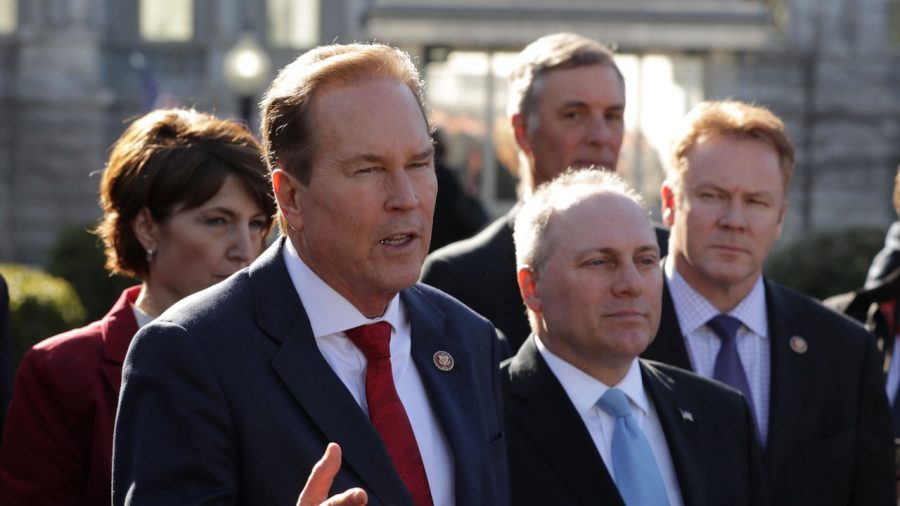
Buchanan, who represents Florida’s 16th Congressional District, has long been viewed as a policy-driven Republican with strong ties to the business community. Before entering Congress, he built a successful career in the private sector, an experience he often cited as shaping his views on regulation, taxation, and job creation.
Throughout his time on Capitol Hill, Buchanan worked under four different presidents—two Republicans and two Democrats—and his office notes that 51 of his bills and legislative initiatives were signed into law during that span. Aides described that record as a rare achievement in an era of legislative gridlock, particularly for a rank-and-file House member.
Among his most notable accomplishments was his role in the development and implementation of the Tax Cuts and Jobs Act, the sweeping 2017 overhaul of the federal tax code. Buchanan argued that the legislation boosted economic growth and helped small businesses expand, though critics contended it disproportionately favored corporations and higher-income Americans.
Beyond tax policy, Buchanan sponsored or supported legislation related to veterans’ services, health care access, and disaster relief—issues of particular relevance to Florida. He frequently highlighted his work securing federal resources following hurricanes and other natural disasters that impacted the Gulf Coast.
Despite serving in an increasingly polarized Congress, Buchanan often portrayed himself as a pragmatic conservative willing to work across the aisle when necessary. While he reliably voted with Republican leadership on major party-line bills, he also cultivated relationships with Democrats on the Ways and Means Committee, particularly on issues tied to trade and economic development.
His retirement adds to a growing list of veteran lawmakers choosing not to seek reelection, a trend that has accelerated in recent cycles as institutional frustration, partisan hostility, and the personal toll of public life take their toll. With the House expected to remain closely divided after 2026, even a handful of open seats could have outsized consequences.
Florida’s 16th District is widely considered Republican-leaning, but without an incumbent on the ballot, the race could draw national attention—especially if Democrats see an opportunity to compete in a changing political environment. The district’s mix of suburban growth, retirees, and shifting demographics makes it less predictable than its voting history might suggest.
Republican strategists, meanwhile, are expected to focus on avoiding a bruising primary that could drain resources and expose internal divisions. Buchanan himself did not endorse a successor in his statement, leaving the field wide open and signaling that he intends to step back rather than act as a power broker.
In closing his announcement, Buchanan struck a reflective tone, thanking his family, staff, and constituents for their support over two decades in office. “I’m deeply grateful for the trust placed in me,” he wrote, underscoring that public service had been both a professional mission and a personal privilege.
As Washington continues to grapple with institutional churn and political uncertainty, Buchanan’s departure stands as a reminder of a quieter style of congressional service—one rooted less in viral moments and more in longevity, committee work, and incremental policy gains.
Whether his successor follows that model or charts a more confrontational path remains to be seen. What is clear is that after 20 years on Capitol Hill, Vern Buchanan is stepping aside, leaving behind a legacy defined by endurance, legislative engagement, and a district that will soon choose a new voice in Congress.

Emily Johnson is a critically acclaimed essayist and novelist known for her thought-provoking works centered on feminism, women’s rights, and modern relationships. Born and raised in Portland, Oregon, Emily grew up with a deep love of books, often spending her afternoons at her local library. She went on to study literature and gender studies at UCLA, where she became deeply involved in activism and began publishing essays in campus journals. Her debut essay collection, Voices Unbound, struck a chord with readers nationwide for its fearless exploration of gender dynamics, identity, and the challenges faced by women in contemporary society. Emily later transitioned into fiction, writing novels that balance compelling storytelling with social commentary. Her protagonists are often strong, multidimensional women navigating love, ambition, and the struggles of everyday life, making her a favorite among readers who crave authentic, relatable narratives. Critics praise her ability to merge personal intimacy with universal themes. Off the page, Emily is an advocate for women in publishing, leading workshops that encourage young female writers to embrace their voices. She lives in Seattle with her partner and two rescue cats, where she continues to write, teach, and inspire a new generation of storytellers.