
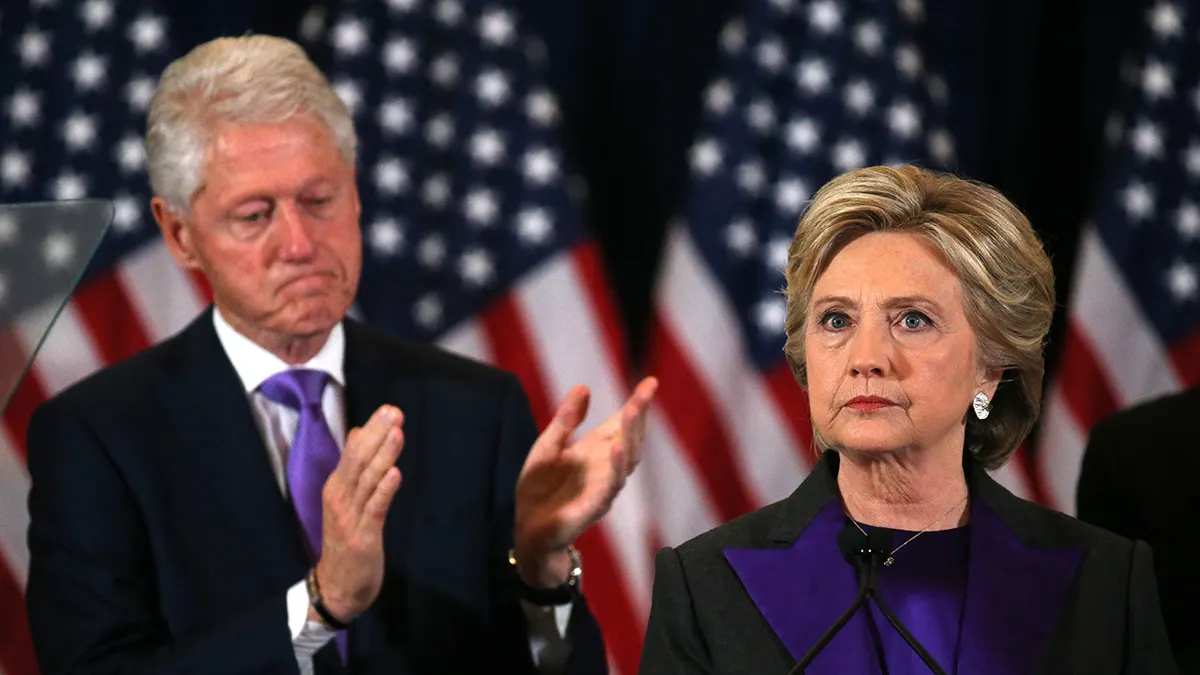
After months of resisting congressional subpoenas, former President Bill Clinton and former Secretary of State Hillary Clinton are now calling for public testimony in the House Oversight Committee’s investigation into the Jeffrey Epstein files — a reversal that is fueling fresh political maneuvering on Capitol Hill.
The House Oversight Committee, chaired by Rep. James Comer (R-Ky.), subpoenaed the Clintons last year as part of its broader probe into Epstein’s network and potential connections to prominent public figures. Following prolonged negotiations and missed appearances, the Clintons are now scheduled to sit for closed-door depositions later this month.
But in recent days, both have publicly demanded that their testimony be conducted in open session.
Hillary Clinton wrote to Chairman Comer on X, “If you want this fight let’s have it in public.” The former president echoed that sentiment, declaring he would not serve as “a prop in a closed-door kangaroo court.”
The Political Strategy Behind the Shift
The timing of the Clintons’ call for public hearings is notable. After initially skipping multiple deposition dates — first in October, then before Christmas due to a funeral, and later in January without offering alternative dates — the Oversight Committee threatened contempt of Congress proceedings.
The committee voted in bipartisan fashion to advance contempt measures. The House Rules Committee had begun preparing for a full House vote that could have resulted in criminal referrals to the Justice Department.
Only after the depositions were firmly scheduled for late February did the Clintons pivot toward demanding open hearings.
Republicans argue that this constitutes “moving the goalposts.” Comer has maintained that he has always been open to public hearings — but only after the completion of depositions.
“Depositions have historically been much more substantive than hearings,” Comer said. “Hearings unfortunately have become more of an entertainment thing.”
From the committee’s standpoint, private depositions allow for uninterrupted questioning, detailed fact-finding, and a preserved evidentiary record before any public spectacle unfolds.
Democrats See a Larger Play
For Democrats, however, the Clintons’ request for public testimony presents a strategic opportunity.
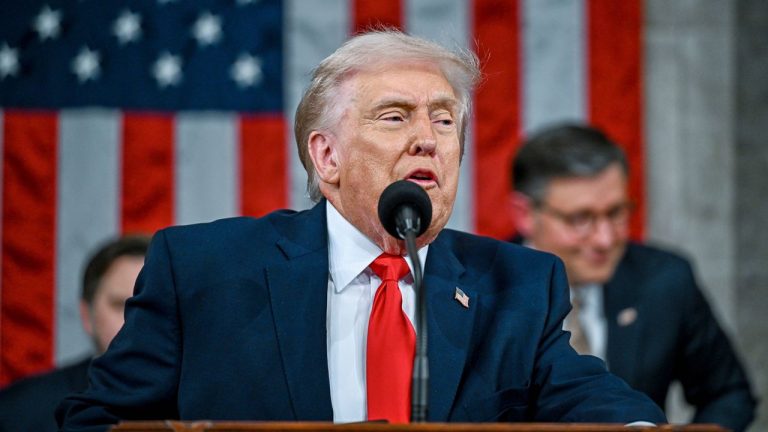
If a former president testifies publicly about Epstein-related matters, it could strengthen arguments that President Donald Trump — who is serving as president in 2026 — should also testify about what he knew regarding Epstein.
Rep. Ro Khanna (D-Calif.), who helped craft legislation mandating the release of Epstein-related records, has argued that the focus should remain on legitimate questions rather than partisan attacks.
“As long as it’s focused on Epstein and not a wild goose chase,” Khanna said, “asking legitimate questions about what they knew and who they knew were participating in heinous acts — that should be a legitimate point of inquiry.”
Rep. Suhas Subramanyam (D-Va.) went further, suggesting that compelling the Clintons to testify under threat of contempt could establish precedent.
“President Trump was subpoenaed during the January 6 investigations and didn’t come in,” Subramanyam noted. “If we’re forcing the Clintons to appear with the threat of criminal contempt, that is a precedent that we are setting.”
The implication is clear: once the door is opened to compelling former presidents to testify about sensitive matters, it may be politically difficult to close it.
Generational Divide Among Democrats
The situation also exposes generational tensions within the Democratic Party. Younger House Democrats do not maintain the same institutional loyalty to the Clintons as older members once did. Hillary Clinton last held elected office in 2009 and left her post as secretary of state in 2013. Bill Clinton left office in 2001.
Some Democrats view the Clintons as legacy figures whose political capital has diminished. Others worry that public hearings could re-litigate controversies from decades past rather than focus squarely on Epstein-related misconduct.
Historical Context: Presidents Before Congress
While rare, presidential appearances before Congress are not unprecedented.
Abraham Lincoln voluntarily testified before the House Judiciary Committee in 1862 over a leak of his written annual message. Woodrow Wilson appeared before the Senate Foreign Relations Committee in 1919 to advocate for the Treaty of Versailles and the League of Nations. Gerald Ford testified before the House Judiciary Committee in 1974 to explain his pardon of Richard Nixon. Harry Truman appeared before the Senate Foreign Relations Committee in 1955 after leaving office.
Former presidents have returned to Capitol Hill in ceremonial or policy-focused roles as well. Ford testified again in 1983 regarding the Constitution’s bicentennial.
First ladies have also appeared before Congress. Eleanor Roosevelt testified on labor issues and civil defense organization. Rosalynn Carter testified on mental health policy. Hillary Clinton testified multiple times — most prominently in 1993 regarding health care reform and in 2013 as secretary of state regarding Benghazi.
So while unusual, congressional testimony by former presidents and first ladies is not without precedent. What makes the current situation distinct is its overtly partisan overlay and its direct connection to an ongoing criminal scandal.
The Epstein Files Pressure Cooker
Republicans argue that transparency surrounding Epstein’s associations remains incomplete and that powerful figures must be scrutinized equally. Some GOP members privately concede that political optics play a role — particularly if Democrats seek to spotlight President Trump’s past social connections with Epstein.
Meanwhile, Democrats argue that if scrutiny applies to one former president, it must apply consistently across party lines.
The result is a high-stakes standoff in which procedural disputes — deposition versus hearing, closed-door versus televised — are proxies for a broader political battle.
What Happens Next
As of now, the Clintons are scheduled for closed-door depositions later this month. Chairman Comer has reiterated that public hearings could follow.
Whether Republicans ultimately proceed with an open session remains uncertain. Some may welcome the spectacle. Others may calculate that televised hearings risk expanding the investigation’s scope beyond its original targets.
One thing is clear: if a former president testifies publicly about the Epstein files, pressure will intensify — from Democrats and potentially some Republicans — to hear directly from President Trump as well.
An open session featuring testimony from both a former and sitting president would be unprecedented in modern American politics. It would dominate the political landscape and redefine the boundaries of congressional oversight.
It may not occur at halftime of a Super Bowl, as some have joked. But if it happens, it would amount to a political Super Bowl of its own.

Emily Johnson is a critically acclaimed essayist and novelist known for her thought-provoking works centered on feminism, women’s rights, and modern relationships. Born and raised in Portland, Oregon, Emily grew up with a deep love of books, often spending her afternoons at her local library. She went on to study literature and gender studies at UCLA, where she became deeply involved in activism and began publishing essays in campus journals. Her debut essay collection, Voices Unbound, struck a chord with readers nationwide for its fearless exploration of gender dynamics, identity, and the challenges faced by women in contemporary society. Emily later transitioned into fiction, writing novels that balance compelling storytelling with social commentary. Her protagonists are often strong, multidimensional women navigating love, ambition, and the struggles of everyday life, making her a favorite among readers who crave authentic, relatable narratives. Critics praise her ability to merge personal intimacy with universal themes. Off the page, Emily is an advocate for women in publishing, leading workshops that encourage young female writers to embrace their voices. She lives in Seattle with her partner and two rescue cats, where she continues to write, teach, and inspire a new generation of storytellers.