


NOTE: VIDEO at the end of the article.
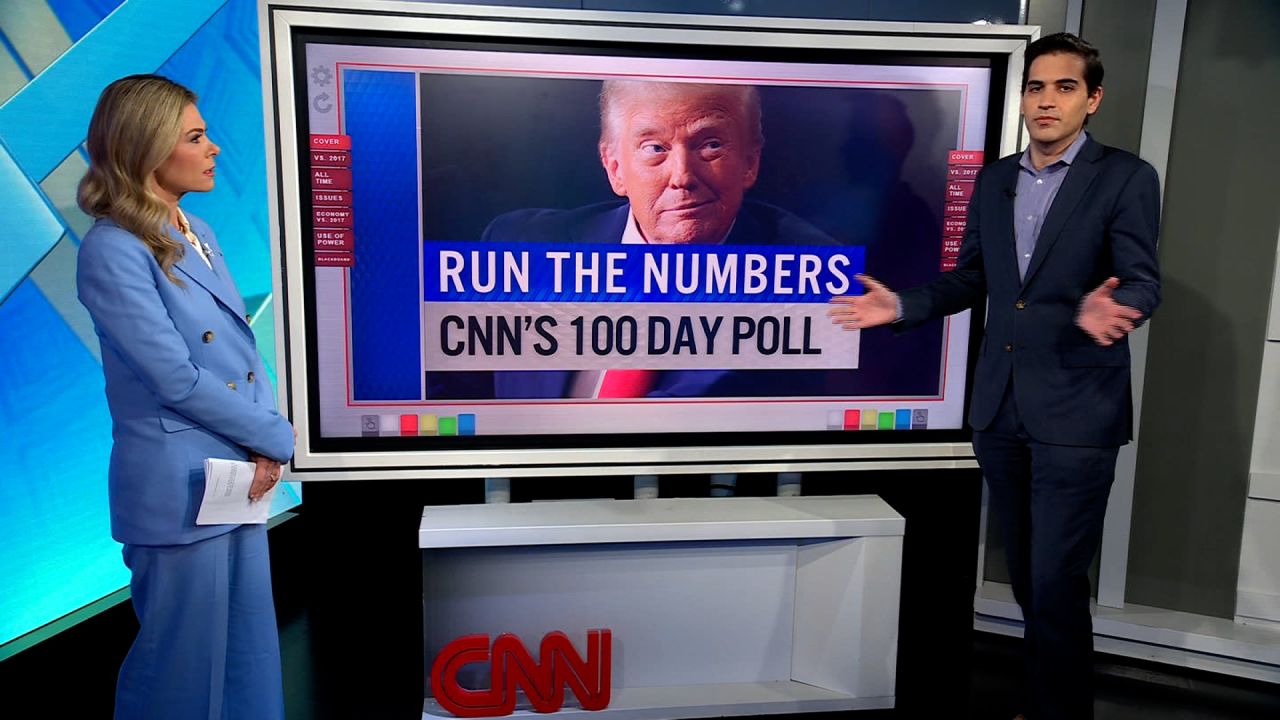
Recent polling data reveal that the Republican Party continues to hold a significant advantage over Democrats when it comes to voter trust on the economy, a trend that has persisted despite ongoing efforts by Democrats to shift public opinion. CNN’s senior data analyst Harry Enten addressed these findings in a recent segment, expressing surprise and frustration over the Democrats’ inability to close the gap.
Enten’s analysis draws on multiple polls, including surveys from Reuters/Ipsos and other respected pollsters, showing that the GOP maintains an edge of roughly eight to twelve points over Democrats on which party voters trust more to manage the economy. This economic trust gap has remained relatively steady since November 2023, when Republicans led by about 11 points.
The persistence of this Republican advantage is particularly notable given the ongoing economic challenges the country has faced, including inflation concerns, fears of recession, fluctuating stock markets, and debates over trade policies. Despite these issues, public sentiment has consistently favored Republicans as the party better equipped to handle economic matters.
Enten highlighted that the Democratic Party has invested considerable effort over the past year attempting to reshape the economic narrative, emphasizing their policy positions and economic plans. Yet, according to the polling data, these efforts have not translated into a meaningful shift in voter attitudes. In fact, some surveys indicate that the Republican lead has even expanded slightly in recent months.
Beyond raw numbers, the polling also reflects a deeper shift in public perception about which party represents the middle class. Historically, Democrats have enjoyed a substantial advantage on this front, sometimes leading by more than 20 points. However, recent figures suggest that this gap has closed significantly, with some polls showing an even tie between the two parties on identification as the party of the middle class.
This shift in economic trust and alignment with the middle class has important implications for the broader political landscape. The Republican Party’s sustained dominance on economic issues strengthens their position going into upcoming elections and challenges Democrats to reconsider their messaging and policy approaches to regain voter confidence.
Enten’s commentary underscores the challenge Democrats face in convincing voters that they are the better economic stewards, despite attempts to spotlight Republican shortcomings. The continued Republican advantage raises questions about the effectiveness of Democratic communication strategies and whether recent policy proposals resonate with the electorate.
For Republicans, the data confirms their narrative success in positioning themselves as the party of economic competence, a message that has clearly struck a chord with many Americans. This economic edge may provide them with a critical advantage in electoral contests where economic concerns remain a top priority for voters.
In conclusion, the polling data analyzed by Harry Enten highlights a stubborn and growing gap in voter trust on economic issues, favoring Republicans. It reveals the uphill battle Democrats face to reshape public perceptions and reclaim economic credibility. As economic issues remain paramount in voter decision-making, the ability to win trust on this front will be a decisive factor in shaping the political landscape ahead.
PLAY:

James Jenkins is a celebrated Pulitzer Prize-winning author whose work has reshaped the way readers think about social justice and human rights in America. Raised in Atlanta, Georgia, James grew up in a community that instilled in him both resilience and a strong sense of responsibility toward others. After studying political science and creative writing at Howard University, he worked as a journalist covering civil rights issues before dedicating himself fully to fiction. His novels are known for their sharp, empathetic portraits of marginalized communities and for weaving personal stories with broader political realities. Jenkins’s breakout novel, Shadows of Freedom, won national acclaim for its unflinching look at systemic inequality, while his more recent works explore themes of identity, resilience, and the fight for dignity in the face of oppression. Beyond his novels, James is an active public speaker, lecturing at universities and participating in nonprofit initiatives that support literacy and community empowerment. He believes that storytelling is a way to preserve history and inspire change. When not writing, James enjoys jazz music, mentoring young writers, and traveling with his family to explore cultures and stories around the world.