

NOTE: VIDEO AT THE END OF ARTICLE
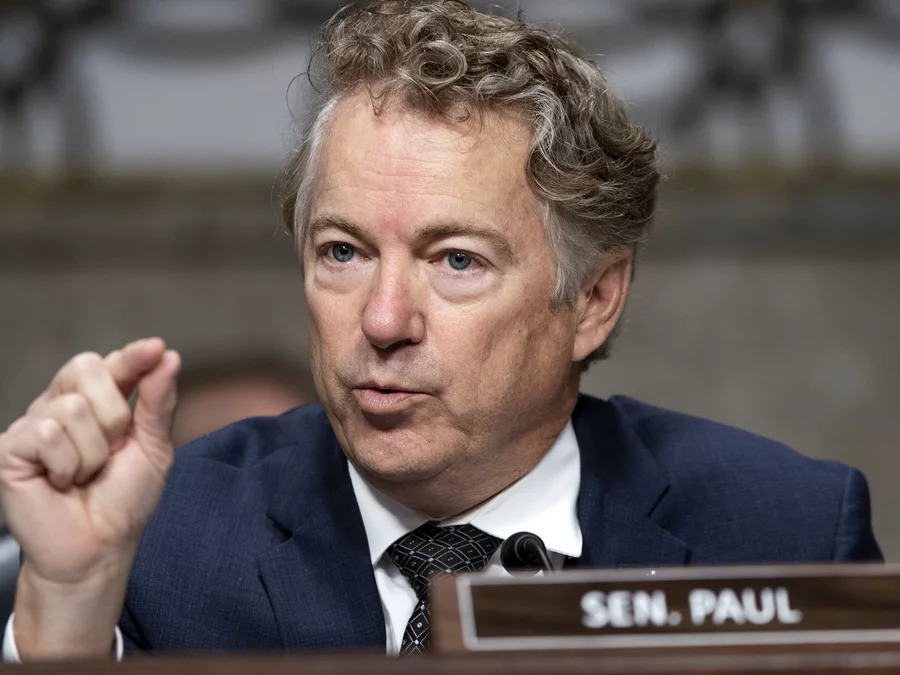
Senator Rand Paul (R-KY) hinted Sunday that he could support President Donald Trump’s new budget proposal—the “One Big Beautiful Bill Act”—but only if the $5 trillion debt ceiling increase currently tied to it is voted on separately.
Speaking on NBC’s Meet the Press, Paul made it clear that while he’s not fully on board yet, his opposition isn’t set in stone.
“I talked to the president last evening after the parade, and we’re trying to get to a better place in our conversations,” Paul said. “I’ve let him know that I’m not an absolute no. I can be a yes.”
The Kentucky senator praised elements of the proposal, especially the tax cuts, saying he agrees with supply-side economists like Art Laffer.
“A lot of times when we cut rates, we actually get more revenue,” Paul added. “So I don’t have as much trouble with the tax cuts. I think there should be more spending cuts.”
But the major sticking point? The massive $5 trillion debt ceiling hike.
“If they want my vote, they’ll have to negotiate. I don’t want to vote to raise the debt ceiling $5 trillion,” Paul said firmly.
Trump has previously called Paul “the toughest vote in the history of the U.S. Senate.” Paul embraced that label, replying, “I take that as a compliment.”
Paul is particularly concerned with reining in the post-pandemic spending levels put in place during the Biden years.
“Congress is awful with money,” he said. “You should give them a more restricted credit line, not an expansive one.”
Rather than raising the debt ceiling in one sweeping motion, Paul proposed incremental increases:
“Yes, the debt ceiling has to go up, but it ought to go up three months at a time. Then we should have a renewed debate.”
Paul’s suggestion? Strip out the debt ceiling language from the bill and vote on it separately.
“Separate out the debt ceiling and have a separate vote on it, and I won’t be the deciding vote on this,” he explained.
Finally, Paul pushed back against internal GOP pressure:
“So far they’ve been sending their attack dogs after me, and that’s not a great persuasion technique. But I will negotiate. I’m not going to stop being conservative just because the president wants me to vote for something.”
https://www.youtube.com/watch?v=zv13kuIqMN0&t=1307s

James Jenkins is a celebrated Pulitzer Prize-winning author whose work has reshaped the way readers think about social justice and human rights in America. Raised in Atlanta, Georgia, James grew up in a community that instilled in him both resilience and a strong sense of responsibility toward others. After studying political science and creative writing at Howard University, he worked as a journalist covering civil rights issues before dedicating himself fully to fiction. His novels are known for their sharp, empathetic portraits of marginalized communities and for weaving personal stories with broader political realities. Jenkins’s breakout novel, Shadows of Freedom, won national acclaim for its unflinching look at systemic inequality, while his more recent works explore themes of identity, resilience, and the fight for dignity in the face of oppression. Beyond his novels, James is an active public speaker, lecturing at universities and participating in nonprofit initiatives that support literacy and community empowerment. He believes that storytelling is a way to preserve history and inspire change. When not writing, James enjoys jazz music, mentoring young writers, and traveling with his family to explore cultures and stories around the world.