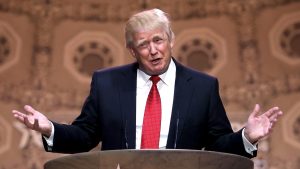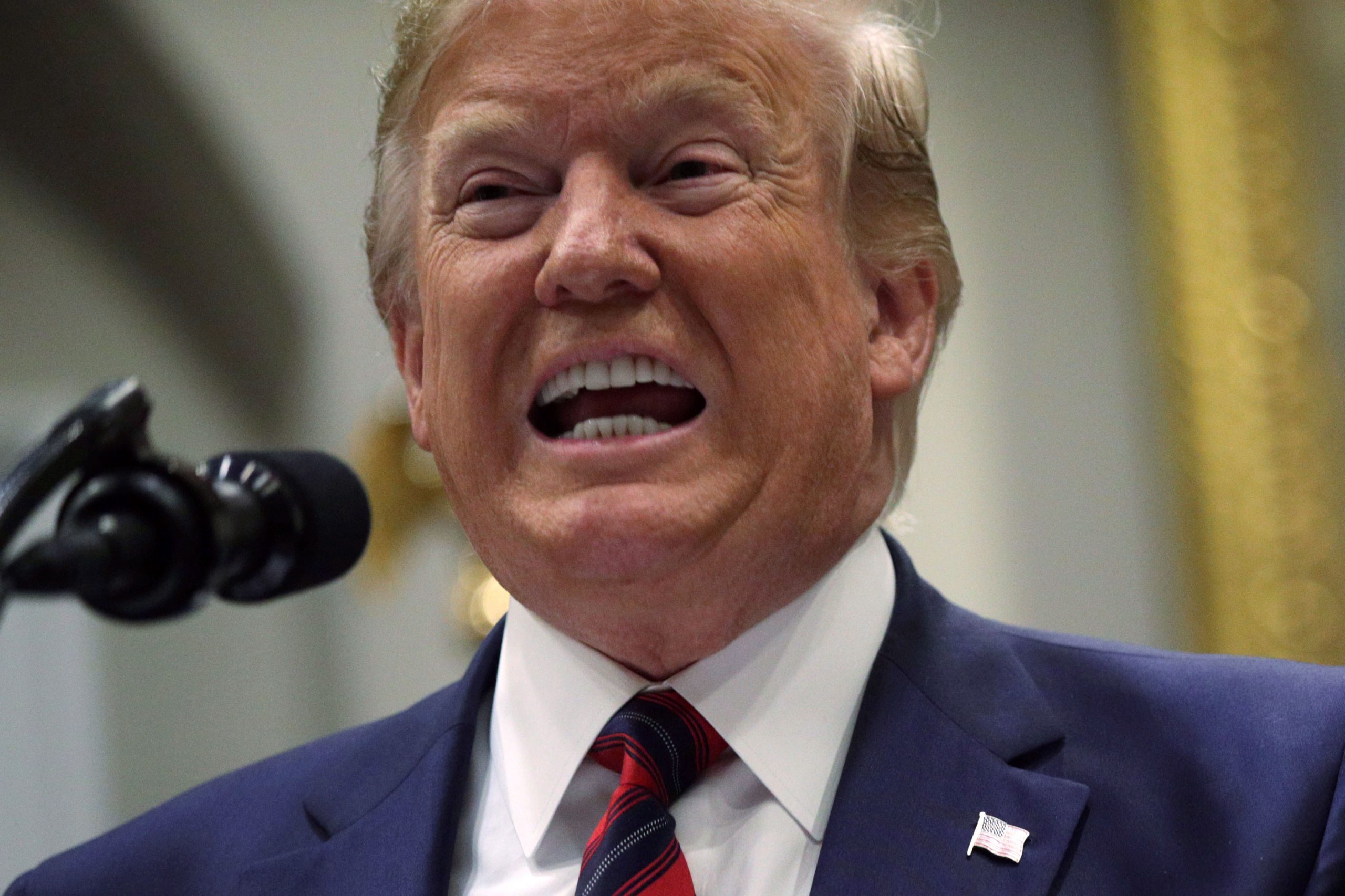
In a dramatic escalation of tensions between the executive branch and the judiciary, President Donald Trump delivered a forceful rebuke of the Supreme Court after it struck down the bulk of his sweeping global tariff policy in a 6–3 ruling. Speaking during an impromptu press conference at the White House, Trump characterized the decision as a “disgrace to our nation” and sharply criticized members of the conservative majority he once counted as ideological allies.
The ruling represents one of the most significant judicial setbacks of Trump’s second term. At the heart of the case was whether the president possessed unilateral authority under the International Emergency Economic Powers Act of 1977 (IEEPA) to impose broad tariffs on foreign imports. The Court concluded he did not.
The decision immediately reverberated across Washington and Wall Street. Markets rallied on news that many of the tariffs would be blocked, while the White House signaled it would pursue alternative mechanisms to maintain its aggressive trade posture.
A 6–3 Decision That Crossed Ideological Lines
The majority opinion, authored by Chief Justice John Roberts, concluded that the statute Trump relied upon did not grant the “distinct and extraordinary power” to impose tariffs without explicit congressional authorization. While IEEPA provides presidents with authority to regulate certain financial transactions during national emergencies, the Court found it insufficient as a basis for sweeping tariff implementation.
In a notable alignment, three conservative justices joined the Court’s three liberal members in ruling against the president. Among them were two Trump appointees: Justices Neil Gorsuch and Amy Coney Barrett. Their decision to side with the majority underscored the Court’s willingness to assert institutional independence, even when evaluating actions taken by the president who nominated them.
Justice Brett Kavanaugh, another Trump appointee, wrote the dissent, joined by Justices Clarence Thomas and Samuel Alito. In his opinion, Kavanaugh argued that the majority had focused too narrowly on statutory interpretation and failed to account for historical precedent granting presidents flexibility in matters of foreign economic policy. He contended that the president may have relied on the wrong statutory vehicle but retained broader authority under other legislative frameworks.
Trump’s Immediate and Forceful Reaction
Within hours of the ruling, Trump convened reporters in the White House briefing room, where he delivered a sharply worded condemnation of the decision. He accused certain justices of lacking “the courage to do what’s right” and went further by suggesting the Court may have been influenced by foreign interests.
“The Supreme Court’s ruling on tariffs is deeply disappointing,” Trump said. “I’m ashamed of certain members of the Court.”
The president reserved particular criticism for Gorsuch and Barrett, stating that he believed their votes would cause embarrassment to their families. His remarks were unusually personal, reflecting frustration not only with the outcome but with the perceived defection of justices he had elevated to the bench.
Trump also reframed the ruling as a partial validation of executive authority. He asserted that while the Court limited the specific mechanism he used, it had clarified that the president retains broad regulatory power over trade when properly grounded in statute. “While I’m sure they did not mean to do so,” he said, “the Supreme Court’s decision made a president’s ability to regulate trade more powerful and more crystal clear rather than less.”
Economic Stakes and Policy Implications
The stakes in the case were substantial. According to estimates cited by Reuters from the Penn-Wharton Budget Model, roughly $175 billion in tariff revenue could be affected by the decision. That figure represents a central component of Trump’s broader economic strategy, which he has consistently argued would strengthen domestic industry, reduce trade deficits, and generate federal revenue.
Earlier in the year, Trump marked what he called “Liberation Day” by unveiling reciprocal tariffs on dozens of nations, including some remote and sparsely populated territories. The administration justified the move as a response to longstanding trade imbalances and national security concerns. Upon returning to office, Trump also imposed tariffs on Mexico, Canada, and China, citing the flow of fentanyl into the United States as justification.
In his remarks following the ruling, Trump announced plans to sign a new executive order imposing a 10 percent global tariff under a different statutory authority. He described the move as both retaliatory and strategic, insisting that the United States would “take in more money” and emerge economically stronger.
“We have alternatives — great alternatives,” he said. “Could be more money. We’ll take in more money, and we’ll be a lot stronger for it.”
Legal Reasoning: Congressional Authorization at the Center
Chief Justice Roberts’ majority opinion centered on constitutional separation of powers. He emphasized that Congress holds primary authority over tariffs and taxation. If lawmakers intended to delegate sweeping tariff powers to the president under emergency statutes, Roberts wrote, they would have done so explicitly.
“The president must point to clear congressional authorization,” the opinion stated. “He cannot.”
The ruling does not foreclose Trump from pursuing tariffs altogether. Instead, it requires that he rely on statutory frameworks that more clearly grant such authority or seek direct congressional approval.
The Court also declined to address how potential refunds of previously collected tariffs would be handled, leaving that issue for lower courts to resolve.
Political Ramifications
Politically, the ruling places Trump in a complex position. He retains Republican majorities in both chambers of Congress, though margins are narrow and midterm elections loom. While tariff legislation could theoretically pass through Congress, it would likely require negotiations with Senate Democrats to overcome procedural hurdles.
For months, Trump publicly lobbied for a favorable ruling, even suggesting he might attend oral arguments at the Court — a move that raised questions about norms surrounding judicial independence. Ultimately, he did not attend.
The president’s forceful response to the ruling may energize his political base, which often views the judiciary with skepticism when it constrains executive authority. At the same time, critics argue that his accusations against the Court risk escalating tensions between branches of government and undermining public confidence in judicial neutrality.
Market Reaction and Broader Impact
Financial markets responded positively to the decision. Traders on Wall Street interpreted the ruling as a reduction in trade uncertainty, leading to a notable stock market spike. Business leaders had expressed concern that the tariffs would increase costs, disrupt supply chains, and strain international relations.
Still, the administration maintains that its trade strategy remains intact. Officials including the U.S. solicitor general and the commerce secretary stood beside Trump during his remarks, signaling unified executive support for alternative approaches.
The long-term impact of the decision will depend on how aggressively the administration pursues new tariff mechanisms and whether Congress intervenes. It also reinforces the Supreme Court’s evolving posture toward executive authority — particularly in areas where emergency powers intersect with economic policy.
An Institutional Test
Beyond trade policy, the case underscores a broader institutional dynamic. The Supreme Court’s conservative majority, though often aligned philosophically with Republican administrations, has shown willingness to curtail presidential power when statutory language or constitutional principles demand it.
For Trump, the ruling represents a rare but consequential judicial check during a term in which he has otherwise benefited from a right-leaning bench shaped in part by his own appointments.
Whether the episode marks a temporary policy detour or a longer-term recalibration of executive trade authority remains to be seen. What is clear is that the clash has intensified debate over the balance of power in Washington — and set the stage for further legal and political battles in the months ahead.

Emily Johnson is a critically acclaimed essayist and novelist known for her thought-provoking works centered on feminism, women’s rights, and modern relationships. Born and raised in Portland, Oregon, Emily grew up with a deep love of books, often spending her afternoons at her local library. She went on to study literature and gender studies at UCLA, where she became deeply involved in activism and began publishing essays in campus journals. Her debut essay collection, Voices Unbound, struck a chord with readers nationwide for its fearless exploration of gender dynamics, identity, and the challenges faced by women in contemporary society. Emily later transitioned into fiction, writing novels that balance compelling storytelling with social commentary. Her protagonists are often strong, multidimensional women navigating love, ambition, and the struggles of everyday life, making her a favorite among readers who crave authentic, relatable narratives. Critics praise her ability to merge personal intimacy with universal themes. Off the page, Emily is an advocate for women in publishing, leading workshops that encourage young female writers to embrace their voices. She lives in Seattle with her partner and two rescue cats, where she continues to write, teach, and inspire a new generation of storytellers.