A tense political showdown is unfolding after President Donald Trump declared himself “totally exonerated” following the release of newly unsealed Jeffrey Epstein files — a statement that drew immediate public pushback, including from voices within his own media orbit. The confrontation underscores the continued national scrutiny over Trump’s connections to the disgraced financier and the broader implications of the Epstein files on public figures and political discourse.
Trump, 79, addressed reporters aboard Air Force One on Thursday, framing the Epstein documents as vindication for himself. The president, who has faced repeated allegations regarding his association with Epstein, said, “Well, you know, I’m the expert in a way, because I’ve been totally exonerated. It’s really interesting, because nobody used to speak about Epstein when he was alive, but now they speak, but I’m the one that can talk about it, because I’ve been totally exonerated. I did nothing.”
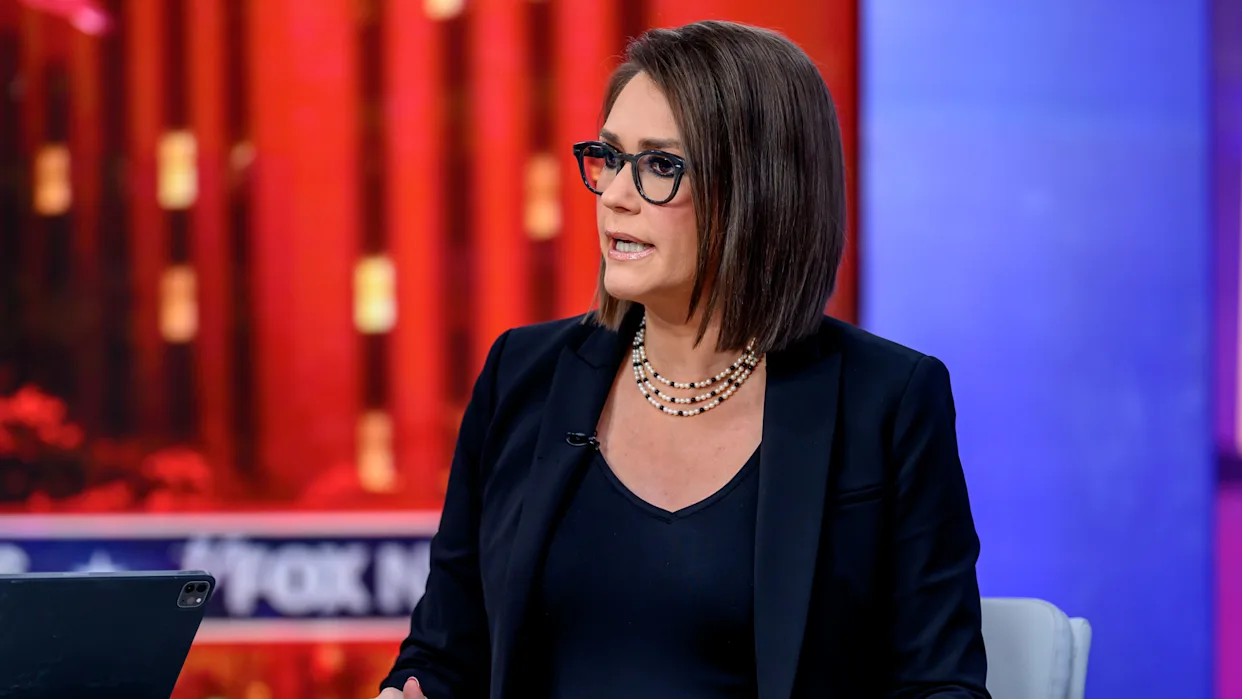
The president’s comments immediately sparked a public debate about the scope and completeness of the files, as well as Trump’s interpretation of what “exoneration” entails. Among the first to challenge Trump’s statement was Jessica Tarlov, co-host of Fox News’ The Five. In a succinct post on X, she directly called on the president to provide the full documents, writing simply, “Then release all the files.”
Tarlov’s response highlights a growing tension between claims of innocence and the broader public demand for transparency. The Epstein Files Transparency Act, signed into law by Trump in November, mandated that the Department of Justice release documents related to the late financier. Millions of pages have since been made public, but disagreements remain over whether the release has been fully comprehensive.
Attorney General Pam Bondi, who oversaw the release, stated that “all” files had been made publicly available. However, not all parties involved in drafting the law concurred with that assessment. Kentucky Republican Thomas Massie, who co-authored the legislation, expressed skepticism over whether the public had truly received complete access. He noted that the law was intended to include internal government communications, memos, and notes related to decisions about whether or not to prosecute Epstein or investigate certain individuals.
Bondi’s submission to Congress over the weekend included a summary of all redactions made to the documents, along with explanations grounded in the “deliberative-process privilege.” This legal principle allows government agencies to withhold internal documents that reflect decision-making processes, but critics argue that such redactions undermine the law’s intent. Massie countered, asserting that the legislation clearly mandates transparency even for internal deliberations, suggesting that certain documents may remain unnecessarily concealed.
The release of the Epstein files has had immediate repercussions for high-profile individuals. Among the most notable developments is the arrest of Andrew Mountbatten-Windsor, 66, the former Duke of York. His arrest, tied to allegations of misconduct in public office, came shortly after the documents cast renewed attention on his interactions with Epstein. Following his detention, Andrew was stripped of his royal title and removed from his Windsor residence, prompting statements from Buckingham Palace.
King Charles issued a formal declaration regarding the situation, saying, “I have learned with the deepest concern the news about Andrew Mountbatten-Windsor and suspicion of misconduct in public office. What now follows is the full, fair, and proper process by which this issue is investigated in the appropriate manner and by the appropriate authorities. In this, as I have said before, they have our full and wholehearted support and cooperation.”
The global attention surrounding Andrew’s arrest underscores the far-reaching consequences of Epstein-related investigations, affecting figures from politics, entertainment, and royalty alike. The files include flight manifests, emails, and other correspondence, linking the financier to numerous prominent personalities. While inclusion in the documents does not imply wrongdoing, the sheer scale of the release has fueled media scrutiny and political tension.
Trump’s assertion of “total exoneration” has been particularly controversial because it intersects with broader questions about credibility, transparency, and the potential for political spin. Critics argue that while the documents may not contain incriminating evidence against the former president, claiming full vindication oversimplifies the nuanced content of millions of pages of correspondence, emails, and investigative materials.
The dispute over Trump’s statement also reflects partisan divides in interpreting the implications of the Epstein files. Supporters of the president highlight the absence of formal charges against him, framing his claim as a legitimate defense of his reputation. Opponents, meanwhile, contend that self-declared exoneration does not equate to independent judicial or investigative clearance and caution that the documents could still contain evidence of questionable associations or behavior.
The political fallout extends beyond media commentary. Lawmakers and legal experts continue to parse the implications of the Epstein Files Transparency Act, debating what constitutes full disclosure and whether existing redactions obstruct the law’s intent. Some analysts note that ongoing litigation or congressional inquiries could arise if it is determined that critical documents, including internal memos and communications, have not been adequately released.
In addition to Trump and Andrew Mountbatten-Windsor, other figures have appeared in the files, sparking discussion and occasional controversy. Prominent women and men from Hollywood, politics, and business are listed, though the Department of Justice emphasizes that inclusion does not imply criminal involvement. Figures like Sarah Ferguson, Melinda Gates, and Monica Lewinsky have been mentioned in connection with events, correspondence, or social encounters, highlighting the wide reach of Epstein’s social network.
The release of these files has reignited conversations about accountability, institutional transparency, and the responsibilities of those in positions of power. Legal scholars argue that even when documents do not establish guilt, the public scrutiny and political ramifications are unavoidable, particularly when high-profile individuals are implicated by association. The tension between privacy, legal protections, and public interest has thus become a central issue in ongoing debates surrounding the files.
As the story continues to develop, Trump’s claim of exoneration remains a focal point for both supporters and critics. Jessica Tarlov’s challenge exemplifies the broader demand for clarity, highlighting a persistent divide between official statements and journalistic or public expectations. Meanwhile, the fallout from Andrew Mountbatten-Windsor’s arrest demonstrates that the consequences of Epstein’s network continue to reverberate on an international scale, reinforcing the files’ significance for both domestic and global audiences.
Observers note that the political implications are likely to extend beyond the immediate controversy. Trump’s self-declared vindication could influence ongoing discussions about his political brand and future electoral prospects, while the scrutiny over document release and potential redactions may shape congressional oversight priorities and public trust in government transparency. The situation also illustrates how high-profile legal and ethical questions intersect with media narratives, fueling ongoing debate over accountability, influence, and the limits of public information.
In summary, the ongoing political tensions surrounding the Epstein files highlight the challenges of balancing transparency, legal obligations, and public perception. President Trump’s claim of “total exoneration” has sparked immediate pushback from media figures, including Jessica Tarlov, while the arrest of Andrew Mountbatten-Windsor underscores the files’ far-reaching consequences. The release of millions of pages of documents has prompted debate over redactions, internal deliberations, and the scope of legislative intent, with critics emphasizing the need for complete transparency. As investigations, media scrutiny, and political commentary continue, the Epstein files remain a focal point in discussions of accountability, influence, and the complex intersection of law, politics, and public trust.

Emily Johnson is a critically acclaimed essayist and novelist known for her thought-provoking works centered on feminism, women’s rights, and modern relationships. Born and raised in Portland, Oregon, Emily grew up with a deep love of books, often spending her afternoons at her local library. She went on to study literature and gender studies at UCLA, where she became deeply involved in activism and began publishing essays in campus journals. Her debut essay collection, Voices Unbound, struck a chord with readers nationwide for its fearless exploration of gender dynamics, identity, and the challenges faced by women in contemporary society. Emily later transitioned into fiction, writing novels that balance compelling storytelling with social commentary. Her protagonists are often strong, multidimensional women navigating love, ambition, and the struggles of everyday life, making her a favorite among readers who crave authentic, relatable narratives. Critics praise her ability to merge personal intimacy with universal themes. Off the page, Emily is an advocate for women in publishing, leading workshops that encourage young female writers to embrace their voices. She lives in Seattle with her partner and two rescue cats, where she continues to write, teach, and inspire a new generation of storytellers.