



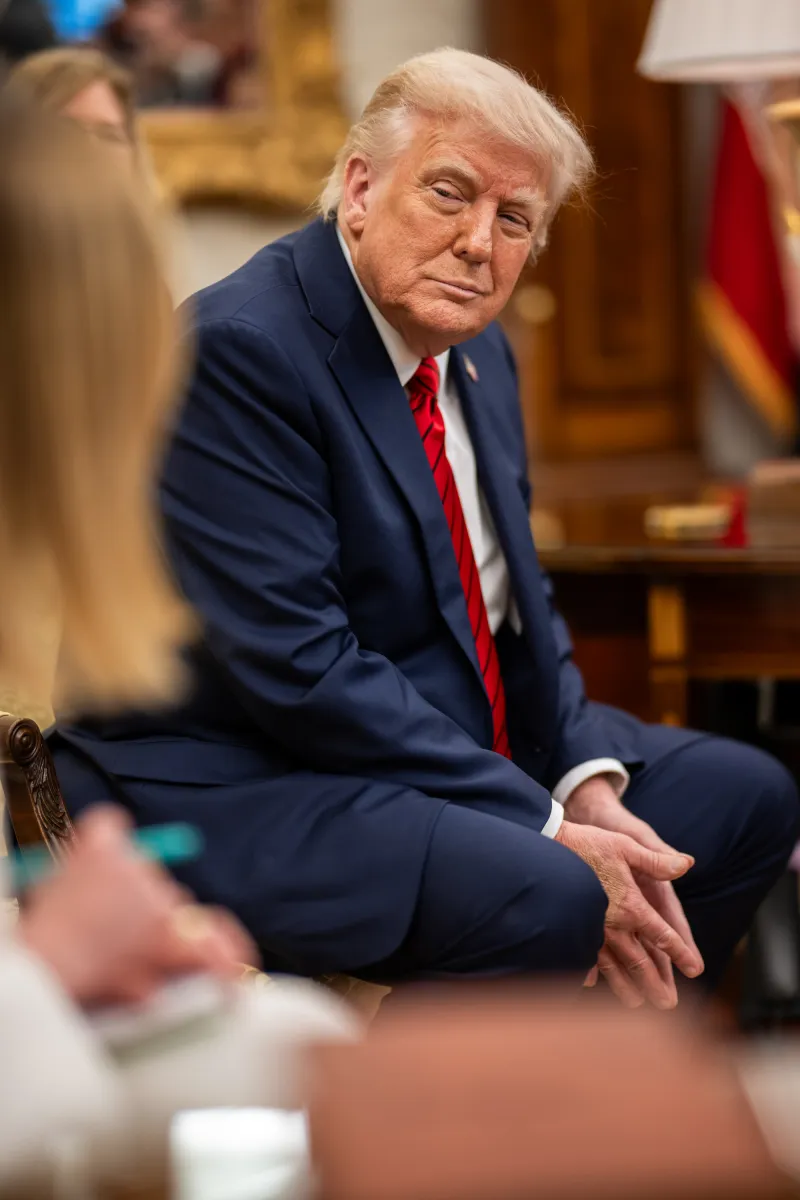
During a recent press conference on August 6, 2025, President Donald Trump delivered a pointed critique of prominent late-night television hosts Jimmy Fallon and Jimmy Kimmel. His remarks suggested that both comedians could soon face cancellation, joining former Late Show host Stephen Colbert, whose long-running program was recently canceled.
President Trump’s comments came in response to a question about the future of late-night television and the impact of anti-Trump sentiment on the careers of several entertainers. He asserted that the so-called “hate Trump business model” has failed, and highlighted Colbert’s departure as evidence.
“The hate Trump business model hasn’t worked for a long time,” Trump stated, emphasizing his belief that Colbert lacked talent. “I could pick a couple of people off the street who would do just as well, or better, and get higher ratings.”
Trump’s critique extended beyond Colbert, with the President specifically naming Jimmy Fallon and Jimmy Kimmel. He described both as lacking talent and indicated that their positions as late-night hosts are at risk.
“Fallon has no talent,” Trump declared. “Kimmel has no talent. They’re next. They’re going to be going. I hear they’re going to be going soon.”
This warning echoed an earlier statement Trump shared on his social media platform Truth Social on July 29, where he disparaged Fallon as “weak and very insecure” and labeled Kimmel “even less talented.” He concluded that the only question remaining was which host would be dismissed first.
The recent cancellation of The Late Show with Stephen Colbert on July 17 has narrowed the late-night television landscape, further fueling speculation about the future of other hosts who have frequently criticized the former President. Trump maintained that he had no involvement in Colbert’s removal, attributing it solely to the host’s lack of skill and diminishing viewer interest.
In addition to Fallon and Kimmel, the President also commented on Howard Stern’s declining presence in the media. Reflecting on his previous appearances on Stern’s show, Trump suggested that Stern’s endorsement of Hillary Clinton contributed to a significant loss of his audience.
“Howard Stern is a name I haven’t heard in a long time,” Trump remarked. “We used to have fun on his show, but when he endorsed Hillary Clinton, he lost his audience. People said, ‘Give me a break.’”
Fallon and Kimmel are well-established figures in American late-night television, known for their comedic monologues, celebrity interviews, and political satire. Both have been frequent targets of criticism from President Trump during his tenure, often responding with measured public statements and continued focus on their shows.
The President’s remarks highlight the ongoing tension between political figures and media personalities who frequently intersect in the realm of late-night comedy. With changing audience preferences and evolving entertainment landscapes, the futures of Fallon and Kimmel have become subjects of speculation among industry observers.
As of early August 2025, neither Fallon nor Kimmel have publicly responded to President Trump’s recent statements. Meanwhile, networks that air their programs have not announced any plans regarding the shows’ continuations or cancellations.
The dynamic between political leaders and late-night hosts continues to evolve, reflecting broader cultural and political divides within the United States. Trump’s direct commentary on individual entertainers underscores his continuing influence on public discourse beyond his presidential administration.

Emily Johnson is a critically acclaimed essayist and novelist known for her thought-provoking works centered on feminism, women’s rights, and modern relationships. Born and raised in Portland, Oregon, Emily grew up with a deep love of books, often spending her afternoons at her local library. She went on to study literature and gender studies at UCLA, where she became deeply involved in activism and began publishing essays in campus journals. Her debut essay collection, Voices Unbound, struck a chord with readers nationwide for its fearless exploration of gender dynamics, identity, and the challenges faced by women in contemporary society. Emily later transitioned into fiction, writing novels that balance compelling storytelling with social commentary. Her protagonists are often strong, multidimensional women navigating love, ambition, and the struggles of everyday life, making her a favorite among readers who crave authentic, relatable narratives. Critics praise her ability to merge personal intimacy with universal themes. Off the page, Emily is an advocate for women in publishing, leading workshops that encourage young female writers to embrace their voices. She lives in Seattle with her partner and two rescue cats, where she continues to write, teach, and inspire a new generation of storytellers.




