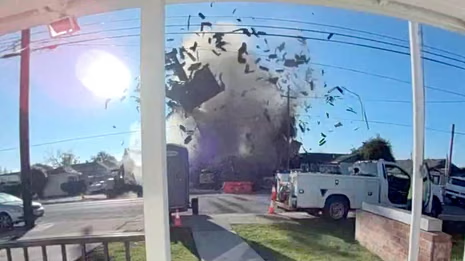
A powerful gas explosion Thursday morning devastated a residential neighborhood in the San Francisco Bay Area, sending debris flying into the air, damaging multiple homes, and leaving six people injured. The explosion, which occurred in the unincorporated community of Ashland near Hayward, has prompted a full-scale emergency response, including firefighters, police, and federal investigators.
Dramatic video footage captured the moment of the blast, showing a house suddenly erupting in flames beneath a clear blue sky. Jagged pieces of wood, roofing material, and household debris shot into the air as a thick plume of smoke enveloped the neighborhood. Residents nearby described the explosion as an earth-shaking event that left them stunned and fearing the worst.
Brittany Maldonado, who lives directly across the street from the affected home, said she and her husband were in their bedroom when they heard the initial blast. “Boxes fell over and everything shook. We thought someone had just flown off the freeway and their car was in our living room,” Maldonado said. “It was like someone had just launched a bomb.”
After checking their Nest doorbell camera, they realized their neighbor’s home had literally exploded. The video showed the building’s walls and roof being blown apart as nearby workers scrambled to safety.
Alameda County Deputy Fire Chief Ryan Nishimoto reported that six individuals were transported to hospitals with injuries. Three were immediately admitted due to more serious trauma, while the other three had minor injuries. It is currently unclear whether the injured were residents of the home, construction workers, or both.
The explosion caused severe damage to three structures across two neighboring lots. Firefighters responding to the scene—about 75 personnel in total—temporarily had to retreat after experiencing electric shocks from downed power lines at the site. The neighborhood itself, characterized by single-level homes with small manicured lawns and several small businesses, had been undergoing construction improvements, including wider sidewalks and bike lanes, at the time of the blast.
Pacific Gas & Electric Co. (PG&E) confirmed that it had been notified at approximately 7:35 a.m. that a construction crew, not affiliated with the utility, had damaged an underground gas line. PG&E crews arrived promptly to isolate the leak; however, gas was found escaping from multiple points. The utility said it took nearly two hours to fully stop the gas flow, with the explosion occurring roughly 10 minutes after the line was shut off.
Tamar Sarkissian, a PG&E spokesperson, emphasized the complexity of the situation: “The gas had been flowing for two hours, and while we did stop the main flow at 9:25 a.m., it took time to completely isolate the line and prevent further leakage. Unfortunately, the explosion happened shortly afterward.”
Footage from nearby doorbell cameras shows a large excavator actively digging in front of the home at the time of the blast. A worker can be seen standing near the equipment as the explosion ignited, illustrating how quickly the situation escalated. Within moments, flames engulfed the building, and residents and workers rushed toward the site to assist any victims trapped in the debris. Several workers were captured lifting a large piece of the destroyed roof from the ground near the excavator.
The National Transportation Safety Board (NTSB) announced Thursday that it would send a team to investigate the incident. Federal investigators are expected to work alongside PG&E, Alameda County fire officials, and local authorities to determine the exact sequence of events and whether any safety protocols were violated during the construction project.
The unincorporated community of Ashland lies just south of the city of Hayward, home to approximately 160,000 residents in the East Bay, about 15 miles from Oakland. Authorities say the affected neighborhood’s proximity to major freeways contributed to heightened concern, as debris and shock waves could have easily impacted traffic and nearby structures.
Residents and first responders described chaotic scenes immediately following the explosion. Sirens pierced the morning air as police and fire crews arrived, while flames from the demolished house began to spread across the property. Neighbors reported that stunned residents wandered the streets, trying to comprehend what had occurred, while others immediately rushed to help those who may have been caught in the blast.
Deputy Chief Nishimoto said that the scale of damage and injuries underscores the dangers posed by even minor mistakes around underground utility lines. “Construction crews and homeowners must be extremely cautious when digging near gas lines,” he said. “Even a small misstep can trigger catastrophic consequences.”
PG&E, which operates a vast network of gas lines throughout Northern California, has faced scrutiny in recent years over pipeline safety, particularly following a string of deadly incidents, including wildfires and explosions in other parts of the state. While the company stressed that the construction crew responsible for damaging the line was not affiliated with PG&E, it acknowledged the critical role utility oversight plays in preventing such disasters.
The NTSB investigation is expected to examine multiple factors, including the construction crew’s adherence to safety protocols, the utility’s response time, and the condition of the underground infrastructure. Officials will also evaluate whether equipment or procedural errors contributed to the severity of the blast.
Beyond the immediate structural damage and injuries, the explosion raised concerns about gas line safety across the region. Residents in surrounding neighborhoods were warned to report any unusual odors, sounds, or signs of leaks, as residual gas pockets could remain in some areas despite the shutdown. Authorities have also reminded the public to exercise caution around power lines and damaged infrastructure in the aftermath of such explosions.
The incident comes at a time when construction and infrastructure improvements are underway across many East Bay communities. Projects intended to expand sidewalks, improve bike lanes, and enhance public safety often require excavation near utilities, increasing the risk of accidental contact with gas or electrical lines. Experts say this underscores the importance of strict adherence to safety protocols and coordination between construction teams and utility providers.
Witnesses described the blast as instantaneous and terrifying. One neighbor reported seeing “a ball of fire shoot into the sky” and feeling the ground shake as if an earthquake had struck. Emergency crews arriving at the scene immediately began evacuating surrounding homes to prevent further injuries from flames, smoke, or potential structural collapse.
PG&E and local officials have urged residents to stay clear of the affected area while investigators continue their work. Firefighters have been monitoring the site to prevent any secondary fires, and crews have been using gas-detection equipment to ensure the safety of nearby homes and businesses.
As of Thursday evening, six individuals remain hospitalized, with authorities confirming that their injuries range from minor to serious. Fire officials said that all injured individuals were expected to survive, but they did not release additional details about their identities or conditions, citing privacy concerns.
The destruction of multiple homes has left families displaced, and local authorities are coordinating with the Red Cross and other community organizations to provide temporary shelter and assistance. Emergency management teams are also assessing the broader neighborhood for structural damage, smoke inhalation hazards, and potential gas leaks from other lines.
The dramatic nature of the explosion—captured on multiple cellphones and security cameras—has circulated widely on social media, prompting warnings about gas line safety and the dangers of excavation work. Experts emphasize that even experienced construction crews must follow strict safety protocols when working near underground utilities, including obtaining accurate line maps, using appropriate detection equipment, and adhering to state and federal guidelines.
Deputy Chief Nishimoto highlighted the collaborative response that prevented the disaster from escalating further. “Firefighters, police, and utility personnel worked quickly and effectively to contain the fire and assist victims. Their actions undoubtedly prevented additional injuries and damage,” he said.
Officials have called for patience as investigators piece together the events that led to the explosion. The combination of human error, infrastructure vulnerability, and delayed isolation of the gas line created a scenario that, while rare, demonstrates the potential for catastrophic outcomes when multiple risk factors align.
In the meantime, residents in Ashland and the surrounding Hayward area are being advised to remain vigilant. PG&E has set up a hotline for residents to report any lingering safety concerns, and local authorities are coordinating public briefings to provide updates on the investigation and ongoing safety measures.
The Bay Area community, while resilient, has been reminded of the hidden dangers posed by underground utility lines and the critical importance of immediate reporting and rapid response to any suspected damage. As recovery efforts continue, officials are urging neighbors to check on one another, assist displaced families, and follow all safety instructions issued by emergency management personnel.
The NTSB’s investigation, expected to take weeks or months, will likely provide a detailed account of the sequence of events, assign responsibility, and recommend safety measures to prevent similar incidents in the future. The hope is that lessons learned from this tragic explosion will reinforce safe practices for both construction crews and utility operators, reducing the risk of catastrophic accidents in urban and suburban communities nationwide.

Emily Johnson is a critically acclaimed essayist and novelist known for her thought-provoking works centered on feminism, women’s rights, and modern relationships. Born and raised in Portland, Oregon, Emily grew up with a deep love of books, often spending her afternoons at her local library. She went on to study literature and gender studies at UCLA, where she became deeply involved in activism and began publishing essays in campus journals. Her debut essay collection, Voices Unbound, struck a chord with readers nationwide for its fearless exploration of gender dynamics, identity, and the challenges faced by women in contemporary society. Emily later transitioned into fiction, writing novels that balance compelling storytelling with social commentary. Her protagonists are often strong, multidimensional women navigating love, ambition, and the struggles of everyday life, making her a favorite among readers who crave authentic, relatable narratives. Critics praise her ability to merge personal intimacy with universal themes. Off the page, Emily is an advocate for women in publishing, leading workshops that encourage young female writers to embrace their voices. She lives in Seattle with her partner and two rescue cats, where she continues to write, teach, and inspire a new generation of storytellers.