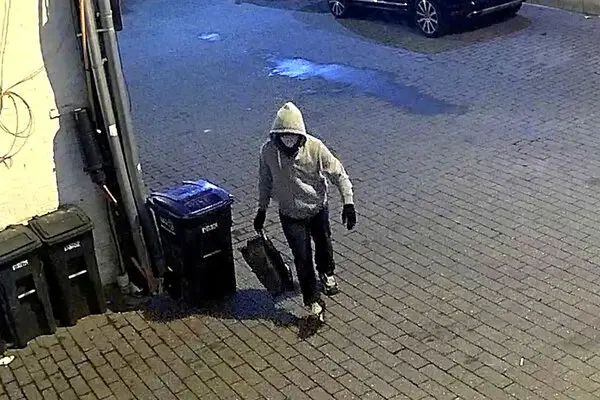
A Virginia man accused of planting pipe bombs outside the headquarters of both major U.S. political parties on the eve of the Jan. 6, 2021, Capitol breach has confessed to building and placing the explosive devices, according to newly unsealed court documents.
Federal prosecutors revealed in a filing dated Dec. 28 that Brian Cole Jr., 30, admitted during a post-arrest interview that he was responsible for constructing and planting two improvised explosive devices near the Democratic National Committee (DNC) and Republican National Committee (RNC) buildings in Washington, D.C., on Jan. 5, 2021.
The confession marks a significant development in one of the most closely scrutinized and long-running federal investigations connected to the events surrounding Jan. 6. For years, the pipe bomb case remained unresolved, despite extensive surveillance footage, public tips, and a nationwide search for the suspect.
Arrest and Confession
Cole was arrested on Dec. 4 following what prosecutors described as months of investigative breakthroughs that ultimately linked him to the explosive devices. Initially, Cole denied any involvement in the incident. However, according to the court filing, he later reversed his account and admitted that he was the masked individual captured on surveillance video placing the devices outside the party headquarters.
During the interview, Cole allegedly walked federal agents through his actions on the day before the Capitol breach, including how he transported the devices into Washington and why he selected those particular locations. Prosecutors said Cole acknowledged that his actions were politically motivated, driven by escalating anger and frustration following the 2020 presidential election.
When questioned about his motive, Cole told investigators that his emotions had reached a breaking point after witnessing increasing political division and unrest in the country. According to prosecutors, he said that “something just snapped” as he watched political tensions worsen in the weeks after the election.
A Case That Haunted Investigators
The pipe bombs were discovered on Jan. 6, 2021, just hours before a joint session of Congress convened to certify the Electoral College results. Although neither device detonated, authorities later confirmed that both were viable explosive threats capable of causing serious harm.
Their discovery prompted emergency evacuations near the DNC and RNC buildings and diverted law enforcement resources during a critical moment as thousands of people gathered near the U.S. Capitol. Investigators have long said the devices posed a grave danger and were intended to create fear, chaos, or distraction.
For nearly four years, the suspect’s identity remained unknown, despite the FBI releasing images of a hooded individual wearing gloves and a mask. The lack of an arrest fueled public speculation and criticism, with lawmakers repeatedly pressing federal agencies for updates on the stalled investigation.
Political Motivation and Mental State
According to the newly unsealed filing, Cole described his actions as the culmination of months of emotional distress tied to political events. Prosecutors said he did not cite allegiance to a specific group or coordinated effort, instead framing his conduct as a personal reaction to what he perceived as a deteriorating political climate.
The filing suggests that Cole acted alone and did not coordinate with others involved in the Jan. 6 Capitol breach. Authorities have emphasized that, at this stage, there is no evidence connecting Cole to any organized extremist group or militia.
However, investigators noted that his decision to target both party headquarters appeared deliberate, signaling generalized anger toward the political system rather than a single ideology or faction.
Legal Consequences Ahead
Cole now faces multiple federal charges, including offenses related to explosives, transportation of destructive devices, and placing explosives near federal buildings. If convicted, he could face decades in prison.
Legal experts say the confession substantially strengthens the government’s case, particularly because it is supported by surveillance footage and other corroborating evidence collected during the investigation.
Prosecutors are expected to argue that the placement of the devices constituted an act of domestic terrorism, given the timing, location, and potential impact on public safety and democratic institutions.
Cole remains in federal custody, and his defense attorneys have not publicly commented on the confession detailed in the court filing.
Broader Implications
The confession closes a chapter in one of the most unsettling unanswered questions surrounding Jan. 6. While much of the national focus has centered on the breach of the Capitol itself, the pipe bombs represented a parallel and potentially catastrophic threat.
Security officials have repeatedly noted that had either device detonated, the consequences could have been severe, potentially resulting in mass casualties and further destabilization during an already volatile day.
The case also underscores ongoing concerns about political radicalization and the risks posed by individuals acting independently under the influence of anger, misinformation, or perceived grievance.
Renewed Scrutiny of Political Violence
In recent years, federal authorities have warned about the growing threat of lone-actor political violence, emphasizing that individuals motivated by personal grievances can be difficult to detect before they act.
The Justice Department has framed the resolution of the pipe bomb case as evidence of sustained investigative efforts, even when progress appears slow. Officials say advances in forensic analysis, digital data, and witness cooperation ultimately led to Cole’s arrest.
Moving Forward
As the case proceeds through the courts, it is expected to renew public discussion about accountability, prevention, and the long-term consequences of political extremism. Lawmakers from both parties have previously described the pipe bomb incident as one of the most dangerous elements of the Jan. 6 events, even though it did not result in physical injuries.
For investigators, the confession brings long-awaited clarity. For the public, it serves as a reminder of how close the nation came to an even greater tragedy on one of the most turbulent days in modern American political history.
The court proceedings in the coming months will determine Cole’s legal fate, but the broader impact of the case—on public trust, political discourse, and national security—will likely resonate far beyond the courtroom.

Emily Johnson is a critically acclaimed essayist and novelist known for her thought-provoking works centered on feminism, women’s rights, and modern relationships. Born and raised in Portland, Oregon, Emily grew up with a deep love of books, often spending her afternoons at her local library. She went on to study literature and gender studies at UCLA, where she became deeply involved in activism and began publishing essays in campus journals. Her debut essay collection, Voices Unbound, struck a chord with readers nationwide for its fearless exploration of gender dynamics, identity, and the challenges faced by women in contemporary society. Emily later transitioned into fiction, writing novels that balance compelling storytelling with social commentary. Her protagonists are often strong, multidimensional women navigating love, ambition, and the struggles of everyday life, making her a favorite among readers who crave authentic, relatable narratives. Critics praise her ability to merge personal intimacy with universal themes. Off the page, Emily is an advocate for women in publishing, leading workshops that encourage young female writers to embrace their voices. She lives in Seattle with her partner and two rescue cats, where she continues to write, teach, and inspire a new generation of storytellers.